
How to Ride a Camel: A Practical Beginner’s Step-by-Step Guide
How to Ride a Camel: A Practical Beginner’s Step-by-Step Guide
Riding a camel is one of those travel experiences that stays with you for life. Whether you are crossing the rolling dunes of the Sahara Desert or taking a short trek near a desert camp, the sight of endless sand from the back of a dromedary is genuinely unforgettable. But if you have never been on a camel before, the whole idea can feel intimidating.
The good news is that learning how to ride a camel is far simpler than most people expect. Once you understand the basic technique, your body adapts quickly, and what starts as nervous excitement becomes a genuinely pleasant ride. This guide focuses specifically on the technique of riding, step by step. For related topics like what to wear, safety considerations, and frequently asked questions, we have dedicated guides you can explore alongside this one.

Quick Answer: How to Ride a Camel
To ride a camel, approach the beast while it is kneeling, mount by swinging your leg over the hump, hold the front of the saddle firmly, and lean in the opposite direction as the camel stands. Once upright, sit deep in the saddle, relax your hips, and let your body move naturally with the camel’s rhythm.
Here is the complete process:
- Wait for the camel to kneel. Your guide will ask the camel to sit before you approach.
- Mount carefully while holding the saddle. Place one foot in the stirrup, grip the saddle handles or front pommel, and swing your other leg over the hump.
- Lean back as the camel stands. The back legs rise first (tipping you forward), then the front legs rise (tipping you backward). Counterbalance each motion.
- Sit upright and relax during the ride. Keep your back straight, let your hips absorb the side to side gait, and look toward the horizon.
- Move naturally with the camel’s rhythm. Avoid tensing up. Let your body swing gently with the camel’s motion.
- Hold the saddle while the camel kneels to dismount. Wait until the camel has fully settled before stepping off.
These basic steps apply whether you ride camels in Morocco’s Sahara Desert, at Egypt’s pyramids, in Jordan’s Wadi Rum, or on shorter tourist rides elsewhere. Each step is explained in detail throughout the sections below.
Understanding How a Camel Moves
Riding a camel feels nothing like riding a horse. A horse uses a diagonal gait, but a camel uses what zoologists call a pace gait, where both legs on the same side move forward together. This creates a distinctive body swing, a slow, rolling sway from side to side rather than the up-and-down bounce you would feel on horseback.
Camels are known as the ships of the desert, and for good reason. That gentle sway genuinely resembles the motion of a boat on calm water. The camel’s natural gait is a measured gait, deliberate and energy-efficient, which is exactly why these animals provide essential transportation across some of the harshest terrain on earth.
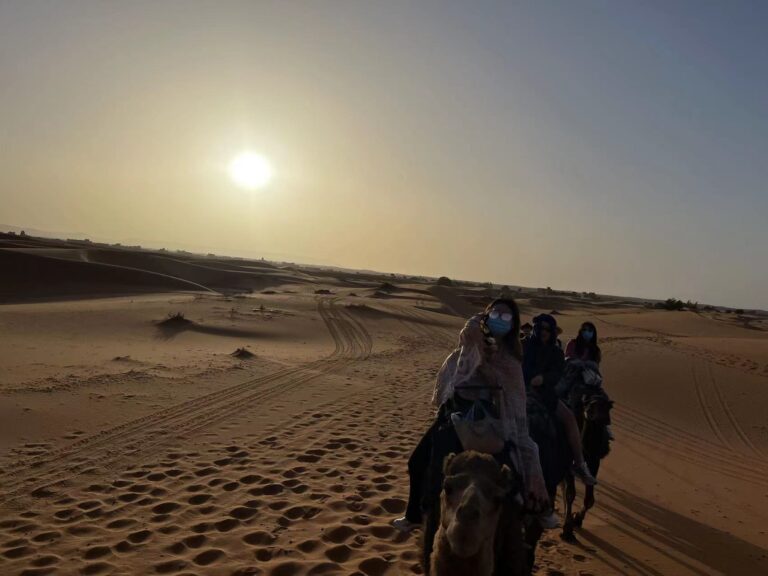
What surprises most beginners is the height. When mounted on a large dromedary, you sit roughly six to seven feet above the ground. The camel’s body, its long legs plus the hump, lifts you higher than you would expect. During the first few minutes, this height combined with the side to side rocking can feel unusual. But desert caravans typically move at a slow, steady pace, often with four camels or more walking in a line, which keeps the rhythm predictable and manageable even for complete beginners.
Before You Mount the Camel
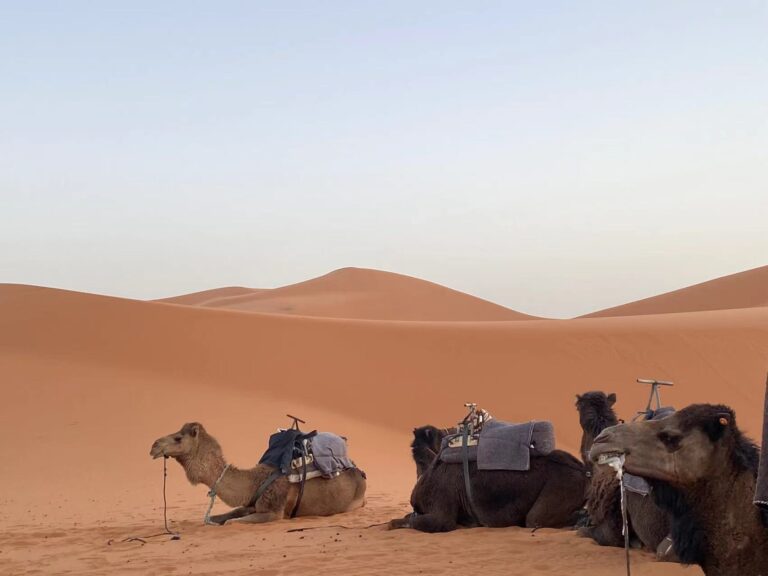
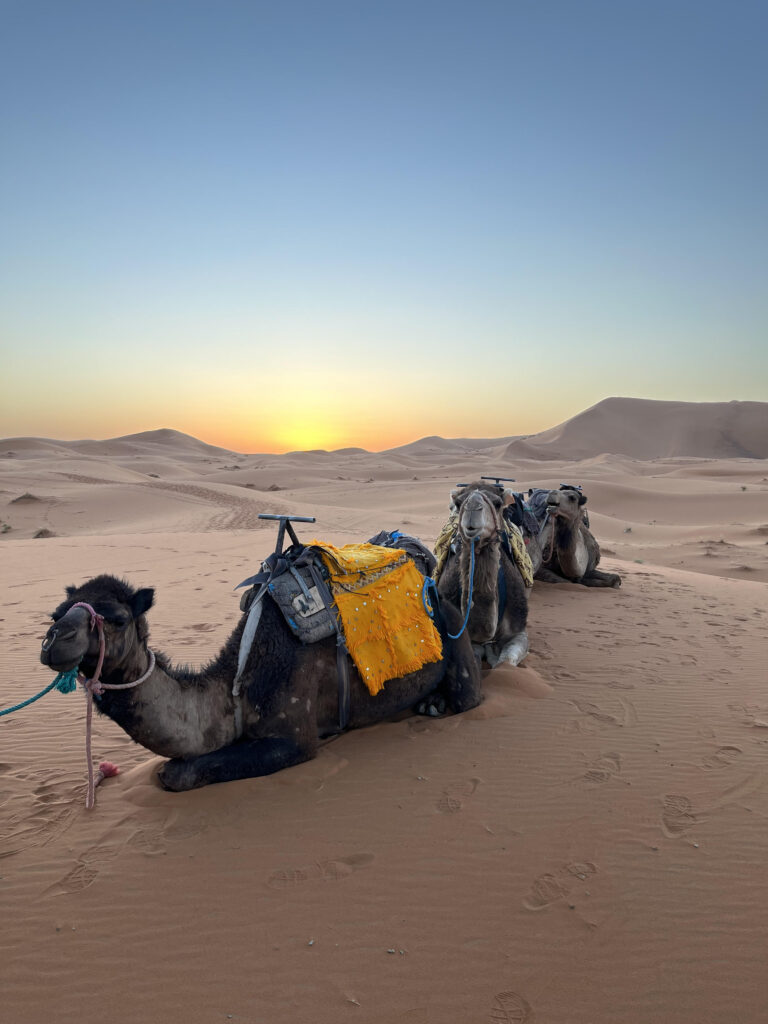
Before anyone climbs onto a camel, the guide, sometimes called the camel man, prepares each animal. The camel will be asked to kneel, folding its legs beneath its body until its chest rests on the sand. You will see a sitting camel waiting patiently for you.
Approach the camel from the side, near its shoulder, not from directly in front of its head or behind its back legs. Speak calmly and move slowly so you do not startle it. Wait for other camels in the caravan to settle as well. Spooked or panicked camels can stand suddenly, so giving the animal a moment of calm before you mount is important.
Your guide will hold the lead rope and signal when it is safe to climb on. Always follow your guide’s instructions. Never try to quickly mount before the guide gives the word. If you have never been around large animals, this is normal, and the handler’s presence is exactly what makes the process safe and smooth.

Step 1: Mount the Camel Correctly
Once the guide signals, step close to the camel’s side. Place your left foot into the stirrup (or onto the lower step if the saddle has one), then grip the saddle handles or the saddle post at the front with both hands. In one smooth motion, mount the camel by throwing your other leg over the hump and settling into the seat.
Do not rush. You want to be comfortable straddling the saddle before anything else happens. Sit deep, let your weight drop into the center of the saddle, and keep both hands on the front handle or pommel. Your fingers should wrap around firmly but without a white-knuckle grip.
Common mounting mistakes include trying to climb on before the camel is fully kneeling, putting weight on a loose stirrup, or forgetting to hold the saddle before swinging across. Take your time. The camel is not going anywhere until the guide gives the command.
Step 2: Stay Balanced While the Camel Stands Up
This is the moment that catches every beginner off guard. Camel rides can feel like a mini rollercoaster when camels stand up, and the motion is more dramatic than people expect.
Here is what happens. When the camel starts to rise, its back legs push upward first. This tips you forward suddenly. Your instinct will be to grab on tighter. Instead, slowly lean forward with the motion and keep your hands locked on the front of the saddle. A second later, the front legs extend upward, and the camel pushes its front end to full height, tipping you backward. At this point, lean backward to counterbalance.
The whole sequence takes about three to ten seconds. Stay calm, keep soft legs with a slight bend in your knees, and brace your core lightly. The camel stands, you settle into an upright position, and the ride begins.
The key is anticipation, not reaction. Know the sequence before it happens, and you will handle it smoothly.
Step 3: Ride Comfortably While the Camel Walks
Once you start riding and the camel’s walk settles into its rhythm, the work becomes much easier. Sit deep in the saddle with your back straight but not rigid. Keep your head up and your eyes on the horizon rather than looking down at the sand. This alone dramatically improves balance.
Riding a camel requires relaxing the hips to absorb the movement. Let your hips follow the camel’s motion side to side. If you tense up and fight the sway, you will tire out quickly and feel every bump. Instead, imagine you are sitting on a slow boat. Take a deep breath, soften your shoulders, and let your lower body do the work.
Your hands should stay on the front handle or saddle, with one hand providing stability and the other resting lightly. You may feel an occasional tug on the lead rope as the guide adjusts pace. To steer or maintain position, use your legs for stability instead of gripping tightly. Keeping your legs clamped against the saddle creates unnecessary pain and fatigue. A gentle, relaxed contact is all you need.
For longer segments, crossing legs in front of the saddle at a diagonal angle can help distribute your weight and reduce pressure on your inner thighs. Some people riding camels also find they can ride a camel side saddle for comfort during easier stretches. You can also hold onto handlebars near the camel’s neck while riding for added security. Ask your guide what leg cross position works best with their particular saddle style.

Riding on Sand Dunes and Uneven Terrain
When the terrain shifts to rolling sand dunes stretching to the horizon, your body position needs small adjustments. Riding a camel offers stunning views of the Sahara Desert from this vantage point, but the dunes demand attention.
Climbing uphill, lean slightly forward to keep your weight centered over the camel’s shoulders. Descending, shift your weight back. These adjustments are subtle, not dramatic lunges. The camel’s sure footing on sand is far better than yours would be, so trust the animal and follow the guide’s judgment on route selection. Experienced Sahara guides choose paths through the dunes that avoid steep drops and loose sand, giving both camel riders and their animals the safest possible passage.
How to Dismount a Camel Safely
Dismounting is easier than mounting, but it still requires attention. The process is essentially the reverse of standing up.
When the ride ends, the guide commands the camel to kneel. The camel sits by lowering its front legs first (you tip forward), then folding its back legs (you tip backward). Hold the front of the saddle with both hands and ride the motion, just as you did when the camel stood. Once the camel relaxes fully and its chest is on the ground, remove your feet from the stirrups.
Swing one leg back over the saddle and step down to the side. Never simply jump off while the camel is still moving or only partially kneeling. Dismounting should be done when the camel has completely stopped moving and settled. The last thing you want is to step off while the animal shifts its weight.
Once on the ground, move a few steps away from the camel’s legs before adjusting your gear or stretching.
Common Beginner Mistakes When Riding a Camel
Nearly every first-time rider makes a few of these mistakes. Recognizing them in advance saves you discomfort and unnecessary risks.
- Leaning too far forward when the camel stands, instead of counterbalancing backward as the front legs rise.
- Gripping too tightly with hands or thighs, leading to muscle fatigue and soreness.
- Locking the knees instead of keeping them slightly bent to absorb movement.
- Looking down constantly at the saddle or the ground, which throws off balance.
- Sitting stiffly and fighting the camel’s motion rather than flowing with it. Shake loose, relax your torso.
- Trying to stand in the stirrups during the ride, which lifts your center of gravity and makes you wobble.
- Letting panic take over during the herky jerky standing motion. Panicked camels are rare; panicked riders are common. The motion feels dramatic but it is completely controlled.
Correcting even one or two of these habits turns an awkward experience into the most pleasant ride you can have on a camel.
What Riding a Camel Really Feels Like
From a beginner’s perspective, the first five to ten minutes feel unusual. The slow rocking, the height, and the unfamiliar animal beneath you create a cocktail of excitement and mild nervousness. The motion is not herky jerky once the camel is walking. It is a steady, gentle sway.
Camel riding offers a unique perspective of the Sahara landscape that you cannot get from a vehicle or on foot. The sight of dunes unfolding ahead of you from that height is something people riding camels remember for years.
Be aware that riding a camel can be uncomfortable for over thirty minutes, especially for beginners. Your inner thighs, lower back, and core will work harder than you expect. Wearing long pants protects your legs from rubbing, and long socks can prevent itchiness during camel rides. Consider painkillers for discomfort after long rides if you tend toward stiffness. For more detailed clothing recommendations, including other clothing essentials like dust goggles, a long scarf, and proper footwear, we cover everything in our dedicated clothing guide. Sunglasses and wide-brimmed hats protect against sun and dust, sunscreen is an absolute must, and bringing bottled water is important to stay hydrated in the desert.
Expert Advice from Sahara Desert Guides
At Chegaga Travel, our guides have spent years leading camel treks through Morocco’s Sahara. Here is what they consistently tell first-time riders:
Trust the camel’s rhythm. These animals have carried people across deserts for centuries. Camels have been integral to Berber culture for as long as anyone can remember. The beast beneath you knows the terrain better than you do. Relax into the camel’s walk and stop trying to control every movement.
Look ahead, not down. Keeping your back straight and eyes on the horizon dramatically improves balance and reduces motion discomfort.
Listen to your guide. Whether it is adjusting your seat, warning about a steep dune, or suggesting a rest stop, the guide’s experience makes your ride safer and more enjoyable. Always follow your guide’s instructions for safety during a ride. If forecast hints suggest possible storms, a dust storm, or shifting winds, your guide will adjust the route or timing accordingly. Securely attach cameras to a strap or your body to avoid dropping them from the height of a camel.
For more advice and practical pointers, our camel riding tips guide covers additional techniques, and our safety guide addresses health and welfare questions in detail. Some travelers even ask about trying camel milk during their trip, which guides are happy to discuss as part of the broader cultural experience.

Final Thoughts
Learning how to ride a camel is less about athletic ability and more about understanding a few key movements: how to mount, how to handle the standing and kneeling sequences, and how to relax into the rhythm once you are moving. With that foundation, most beginners feel confident within the first ten minutes.
Do not worry about getting every movement perfect. Enjoy the experience. The Sahara has a way of making every small imperfection feel irrelevant once you are swaying across the dunes with nothing but sand and sky around you. It is the kind of trip that changes how you see desert travel for the rest of your life.
If you are planning a camel ride in Morocco, explore our Morocco Camel Riding experiences for guided sunset treks, overnight desert camp journeys, and multi-day Sahara expeditions. You can also compare destinations in our Merzouga vs Erg Chigaga camel trek guide, or browse answers to common questions in our camel riding FAQ.
Ready to Ride a Camel in Morocco?
Now that you know what to expect when mounting, riding, and dismounting a camel, take the next step and plan your own Sahara experience. We can create a private Morocco itinerary around your travel dates, interests, and preferred desert experience.