
Camel Riding Tips: 25 Expert Tips for a Comfortable Desert Experience
Camel Riding Tips: 25 Expert Tips for a Comfortable Desert Experience
Camel riding is one of the most memorable parts of any Morocco adventure, and the good news is that it is completely beginner-friendly. That said, knowing a few practical camel riding tips before you mount up can make a big difference between an awkward hour in the saddle and a genuinely enjoyable desert experience.
This guide shares advice gathered from experienced Sahara desert guides who lead travelers through the dunes every week. You will find tips for preparing before the ride, staying comfortable during it, and making the most of the moment. For deeper detail on specific topics, separate guides cover riding technique, safety, clothing, and frequently asked questions.

Quick Tips for First-Time Camel Riders
To ride a camel comfortably on your first time, relax your body, listen to your guide, hold the saddle when the camel stands, and let your hips move naturally with the animal’s rhythm. Most riders settle in within five to ten minutes.
Here are ten quick tips to keep in mind:
- Relax your shoulders and hips. Tension is the number one cause of soreness.
- Listen to your guide. They will tell you exactly what to do and when.
- Hold the saddle handle during mounting. When the camel stands, its back legs lift first, then its front legs – the motion feels like a mini rollercoaster, but it lasts only a few seconds.
- Look ahead, not down. Fixing your eyes on the horizon helps your balance.
- Keep your weight centered. Avoid leaning too far to one side.
- Maintain proper posture – sit upright but relaxed, letting your hips follow the camel’s sway.
- Breathe steadily. Natural breathing keeps your body loose.
- Don’t lock your knees or grip with your legs. Let them hang softly.
- Stay hydrated. Drink water before and during the ride.
- Enjoy the experience. You are sitting on the “ship of the desert” – watch the scenery and have fun.
Mild wobbliness at the beginning is completely normal and usually passes quickly once you stop overthinking.
Prepare Before Your Camel Ride
A little preparation goes a long way. Arriving ready means you can focus on the excitement instead of scrambling with gear or fighting discomfort.
- Eat a light meal an hour or two before the ride. A heavy dinner right beforehand can make the swaying uncomfortable.
- Drink water steadily in the hours leading up to departure. Staying hydrated is essential during camel rides in hot, dry environments, but avoid chugging a large amount right before you mount.
- Arrive early. Give yourself fifteen to twenty minutes to meet your guide, adjust your scarf, and settle in.
- Apply sunscreen on your face, neck, ears, and hands. Sunglasses and a hat or scarf provide solid protection from sun and sand while riding.
- Secure loose items. Scarves, straps, and accessories that flap can distract you – or the camel.
Clothing matters, too. Wear long pants to prevent chafing while riding – camel hair can be scratchy, so jeans or structured trousers work well. Choose loose-fitting clothes for comfort and avoid flip-flops; wear closed toe shoes for stability when mounting and dismounting. For a full outfit breakdown, check our dedicated guide on what to wear for camel riding.
Relax Instead of Fighting the Camel’s Movement
Almost every person tenses up on their first camel ride. It is instinctive – you feel the unfamiliar sway and your body tries to fight it. The problem is that rigidity makes everything worse. Your muscles fatigue faster, your lower back aches, and you feel every bump.
The camel’s swaying motion basically resembles a gentle boat ride. Instead of resisting, soften your lower back, let your hips rock forward and back, and keep your knees slightly bent. Breathing naturally – slow in through the nose, out through the mouth – helps maintain balance and keeps your body loose.
Trust the animal. Camels have evolved for desert terrain and are far more stable on sand than they feel at first. After a few minutes, most riders discover that moving with the rhythm rather than against it reduces muscle fatigue dramatically.
Listen Carefully to Your Guide
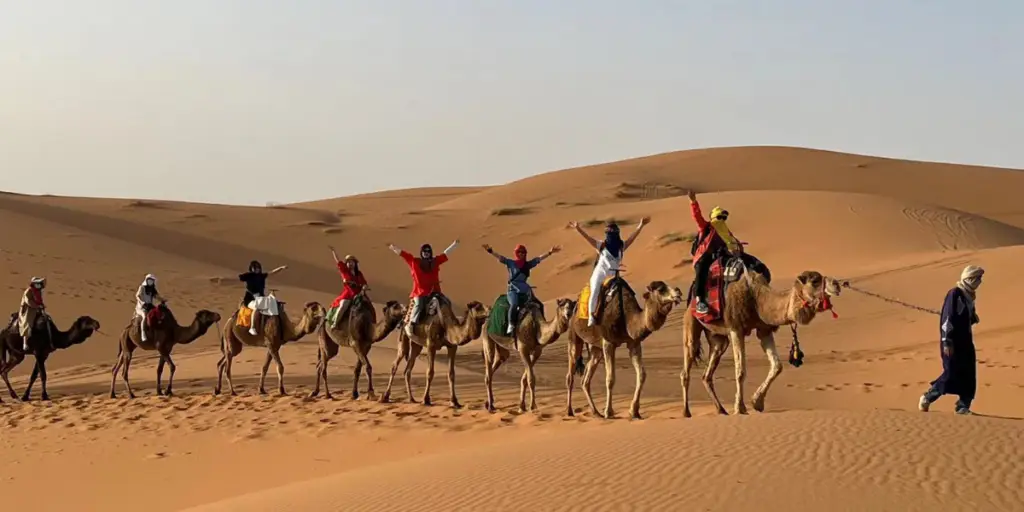
Your guide gives instructions before, during, and after the ride for a reason. Camel rides are safe with professional guides providing clear instructions, and following them prevents most problems.
- Mounting: You will mount the camel by throwing your leg over its hump while the beast kneels on the ground. Lean back slightly when the camel stands to maintain balance. If you struggle, ask your guide for assistance – that is what they are there for.
- Stopping and starting: Guides control the pace. Avoid pulling the reins or trying to steer on your own.
- Riding in a caravan: Maintain spacing between camels and follow the set track.
- Crossing dunes: Listen for commands like “lean back” or “hold tight” on steep or uneven ground.
Riders should also approach camels calmly from the side to avoid startling them. Guides at Chegaga Travel repeat key instructions in clear English or French and check each rider’s comfort regularly.
Keep Your Camera and Phone Secure
Everyone wants great photos from their camel ride, and the Sahara delivers. Riding a camel offers breathtaking views of the desert that you will want to capture. But the saddle sways, and sand is not kind to electronics.
- Use a wrist strap for your phone or a neck strap for a camera.
- Keep devices in zippered pockets or a small crossbody bag when not shooting.
- Wait for calm, level stretches or scheduled photo stops before taking pictures.
- Never use both hands for photography while the camel is moving – keep one hand on the saddle.
Ask your guide to snap a photo from the ground. They usually know the best angles and safest moments. In the soft sand of Erg Chegaga or Merzouga, a dropped phone can vanish quickly, so prevention beats searching.
Stay Comfortable During Longer Camel Rides
Short rides of one to two hours feel very different from a multi-day trek. Small adjustments keep longer rides enjoyable.
- Shift your sitting position slightly every so often – move your weight forward or backward to avoid numbness.
- Stretch during breaks. Simple hip circles, quad stretches, and forward bends on the ground are enough.
- Keep drinking water. Desert air is deceptively dry.
- Stay loose. Avoid clenching your jaw, shoulders, or legs.
You can ride a camel side saddle for added comfort if the saddle allows it. Camel riding can lead to stiff legs after an hour-long journey, but mild soreness is normal – think of it like trying a new sport. A warm shower and light stretching after returning to camp work wonders.
Tips for Riding at Sunrise and Sunset
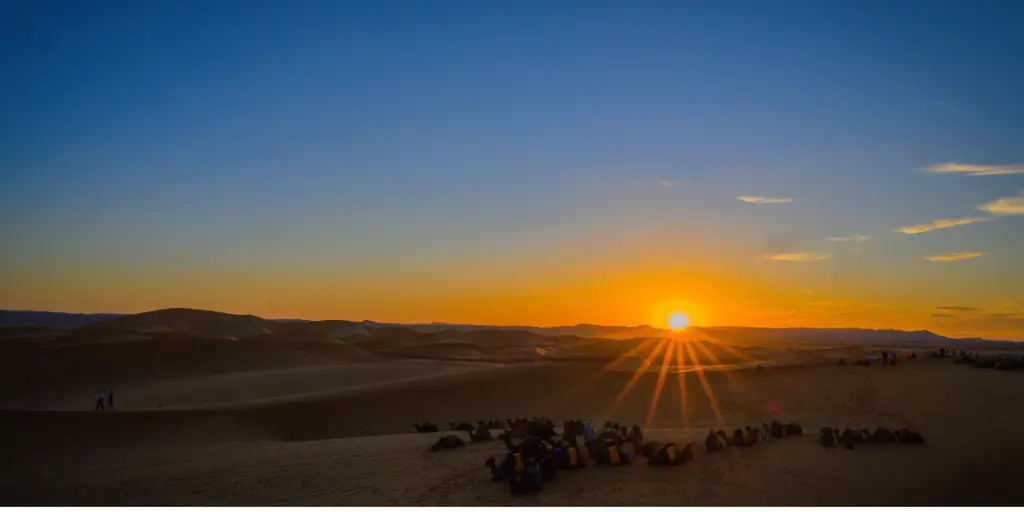
There is a reason most Morocco camel rides are scheduled around dawn and dusk. These are the cool hours, especially in summer when inland temperatures reach 38 to 45°C.
- Cooler temperatures mean less sun exposure and a more pleasant ride for both you and the camel.
- Softer, golden light makes the dunes glow – perfect conditions for photography.
- Calmer desert conditions. Wind tends to be lighter, and the sand settles.
For sunrise rides, prepare everything the night before – head covering, water, camera batteries – because departures can be as early as 05:00. For sunset rides, plan your dinner around the schedule and bring a small headlamp for walking back to the campsite in low light.
Take a moment to forget technique entirely and simply watch the beauty of shifting colors across the horizon.
Tips for Families Riding Camels
Camel riding is a fantastic family activity in Morocco, and a little preparation makes it smooth for everyone.
- Choose shorter rides for younger children – thirty to sixty minutes is ideal for a first experience riding as a family.
- Prepare children by explaining what will happen. Tell them the camel lifts its back legs first, then its front legs, and that the rocking is part of the fun. Let kids meet the animal on the ground before mounting to build confidence.
- Follow the guide’s pace. Parents should ride close to children and let the guide know in advance if anyone is nervous.
- Bring small comforts – a favorite hat, a light scarf, socks for cooler mornings – but keep bags minimal.
For detailed information about health considerations and age guidelines, see our separate guide on camel riding safety. It is also advisable to check with a healthcare provider if anyone in the family has back or balance issues before riding.
Respect the Camel and the Desert Environment
Responsible behavior makes the experience better for everyone – riders, guides, animals, and future visitors.
- Stay calm around camels. Avoid loud noises, sudden movements, or approaching from behind.
- Treat camels gently. Never pull hard on the reins or try to make the camel run. These are sensitive animals that respond to calm handling.
- Leave no litter. Keep wrappers, bottles, and tissues in a bag until you reach camp or town.
- Respect wildlife and plants. The Sahara ecosystem is fragile – stay on established tracks.
Choose a reputable tour operator for camel rides. Read online reviews to check for ethical treatment of animals, and ensure the operator prioritizes the well-being of camels with proper rest, water, shade, and saddle care.
For additional destination information and travel planning resources, consult the Morocco National Tourism Office for official information about traveling in Morocco.
Mistakes That Can Make Your Camel Ride Less Enjoyable
Most discomfort on a camel ride comes from a handful of avoidable mistakes:
- Forgetting water. Dehydration causes headaches and fatigue fast.
- Wearing shorts. Wearing shorts leads to chafing against the saddle and scratchy camel hair on bare skin.
- Carrying too much. A heavy backpack throws off your weight and strains your back.
- Rushing photos. Fumbling with a phone while the camel is walking is how devices end up in the sand.
- Ignoring guide instructions. Your guide knows the terrain and the animal – listen to them.
- Overthinking the experience. You do not need to sit perfectly still or ride like a horse. A camel has a completely different gait.
- Expecting perfect comfort immediately. Give yourself a few minutes to adjust before deciding anything.
The good news is that once you know these pitfalls, avoiding them is straightforward.
Expert Tips from Chegaga Travel’s Sahara Guides
These tips come from guides who lead private camel treks through Morocco’s Sahara regularly. Their advice is simple and consistent:
- Relax and enjoy the rhythm. “Treat the camel like a gentle boat on waves – your body will follow naturally.”
- Don’t focus on staying perfectly still. Small, natural movements keep you more comfortable than rigid sitting.
- Trust your guide. They read the dunes, the wind, and the light to keep the caravan safe and scenic.
- Take your time. There is no rush. The desert rewards patience.
- Watch the scenery. Lift your eyes from the saddle and look at the dunes, the sky, the life around you. That is what you came for.
Experienced guides enhance safety during camel rides and can adjust saddle padding, change the pace, or add extra stops if someone is uncomfortable. Speak up early – visiting the Sahara should feel like an adventure, not an endurance test.

Final Thoughts
The most valuable camel riding tips are also the simplest: prepare lightly, relax your body, listen to your guide, respect the camel, and focus on enjoying the journey rather than riding perfectly. Whether it is your first time in the saddle or you have been glad to ride camels before, the Sahara has a way of making every trip feel new.
If you want to go deeper, these related guides cover specific topics:
- How to Ride a Camel – step-by-step riding technique
- Is Camel Riding Safe? – health, risks, and safety details
- What to Wear for Camel Riding – clothing and footwear advice
- Camel Riding FAQ – answers to common questions
Planning a Morocco adventure? Explore Chegaga Travel’s Morocco Camel Riding experiences or browse our tailor-made tours to design a private itinerary that includes a comfortable, memorable ride through the Moroccan desert.
Ready to Experience Camel Riding in Morocco?
Now that you know how to make your camel ride more comfortable and enjoyable, let us help you plan a private Morocco desert experience around your travel dates, interests, and preferred pace.