What to Wear for Camel Riding: The Complete Packing Guide
What to Wear for Camel Riding: The Complete Packing Guide
Choosing the right clothing for a camel ride can make the difference between a comfortable adventure and a miserable one. Whether you are planning a sunset trek across towering dunes, a half-day excursion, or a multi-day journey through the sahara desert, your outfit matters more than you might expect. Camel rides connect travelers to Morocco’s ancient trade routes and allow you to experience some of the world’s most dramatic desert landscapes. This guide breaks down exactly what to wear before, during, and after a camel ride so you can spend less time worrying about your clothing and more time enjoying the ride.
Quick Answer: What Should You Wear for Camel Riding?
If you need ideas fast, here is what to wear for camel riding in any desert environment:
- Long lightweight trousers – cotton, linen, or hiking pants that protect your legs from the saddle and sun
- Breathable long-sleeve shirt – loose fit in light colours to stay cool
- Closed toe shoes – sneakers, trail shoes, or light hiking boots with good grip
- Sunglasses – polarised lenses with a secure strap
- Wide-brim hat or desert scarf – shields face, ears, and neck
- Sunscreen – SPF 30–50+, broad spectrum, applied generously
Each item solves a specific problem. Long pants reduce chafing from the saddle. A hat and sunglasses are essential for sun protection. Loose, light-colored clothing helps keep you cool in the desert. Closed shoes prevent burns from hot sand and give stability when you mount or dismount. Camel rides can last from a few hours to multiple days, and this outfit works across all of them, from short camel rides near a resort to longer treks deep into the dunes.
Why Clothing Matters on a Camel Ride
A camel is not a horse. Dromedary camels, the single hump species vital in North Africa for centuries, have a wider gait, coarser hair, and a broader saddle. When you are sitting on one for hours, every clothing choice you made that morning becomes very obvious.
Here is what your body deals with during a desert camel ride:
| Challenge | Effect on the rider |
|---|---|
| Saddle friction | Chafing on inner thighs, rump, and lower legs |
| Camel hair | Irritation and itchiness against bare skin |
| Sun exposure | UV index often exceeds 11 in desert zones at midday |
| Sand and dust | Gets into ears, nose, eyes, and every fold of fabric |
| Temperature swings | Temperatures can exceed 50°C in the sahara desert by day and drop below 10°C at night |
Dressing in light, loose clothing is crucial for comfort in these conditions. Proper clothing also improves safety: secure shoes prevent slipping, long fabric shields skin from burns, and layers manage the hot-to-cold transition after sunset.
Best Pants for Camel Riding
Long pants are non-negotiable for camel riding. Your inner thighs press directly against the saddle for the entire ride, and bare legs against rough leather or woven fabric will leave you sore within minutes.
The best options are lightweight hiking trousers, travel pants with stretch panels, or breathable cotton trousers. Look for relaxed or slightly loose cuts that allow your legs to swing over the camel without restriction. Wear loose-fitting light pants, ideally in earth tones like khaki, sand, or light grey, which hide dust well and reflect heat.
Avoid shorts entirely. They expose your skin to sun, saddle rub, and camel hair. If you prefer a skirt, choose one that falls well below the knee, though trousers are still more practical.
What about jeans? Soft, broken-in jeans can work for a short ride, but stiff or tight denim traps heat, dries slowly, and restricts movement. On longer treks lasting two or three days, lightweight hiking pants outperform jeans in every category: breathability, flexibility, and drying speed.
What Shirt Should You Wear?
You should wear long sleeves to protect your skin from sun and sand. A loose, breathable long-sleeve shirt in cotton, linen, or a moisture-wicking blend gives you the best combination of coverage and airflow. Long sleeves protect your arms from direct UV exposure, windburn, and the fine grit that blows across open desert terrain.
Look for shirts with rollable cuffs so you can adjust on the fly. Collars that flip up add neck protection. Fabrics in the 120–180 gsm range provide enough structure to handle wind without trapping excessive heat. Sun protective clothing with UPF 30–50+ ratings can reduce UV exposure to less than five percent of what bare skin would absorb.
For colour, choose light but not pure white, since white shows every grain of sand. Beige, soft grey, and pale blue photograph well and keep you cooler than dark colours. In cooler months, layer a thin fleece or windbreaker over your base shirt. Travelers staying overnight in a desert camp near Erg Chegaga should pack a warm extra layer for sitting around the campfire after the sun drops.
Best Shoes for Camel Riding
Your feet need protection from the ground, the stirrups, and the sand itself. Closed-toe shoes are recommended for camel riding because they shield your feet from burning sand, provide grip when you mount and dismount, and keep debris out.
The best choices are:
- Trail running shoes or sneakers – lightweight, good traction, breathable
- Light hiking boots – ankle support for walking on uneven terrain
- Sturdy trainers – a solid everyday option that most travelers already own
Wear comfortable sandals or sports shoes in the desert only if they have a secure heel strap and toe coverage. Flip-flops may fall off while riding a camel and offer zero protection. High heels, slides, or platform shoes have no place on camelback.
Breathable shoes help prevent sweaty feet during rides, especially in summer. Pair them with mid-length socks to avoid blisters and direct contact with dusty stirrups. Wearing socks can also protect against itchiness from camel fur, which rubs against your ankles during the ride. Once you arrive at camp, you can change into lighter sandals for the evening.
Hats, Scarves, and Sunglasses
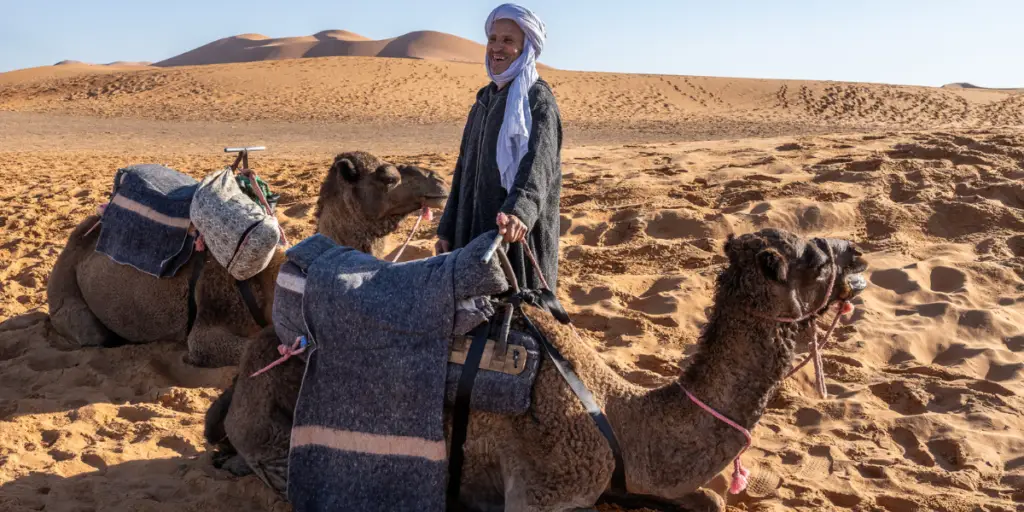
A wide-brimmed hat and UV-protective sunglasses shield you from sun glare, which is relentless across open dunes from mid-morning onward. A wide-brimmed hat protects against the harsh sun by covering your face, ears, and the back of your neck. Choose a hat with a chin strap so it stays on when the camel lurches forward or a gust hits.
A lightweight scarf can protect against dust and sun exposure. In Morocco, desert guides often wrap a traditional cheche (Tuareg-style scarf) around the head and face. It works as a sun shield, sand filter, and neck cover all at once. You can buy one in any local souk for a few dirhams, and your guide can show you how to tie it properly.
Polarised sunglasses with a snug frame or side coverage keep blowing sand out of your eyes. Use a secure strap so you do not lose them when the camel rises or kneels. For sunset or sunrise camel rides, polarised lenses also cut the intense glare off the sand.
What to Bring in a Small Day Bag
A few well-chosen accessories in a compact backpack will dramatically improve your comfort without weighing you down. Avoid a large or bulky bag; a small crossbody or slim daypack that sits close to your body is ideal.
Pack these essentials:
- Water – at least one litre; an insulated bottle keeps it cool. Drink regularly
- Sunscreen – SPF 30–50+, broad spectrum. Use sunscreen with a high SPF to protect against UV rays, and reapply every two hours
- Lip balm with SPF – desert air dries lips fast
- Tissues or wet wipes – for dust, sweat, and general freshness
- Phone and power bank – secured in a zip pocket or protective pouch
- Camera – wrap it in a soft cloth bag to shield from sand
- Light jacket – for sunrise, sunset, or sudden wind
On Private Morocco Desert Tours with Chegaga Travel, drivers can store your larger luggage in the 4×4 while you take only a small backpack on the camel.
What to Wear in Different Seasons
What counts as proper attire shifts considerably between summer heat and winter nights in the desert. Bringing layers is essential as desert temperatures drop at night regardless of the season.
Summer
In summer (June–August), temperatures regularly exceed 40°C. Wear ultra-light, loose, long clothing and maximise sun protection. Schedule rides for early morning or late afternoon to avoid peak heat. Your outfit should prioritise breathability above all else: thin cotton or linen long pants, a light long-sleeve shirt, wide-brim hat, and strong sunscreen. Hydration is critical, so carry extra water and drink before you feel thirsty. The Agafay Desert near Marrakech offers half-day camel ride excursions that are popular in summer because they finish before the worst midday heat.
Winter
December through February brings milder days but cold nights that can drop below 5°C in the open desert. Pack a fleece, a windproof outer layer, a warm beanie for evenings, and thicker socks. A thermal base layer under your shirt will keep you warm during sunrise rides. Blankets are usually provided at camp, but having your own warm jacket means you can comfortably relax outside before breakfast. Camel rides often include sunset or sunrise experiences, and winter light on the dunes is spectacular.
Spring and Autumn
These shoulder seasons (March–May, September–November) are ideal for camel riding. Expect variable temperatures and occasional wind. A light base, long sleeves, and a packable jacket give you maximum flexibility. Multi-day camel treks are common near Merzouga and Zagora during these months, and a trek of three days through the dunes requires an outfit you can adapt quickly as conditions shift.
What NOT to Wear for Camel Riding
Knowing what to avoid is just as important. Do not forget that fashion takes a back seat to function in the desert.
- Shorts, mini-skirts, strapless tops – leave skin exposed to sun, sand, and saddle rub. Also culturally inappropriate in many rural areas
- Stiff or tight jeans – restrict movement, trap heat, slow to dry
- Flip-flops, slides, platform shoes, high heels – slip off easily, zero grip, no protection from hot sand
- Heavy or bulky backpacks – interfere with balance and make mounting awkward
- Dangling jewellery – earrings, long necklaces, or large bracelets can snag on the saddle or fall into the sand
- Expensive handbags or delicate items – dust and friction will damage them
- Very tight or transparent clothing – uncomfortable for riding and disrespectful when visiting local communities
If you would not wear it on a long hike in hot weather, do not wear it on a camel.
Clothing Tips for Families
Traveling with children or older family members requires a bit more planning. Ensure kids wear long pants and long-sleeve shirts just like adults, along with shoes that stay securely on their feet. Pack a spare change of clothes in case of sweat or sand saturation, and bring extra sunscreen. Children may also appreciate a hat with a chin strap since they tend to fidget on the saddle.
For older travelers, prioritise lightweight clothing with easy closures (zips over buttons), cushioned insoles in shoes, and a warm layer that is simple to put on. Avoid heavy gear. If you are visiting Morocco as a family, Family Morocco Tours from Chegaga Travel can be tailored to include shorter rides and extra support for younger or older riders.
Desert Guide Recommendations
Chegaga Travel’s local guides spend hundreds of days a year in the desert. Here is what they consistently tell other travelers before a camel ride tour:
Wear long pants, always. Even when it is hot. The saddle and camel hair will punish bare legs. Cotton or linen trousers are what most guides prefer themselves.
Do not overdress. Layers are better than one heavy jacket. You can shed a layer in minutes but you cannot cool down quickly if you are trapped in thick fabric.
Bring a scarf. A simple lightweight scarf is the most versatile piece of desert gear. It covers your head, protects your face, shades your neck, and doubles as a cushion if needed.
Break in your shoes first. New boots or stiff shoes cause blisters within the first hour. Wear whatever you plan to ride in for at least a few days before your trip.
Riding camels allows travelers to experience Morocco’s desert landscapes in a way no car ride can replicate. Guides share stories about camels and local heritage during rides, giving you a taste of Berber traditions and daily life. Camel rides offer real insight into how people have lived and traveled across these landscapes for centuries. Merzouga is a top location for camel rides in Morocco, and comparing it with Erg Chegaga can help you choose the right destination for your trek.
These animals are remarkably well-adapted to desert conditions, and with a sense of preparation from your side, the ride becomes a truly immersive experience rather than an endurance test.
Packing Checklist
Here is everything in one place. Print it, screenshot it, or save it before you join your tour:
- ✓ Long lightweight trousers (pack a spare pair for multi-day treks)
- ✓ Breathable long-sleeve shirt
- ✓ Light jacket or fleece
- ✓ Closed shoes with good grip
- ✓ Mid-length socks
- ✓ Wide-brim hat or desert scarf
- ✓ Sunglasses with strap
- ✓ Sunscreen (SPF 30–50+)
- ✓ Lip balm with SPF
- ✓ Reusable water bottle
- ✓ Small daypack or crossbody bag
- ✓ Phone, camera, power bank
- ✓ Tissues or wet wipes
- ✓ Warm layer for evenings
Pack light. Camels carry limited weight, and your larger luggage can stay in the car or riad.
Final Thoughts
You do not need an expensive outdoor wardrobe or a complicated outfit to ride camels comfortably. Simple, breathable, loose-fitting clothing in light colours, a good pair of closed shoes, sun protection for your head and skin, and a few layers for temperature changes will cover virtually every scenario. Whether you are on a short sunset ride or a multi-day desert adventure, the right dress code lets you relax and look forward to the unique experience rather than worry about discomfort.
If you are planning a camel ride tour in Morocco, Chegaga Travel can help you design a private journey that fits your schedule and comfort level. Explore our Morocco Camel Riding experiences to discover camel rides and desert adventures tailored to your itinerary. For more on the practical side, explore our guides on how to ride a camel, camel riding tips, and whether camel riding is safe.
Ready to Experience the Moroccan Sahara?
Once you know what to expect, let us help you plan a private Morocco trip that includes a camel riding experience suited to your travel dates, interests, and preferred itinerary.