Morocco in Summer: Real Heat, Cool Escapes and How to Plan Your Trip
Yes, you can visit Morocco in summer, but the country you see depends on where you go. From June to August, Marrakech averages about 37°C (98°F) in July, and the Sahara around Merzouga reaches 43°C (109°F) by day with nights that stay near 29°C (84°F). At the same time, Essaouira on the Atlantic coast rarely passes 26°C (79°F), and High Atlas villages such as Imlil stay around 30°C (86°F) by day and 16°C (61°F) at night.
So summer works best as a coast-and-mountains trip, with cities visited early and late in the day and a short, well-timed stop in the desert. Days are long, about 14 hours of daylight in late June, which gives you cool mornings and evenings to work with. For a month-by-month comparison with other seasons, see our guide to the best time to visit Morocco.
We are Chegaga Travel, a local agency based in Marrakech that organizes private, tailor-made tours across Morocco. This guide covers the real summer temperatures by region, where it stays comfortable, how to approach the Sahara in July and August, what is on in summer, and a realistic 9-day route that follows the cooler side of the country.
Morocco Summer Weather by Region (June to August)
In summer, distance from the ocean and altitude matter more than anything else. On the same July afternoon it can be 25°C (77°F) and windy in Essaouira, 37°C (98°F) in Marrakech two and a half hours inland, and above 40°C (104°F) in the dunes. The table shows typical July averages, the hottest month; June is a few degrees cooler and August is similar to July.
| Region | Day (Jul avg) | Night (Jul avg) | What to expect |
|---|---|---|---|
| Essaouira (Atlantic coast) | 25–26°C / 77–79°F | 19–20°C / 66–68°F | The coolest major stop in summer; strong north wind most afternoons, cool sea |
| High Atlas villages (Imlil, about 1,740 m) | 30°C / 86°F | 16°C / 61°F | Warm days, fresh nights; the best walking area in summer |
| Fes | 34–36°C / 93–97°F | 20–22°C / 68–72°F | Hot afternoons in the medina; visit in the morning |
| Marrakech | 37°C / 98°F | 21°C / 70°F | Dry heat, very strong sun; quiet from 1 to 5 p.m. |
| Sahara (Merzouga) | 43°C / 109°F | 29°C / 84°F | Extreme daytime heat; warm nights in camp; almost no rain |
Sources: WeatherSpark – Marrakech, Weather & Climate – Merzouga, July, Weather & Climate – Imlil, July. Averages hide heat waves: Merzouga reached 46°C (115°F) on 27 July 2023, so check the forecast a few days before you travel.
The good news is daylight. In late June the desert gets about 14 hours of daylight, with sunrise around 6:15 a.m. and sunset around 8:20 p.m. (Where and When – Merzouga, June). That leaves long, usable mornings and evenings, which is how summer travel in Morocco works.
Where to Go in Morocco in Summer
The best summer trips spend most nights where it is cool and pass through the hot places at the right hour. Four areas carry a summer itinerary well.
The Atlantic coast: Essaouira and beyond
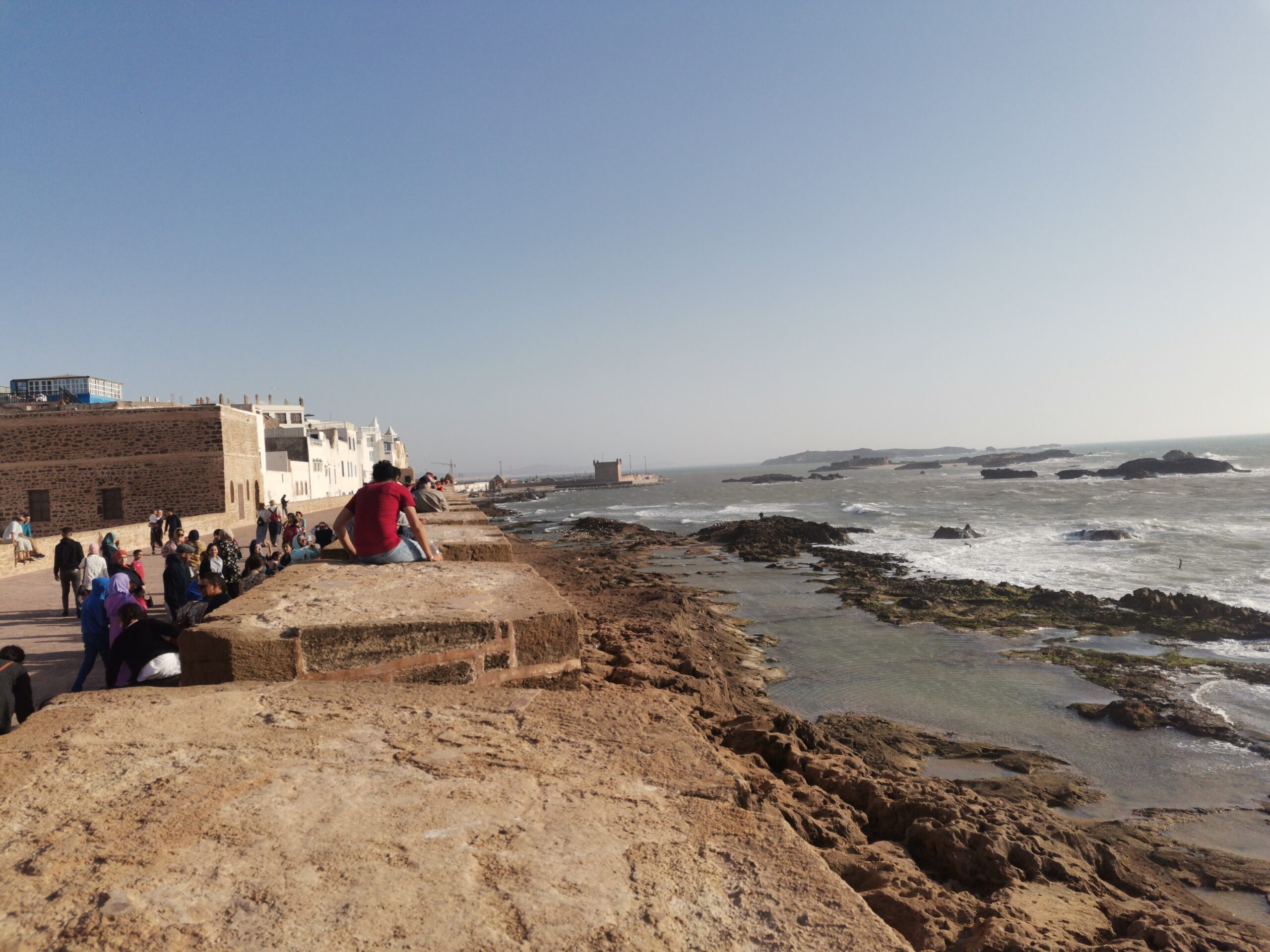
Essaouira is the classic summer escape from Marrakech, about 2.5 to 3 hours away by road. July highs stay around 25°C (77°F), there is almost no rain from June to August, and the walled medina, harbor and seafood grills are pleasant all day. The trade-off is wind: summer is the windiest season, with an average of about 20 km/h (12 mph) in July and stronger gusts in the afternoon. That is ideal for kitesurfing and windsurfing, less so for lying on the beach. Bring a light jacket for the evening and plan beach time for the morning.
Our Essaouira travel guide covers the town in detail, and our Morocco Atlantic coast private tour links it with the rest of the coast.
The High Atlas: Imlil and the valleys
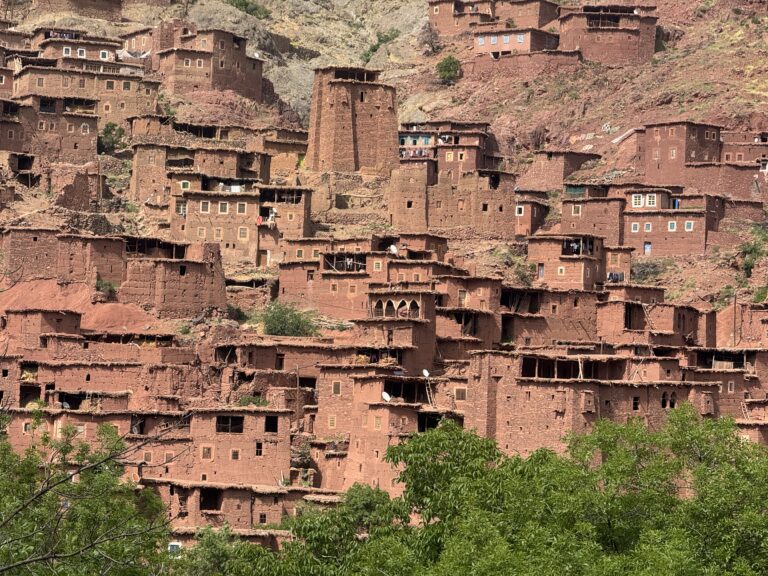
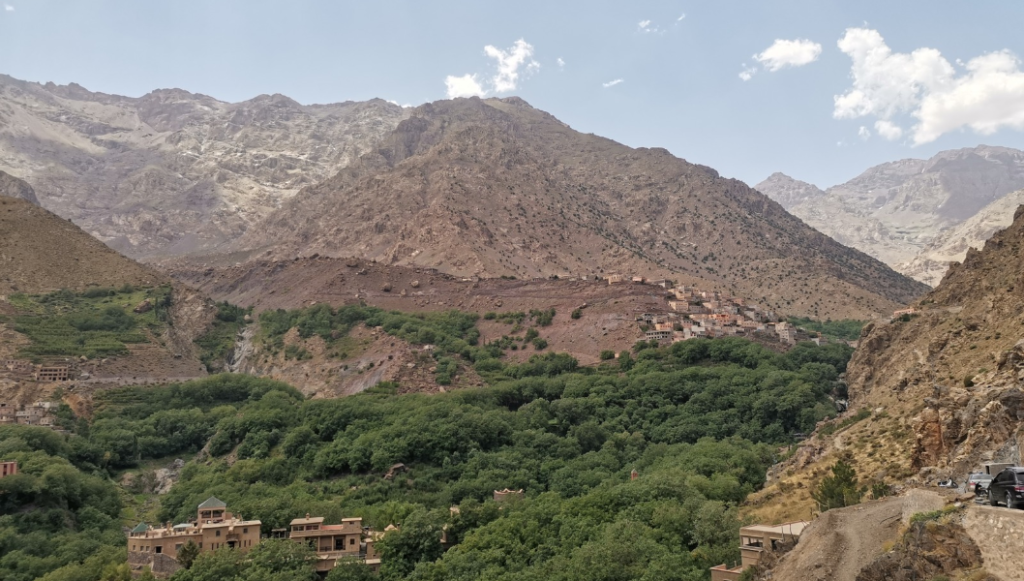
About 1.5 hours from Marrakech, Imlil sits at around 1,740 m (5,700 ft). July days are about 30°C (86°F) and nights drop to around 16°C (61°F), so you sleep well without air conditioning. Summer is a good season for valley walks between Berber villages, lunch on a family terrace and gentle hikes with a local guide. For a two- or three-night mountain stay as part of a longer trip, see our Atlas Mountains private tour.
If you plan to climb Toubkal (4,167 m), summer is the season without snow on the main route, but start each day at first light: afternoons on exposed slopes are hot, and thunderstorms can build over the mountains in the afternoon.
The north: Chefchaouen, Tangier and the Rif
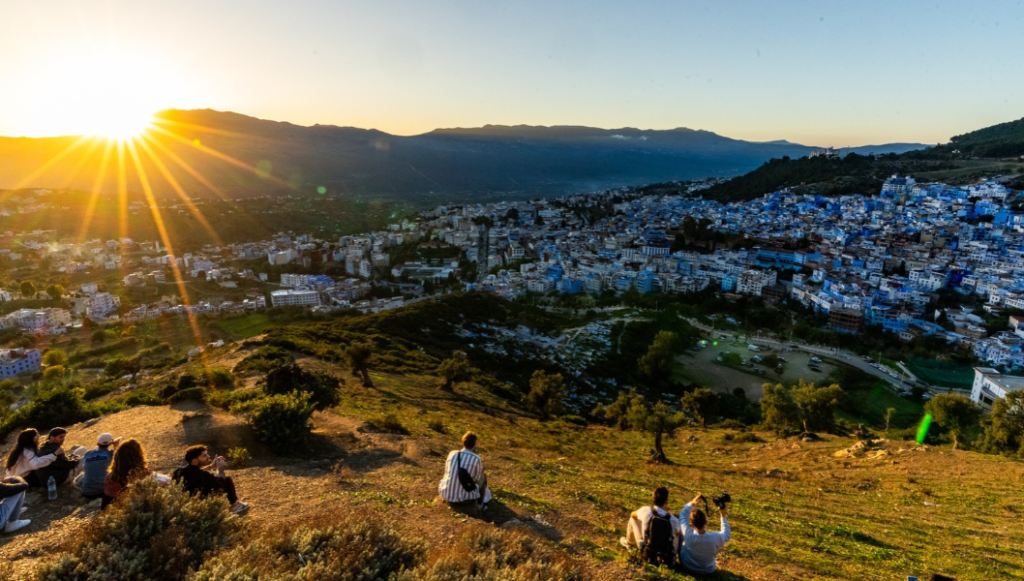
The north is milder than the interior, and Chefchaouen sits in the Rif Mountains at about 600 m. Mornings and evenings in the blue medina are comfortable, and Tangier gets a sea breeze from the Strait of Gibraltar. July and August are busy here, because Moroccan families and Moroccans living abroad take their own summer holidays. Our Chefchaouen travel guide has practical tips for a first visit.
Marrakech and Fes: cities on a summer rhythm
You do not need to skip Marrakech or Fes in summer, but you do need to change the schedule. Visit monuments and souks from 8 to 11 a.m., return to a riad with a pool or shaded courtyard for the afternoon, and go out again after 6 p.m., when Jemaa el-Fna and the rooftop restaurants come alive. A private guide helps here because the visit can start when the gates open, not when a group bus arrives.
The Sahara in Summer: Is It Too Hot?
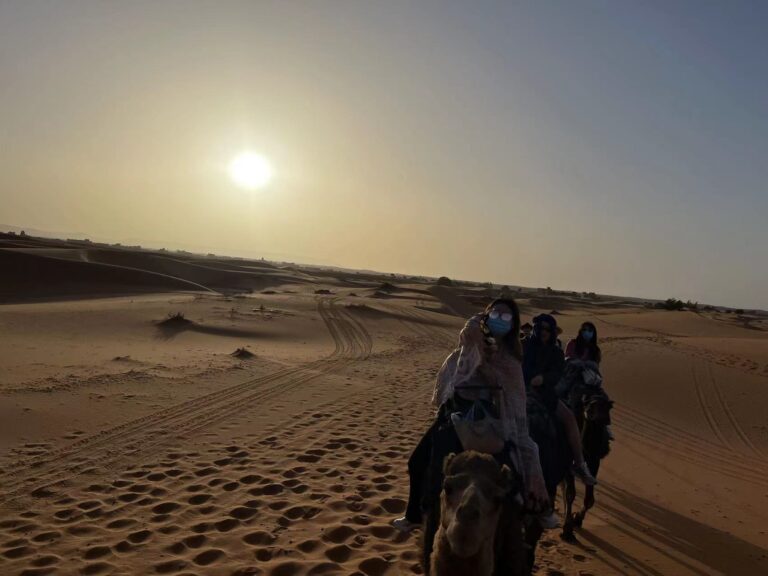
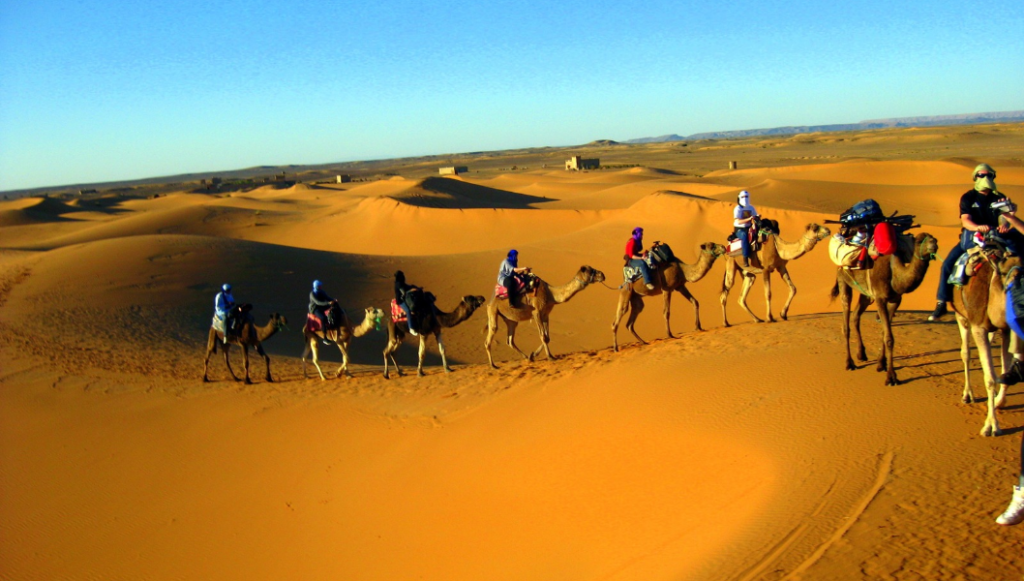
The desert is possible in summer, but only with the right timing and the right expectations. In July, Merzouga averages 43°C (109°F) by day and about 29°C (84°F) at night, and every day of July and August normally passes 30°C. Camel rides and dune walks happen at sunrise and sunset; the middle of the day is spent in shade, resting.
How to do a summer desert night well
- Keep it to one night. One night in camp gives you the sunset, the stars and the sunrise. A second night adds a full day of heat with little to do.
- Time the arrival. Arrive at the edge of the dunes around 6 p.m., ride to camp as the heat drops, and leave after sunrise the next morning. Sunset is around 8:20 p.m. in late June.
- Ask about the tent. Summer comfort varies a lot between camps. Before you book, ask whether tents have fans or air conditioning, whether there is electricity through the night, and whether you can sleep outside on a mattress under the stars, which many travelers prefer in July.
- Drink before you are thirsty. Carry at least 2–3 liters of water per person on desert driving days, and add oral rehydration salts if you sweat a lot.
- Cover up. A light long-sleeved shirt, a wide hat or scarf and closed shoes protect you better than shorts and sandals. Sand at midday is hot enough to burn bare feet. Our guide on what to wear for camel riding explains the details.
Merzouga or Erg Chegaga in summer?
Both are very hot from late June to August. Merzouga (Erg Chebbi) is reached by paved road, has the widest choice of camps, and is easier to fit into a route between Marrakech and Fes. Erg Chegaga is wilder and quieter, but the last stretch is a 4×4 track from M’Hamid, which means more time in the vehicle during the heat. We compare both in Merzouga vs Erg Chegaga camel trek.
If you want the dunes on a short trip, our 3-day Sahara desert tour from Marrakech can be timed for summer with early departures. If the desert is the main reason for your trip and your dates are flexible, consider moving it to spring or autumn, when the Sahara is far more comfortable; see Morocco in Spring.
The local summer tradition in Merzouga
Summer is also the season of the sand bath in Merzouga. Local people, and many Moroccan visitors, are buried up to the neck in hot sand for a few minutes, a traditional practice used for joint and back pain. If you are curious, only do it with local supervision, for a very short time, and never with heart conditions, high blood pressure or during pregnancy.
When to skip the desert
With young children, older travelers, or anyone with heart or breathing conditions, we recommend leaving out the deep desert in July and August. The Agafay desert, a stony desert about 40 minutes from Marrakech, gives a taste of the desert landscape and a sunset dinner without a long drive.
A Sample 9-Day Private Morocco Itinerary for Summer
This route goes from Marrakech to Tangier with one well-timed desert night, then finishes in the cooler north. Most driving happens in the morning, and the longest day crosses the Middle Atlas, which is cooler than the valleys. Driving times are approximate and do not include photo or lunch stops.
| Day | Route | Driving time | Summer tip |
|---|---|---|---|
| 1 | Arrive in Marrakech | Airport transfer | Choose a riad with a plunge pool or air-conditioned rooms |
| 2 | Marrakech: guided medina visit, gardens, souks | None | Start at 8 a.m., rest from 1 to 5 p.m., Jemaa el-Fna after sunset |
| 3 | Marrakech – Tizi n’Tichka – Aït Ben Haddou | About 4 h | Leave by 7:30 a.m.; the pass is fresher than the plain |
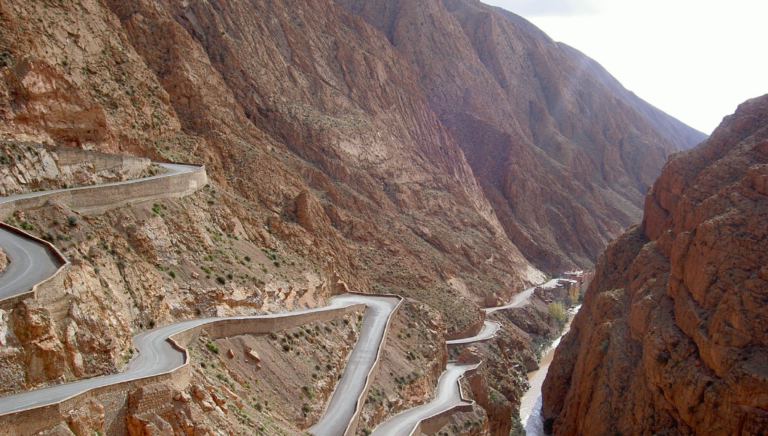
| 4 | Aït Ben Haddou – Dades Valley – Todra Gorge | About 4 h | Walk the gorge in the morning shade |
| 5 | Todra Gorge – Merzouga, sunset camel ride, night in camp | About 3 h | Rest at a guesthouse pool, then ride out around 6 p.m. |
| 6 | Merzouga – Midelt – Ifrane – Fes | About 7–8 h | Leave right after the sunrise breakfast; lunch in the cooler Middle Atlas |
| 7 | Fes: guided medina visit, tanneries, crafts | None | Tanneries and souks before noon; a long afternoon break |
| 8 | Fes – Chefchaouen | About 3.5–4 h | Evening walk in the blue medina when it cools down |
| 9 | Chefchaouen – Tangier, departure | About 2.5 h | Fly home from Tangier, or continue by ferry or train |
Prefer to skip the deep desert? Spend days 3 to 6 in the High Atlas around Imlil and on the coast in Essaouira instead, then return to Marrakech. Our Marrakech to Fes private tour and 10-day itinerary from Marrakech to Tangier can be adapted to summer in the same way.
Festivals and Events in Morocco in Summer
Summer is Morocco’s main festival season. The 2027 dates were not yet announced in October 2026, so the table shows the 2026 dates as a guide; confirm before you plan your trip around an event.
| Event | Where | Usual timing | 2026 dates |
|---|---|---|---|
| Gnaoua and World Music Festival | Essaouira | Late June | 25–27 June 2026 |
| National Festival of Popular Arts | Marrakech | Late June or early July | 2–6 July 2026 |
| Jazzablanca | Casablanca | Early July | 2–11 July 2026 |
Sources: Hespress – 2026 festival calendar, Gnaoua Festival press release, Visit Marrakech.
The Gnaoua festival is the one most worth planning around: Essaouira fills with free concerts on its squares, and Gnaoua music is on UNESCO’s list of Intangible Cultural Heritage. It also means riads in Essaouira book up early for those dates. The Popular Arts festival in Marrakech brings folk dance and music groups from every region of the country, mostly in the evening, which suits the summer rhythm.
Two other things to know: Throne Day on 30 July is a national holiday, and August is the peak of domestic travel, when beaches, Chefchaouen and the ferry ports from Spain are at their busiest.
Practical Tips for Morocco in Summer
Plan your days around the heat
- Start early. Be on the road or at the first monument by 8 a.m.; most sightseeing should be done before noon.
- Book the afternoon break. Riads with a pool, a shaded courtyard or air conditioning make the 1 to 5 p.m. rest part of the holiday instead of lost time.
- Keep long drives for the morning. A private driver can leave at 7 a.m. and stop where there is shade and a cold drink, which a fixed group timetable cannot do. Learn more about how a Morocco private driver works.
What to pack for Morocco in summer
- Loose, light clothing in cotton or linen that covers shoulders and knees. It is cooler than shorts in strong sun and respectful in villages and medinas.
- A wide-brimmed hat or a cotton scarf, which also protects you from sand on a camel ride.
- High-SPF sunscreen and sunglasses. The UV index reaches about 9 in Marrakech and Essaouira in summer.
- A refillable water bottle and oral rehydration salts.
- Closed, breathable shoes for medina streets and hot sand.
- A light sweater or windbreaker for Essaouira’s evenings and Atlas nights.
For the full list by season, see our Morocco packing list.
Stay safe in the heat
Heat exhaustion shows up as headache, dizziness, nausea, heavy sweating or unusual tiredness. If you notice these signs, stop, move into shade or air conditioning, drink water with salts and rest. Confusion, a very high body temperature or fainting needs urgent medical help. Your driver or guide can take you to the nearest clinic.
Crowds and prices in summer
Summer is quieter in the interior and busier on the coast and in the north. Riads in Marrakech and Fes often have more availability in July and August, while Essaouira, the beaches and Chefchaouen are in high demand, especially in August. Book coastal nights and festival dates early.
Our private, tailor-made tours start from 272 US$ per day per person, based on 2 travellers. The final price depends on your dates, the length of the trip, your choice of riads and camps, and the activities you add.
Is summer the right time for your Morocco trip?
| Summer is a good fit if you… | Choose another season if you… |
|---|---|
| Can only travel during school holidays | Want several days and nights in the Sahara |
| Like the coast, mountain walks and long evenings | Find temperatures above 35°C (95°F) hard to handle |
| Are happy to sightsee early and rest in the afternoon | Want to walk the medinas all day long |
| Want to see the Gnaoua or Popular Arts festivals | Prefer quiet beaches and towns in August |


Plan your summer trip with a local team
Tell us your dates, how many people are traveling and what you want to see, and our Marrakech team will send you a personalized summer itinerary and quote, with early starts, cool nights and realistic driving times built in. Request your personalized Morocco itinerary.
Morocco in Summer: FAQ
Is Morocco too hot in summer?
It depends on the region. Marrakech averages about 37°C (98°F) in July and the Sahara about 43°C (109°F), while Essaouira stays around 25°C (77°F) and High Atlas villages around 30°C (86°F). A summer trip works well if most nights are on the coast or in the mountains.
Can you visit the Sahara desert in summer?
Yes, for one night, timed carefully. Arrive at the dunes in the early evening, ride to camp at sunset and leave after sunrise. Daytime heat in July and August is extreme, so it is not the season for long camel treks.
Where is the coolest place in Morocco in summer?
The Atlantic coast, especially Essaouira, and the High Atlas. Essaouira averages about 25–26°C (77–79°F) in July but is windy, and Imlil has warm days with nights around 16°C (61°F).
Is July or August better for Morocco?
They are similar in temperature. The Popular Arts festival in Marrakech usually falls in late June or early July; August is the busiest month for domestic travel on the coast and in the north. If you can choose, June is a few degrees cooler than both.
What should I wear in Morocco in summer?
Loose, light clothes that cover shoulders and knees, a hat or scarf, closed breathable shoes and sunscreen. Add a light sweater for Essaouira evenings and Atlas nights.
Is Morocco cheaper in summer?
In the interior it is often easier to find availability in July and August, while the coast and Chefchaouen are in high demand. Our private tours start from 272 US$ per day per person based on 2 travellers, and we confirm the exact price for your dates.
📅 Last updated: