Zagora and the Draa Valley: A Local’s Guide
The Zagora desert is the rocky, palm-fringed edge of the Sahara in southern Morocco’s Draa Valley, about 7–8 hours by road from Marrakech. Zagora town itself sits on stony desert, not on big sand dunes. The small Tinfou dunes are about 30 minutes south of town, and the large dunes of Erg Chegaga lie beyond M’Hamid, roughly half a day further by road and 4×4.
This guide explains what the Zagora desert really looks like, how to get there, what to see along the Draa Valley, when to go, and how Zagora fits into a private, multi-day Morocco itinerary.
Where Is the Zagora Desert, and What Does It Look Like?
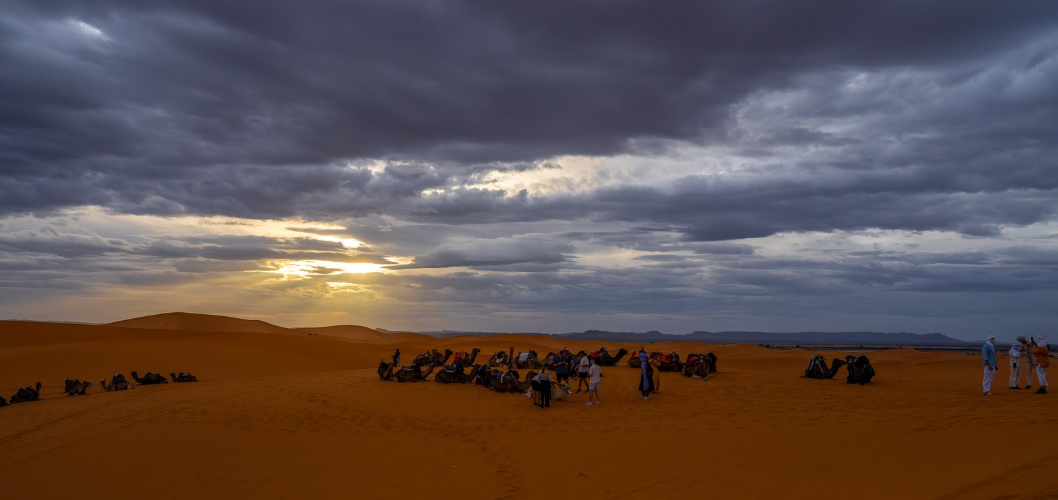
Zagora is a market town in southeastern Morocco, in the Drâa-Tafilalet region, set beside the Draa River and its long chain of palm-grove oases. Around the town, the land is mostly hamada: flat, stony desert with dark rock hills. Sand dunes start further south.
Many travelers expect tall golden dunes right outside their hotel. In Zagora, that’s not what you’ll see. Here’s how the desert changes as you head south:
| Area | Distance from Zagora | Landscape | Best for |
|---|---|---|---|
| Zagora town and palm groves | In town | Stony desert, date palms, mud-brick villages | Culture, walks, a first night in the south |
| Tinfou dunes | About 25–30 km south | A small patch of orange sand dunes | A short camel ride or sunset stop |
| M’Hamid El Ghizlane | About 95 km south (end of the paved road) | Oasis village at the edge of the open desert | Starting point for 4×4 trips and camel treks |
| Erg Chegaga | About 55–60 km beyond M’Hamid by 4×4 track | Large, remote sand sea with high dunes | A real Sahara camp night, silence, stargazing |
In short: Zagora is the gateway, Tinfou is a taste of sand, and Erg Chegaga is the deep-desert experience most people picture when they think of the Sahara.
How Do You Get to Zagora from Marrakech?
By road, Marrakech to Zagora is about 360 km and takes 7–8 hours with photo and lunch stops. The route crosses the High Atlas Mountains on the Tizi n’Tichka pass, then follows the N9 road through Ouarzazate and down the Draa Valley.
| Stage | Approx. distance | Approx. driving time |
|---|---|---|
| Marrakech → Ouarzazate (via Tizi n’Tichka) | 200 km | 4 hours |
| Ouarzazate → Agdz (via Tizi n’Tinififft pass) | 70 km | 1 hour 15 min |
| Agdz → Zagora (along the Draa Valley) | 95 km | 1 hour 45 min |
| Zagora → M’Hamid | 95 km | 1 hour 30 min–2 hours |
Doing Marrakech to Zagora in one day is possible, but it’s a long day in the car. Most of our travelers prefer to break the journey with a night in Ouarzazate or near Aït Benhaddou, so they can actually enjoy the kasbahs and the Draa Valley instead of watching them through the window.
With a private driver, you also decide where to stop: a viewpoint over the palm groves, a pottery workshop, a mint tea in a village café. That flexibility matters on this road, because many of the best stops are short and unplanned.
What to See in the Draa Valley Between Ouarzazate and Zagora
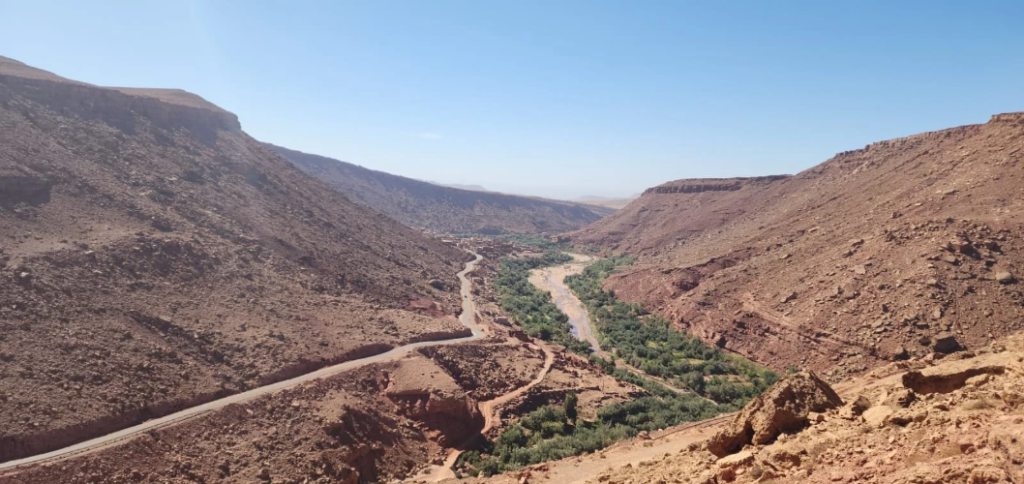
The Draa Valley is a green ribbon of date palms, kasbahs and fortified villages running roughly 100 km between Agdz and Zagora. The Draa is Morocco’s longest river, and its water is what makes this oasis possible in the middle of dry, rocky mountains.
The Tizi n’Tinififft Pass
South of Ouarzazate, the road climbs over the Tizi n’Tinififft pass (around 1,660 m). The rock layers here are folded and colored in bands of purple, ochre and gray, and it’s one of the best photo stops of the day.
Agdz and Jbel Kissane
Agdz is the first real town of the valley, sitting below Jbel Kissane, a flat-topped mountain that’s easy to recognize. Just past the town, a viewpoint looks down over the first big palm grove of the Draa.
Ksar Tamnougalt
A few kilometers from Agdz, Tamnougalt is one of the oldest fortified villages still standing in the valley. Its earthen lanes, covered passages and old kasbah give you a real sense of how people lived here when caravans passed through. It’s best visited with a local guide, who can open the doors that are otherwise closed.
The Palm Groves and Kasbahs
From Agdz to Zagora, the N9 follows the river closely. You’ll pass ksour (fortified villages), crumbling and restored kasbahs, and fields of henna, barley and vegetables growing in the shade of date palms. Early morning and late afternoon light is the best time to photograph them.
Things to Do in and Around Zagora
See the “52 Days to Timbuktu” Sign
At the edge of town, a painted sign shows the distance to Timbuktu: 52 days by camel. It’s a reminder that Zagora was once a stop on the trans-Saharan caravan routes linking Morocco to West Africa, trading salt, gold, dates and manuscripts.
Watch Sunset from Jebel Zagora
The rocky mountain opposite the town, Jebel Zagora, gives a wide view over the palm groves and the desert to the south. The walk or drive up is worth it at sunrise or sunset, when the heat drops and the light turns warm.
Visit the Zagora Souk
Zagora’s weekly market (traditionally on Wednesdays and Sundays) is where people from surrounding villages come to buy and sell vegetables, spices, livestock and household goods. It’s a working market, not a tourist show, and it’s a good place to taste local dates.
Tamegroute: An Old Library and Green Pottery
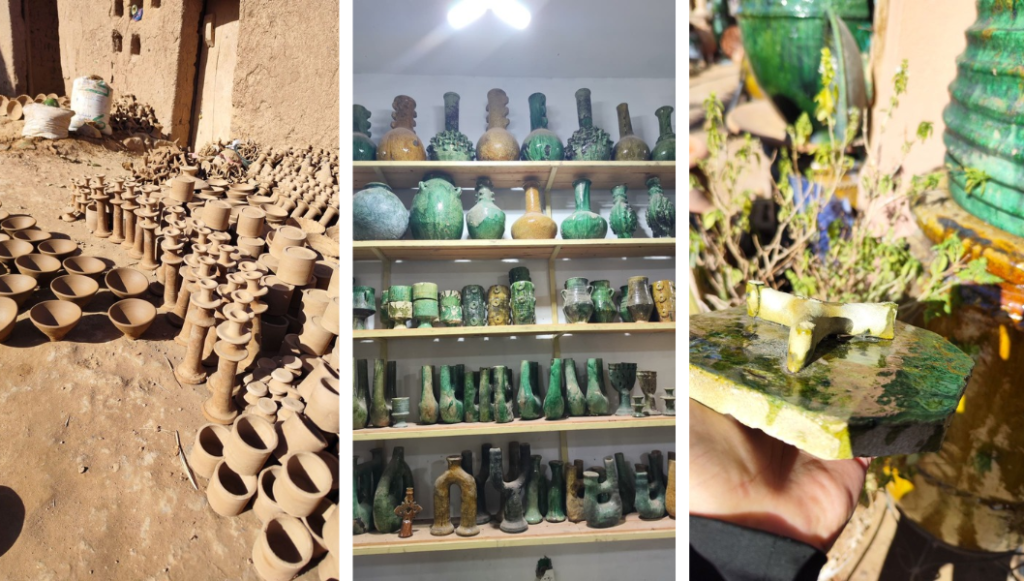
Tamegroute, about 20 km south of Zagora, is famous for two things: an old Sufi library and its green-glazed pottery.
- The library of the Zawiya Naciria: From the 17th century, the Naciri Sufi brotherhood made Tamegroute a center of learning. Its library still keeps a collection of old manuscripts on religion, law, astronomy and medicine, some displayed behind glass. Opening hours vary, so ask your driver to check locally.
- The pottery cooperative: Potters here still shape, glaze and fire their work in traditional wood-fired kilns. The deep green glaze varies from piece to piece, which is why no two bowls look the same. Watching the process is free; buying is up to you.
- The underground ksar: Parts of the old village are built with covered lanes that stay cool in summer. A local guide can walk you through them.
Tinfou Dunes
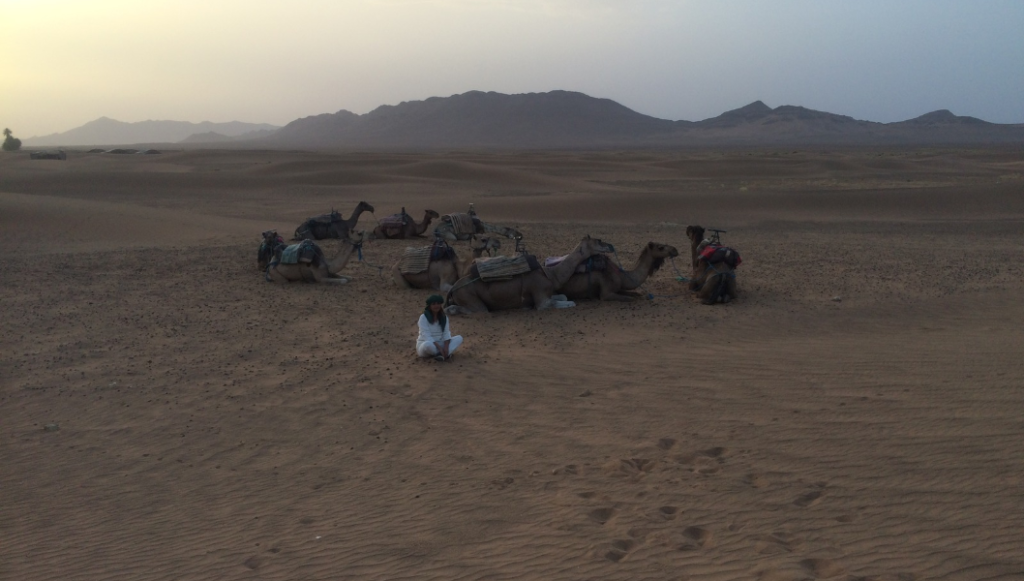
Just past Tamegroute, the Tinfou dunes are a small patch of soft orange sand rising from the stony plain. They’re not the high dunes of Erg Chegaga or Merzouga, but they’re a good spot for a short camel ride, sandboarding with kids, or a sunset if you’re not continuing deeper into the desert.
Zagora Desert or Erg Chegaga: Which Should You Choose?
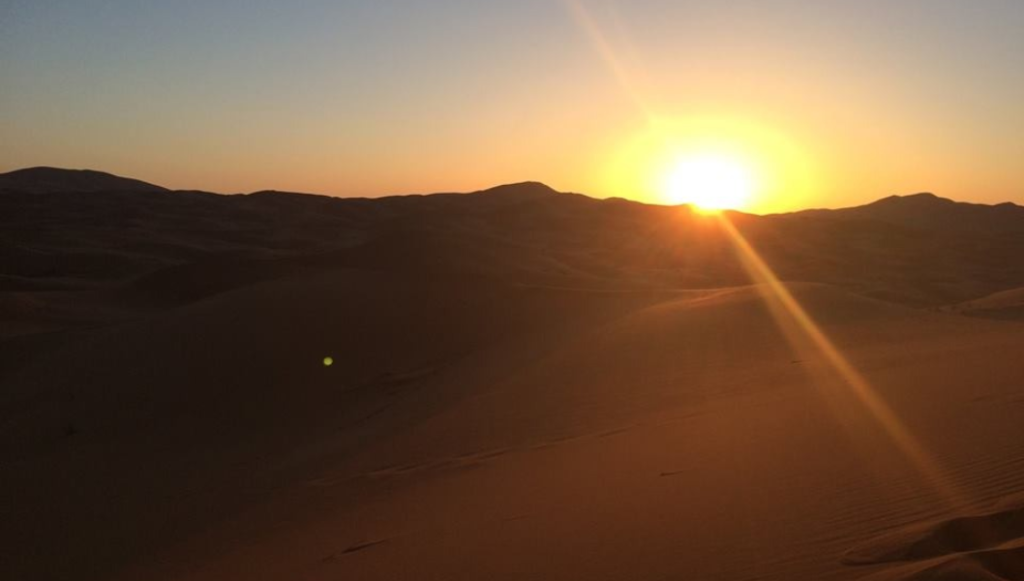
If you want a real night among high dunes, go on to Erg Chegaga. If you want culture and the Draa Valley with only a taste of sand, Zagora and Tinfou are enough. Many private itineraries combine both: Zagora on the way south, Erg Chegaga for the desert night.
| Zagora and Tinfou | Erg Chegaga | |
|---|---|---|
| Dunes | Small dunes at Tinfou; mostly stony desert | Large sand sea with high dunes |
| Access | Paved road all the way | Paved road to M’Hamid, then 4×4 track |
| Atmosphere | Oasis towns, markets, villages | Remote, quiet, very few lights at night |
| Minimum time from Marrakech | 2 days (long driving days) | 3 days; 4 days is more comfortable |
| Best for | Culture lovers, shorter trips, travelers who don’t want off-road driving | Couples, families and photographers who want the full Sahara experience |
If you’re still deciding between desert regions, our guide to Erg Chegaga desert tours explains the camps and the drive in more detail.
When Is the Best Time to Visit Zagora?
The best months for the Zagora desert are October to April, when days are warm and nights are cool or cold.
- October–November: Pleasant days and the date harvest season in the Draa Valley.
- December–February: Sunny, mild days but cold nights, especially in a desert camp. Bring warm layers.
- March–April: Warm days and green palm groves. Spring winds can bring sand into the air on some days.
- May–September: Very hot. Summer temperatures in Zagora regularly pass 40°C (104°F). If you travel then, plan sightseeing for early morning and late afternoon.
What to Pack for Zagora and the Draa Valley
- Layers: a light shirt for the day and a warm fleece or jacket for the evening (winter nights are cold).
- A scarf or cheche to protect your face from sun and wind; you can also buy one locally.
- Sunglasses, sunscreen and a hat.
- Closed shoes for village lanes and sandals for the dunes.
- Cash in Moroccan dirhams for small purchases in villages, where cards are often not accepted.
- A small headlamp if you’re spending a night in the desert.
How Zagora Fits into a Private Tailor-Made Morocco Tour
We rarely send travelers to Zagora as a stand-alone stop. It works best as part of a southern loop where each day has a reasonable amount of driving. Here’s one example of how the Draa Valley and Erg Chegaga can be combined.
| Day | Route | Highlights |
|---|---|---|
| Day 1 | Marrakech → Aït Benhaddou → Ouarzazate | Tizi n’Tichka pass, guided visit of Aït Benhaddou |
| Day 2 | Ouarzazate → Agdz → Zagora | Tizi n’Tinififft pass, Ksar Tamnougalt, Draa Valley palm groves |
| Day 3 | Zagora → Tamegroute → M’Hamid → Erg Chegaga | Tamegroute library and pottery, 4×4 into the dunes, desert camp night |
| Day 4 | Erg Chegaga → Foum Zguid → Marrakech | Sunrise in the dunes, Lake Iriki dry lake bed, return north. |
Because the tour is private, you can slow it down (an extra night in the Draa Valley), add Skoura and the Dades Valley, or continue to Merzouga and Fes instead of returning to Marrakech. Your driver stays with you for the whole trip, so changes along the way are easy.
Ready-made options to start from:
- 3-day Erg Chegaga desert tour for a shorter trip.
- 4-day Chegaga desert tour from Marrakech at a more relaxed pace.
- Private tours of southern Morocco if you want the kasbahs, valleys and desert in one longer loop.
Our private tours start from US$272 per person per day, based on 2 travelers. The final price depends on your dates, the length of the trip and the accommodation level you choose.


Zagora Desert: Frequently Asked Questions
Are there sand dunes in Zagora?
Not in the town itself. Zagora is surrounded by stony desert and palm groves. The nearest sand dunes are at Tinfou, about 30 minutes south, and they’re small. For high dunes, you need to continue past M’Hamid to Erg Chegaga, which requires a 4×4 for the last part of the journey.
Is Zagora worth visiting?
Yes, especially if you enjoy culture and landscapes as much as dunes. The Draa Valley drive, Ksar Tamnougalt and Tamegroute’s library and pottery are highlights of southern Morocco. Zagora is less impressive if you only want big dunes, so we usually pair it with a night in Erg Chegaga.
How many days do you need for Zagora and the Draa Valley?
Plan at least 3 days from Marrakech if you want to see the Draa Valley properly and spend a night in the desert. Four days allows a comfortable pace with Erg Chegaga. A 2-day trip to Zagora is possible but involves long driving days and only a short time on the sand.
Is Zagora safe for tourists?
Zagora is a calm market town used to welcoming visitors. As anywhere, use normal precautions with valuables and dress modestly in villages. Before you travel, check your government’s current travel advice for Morocco (for US travelers, the US State Department’s Morocco page), and travel with a licensed driver and guide when going off-road into the desert.
Can families with children visit the Zagora desert?
Yes. The Draa Valley, a short camel ride at Tinfou and a desert camp night are popular with families. With a private tour, we can plan shorter driving days, more breaks and family tents at camp. Summer heat is the main thing to avoid with young children.
Plan Your Private Trip Through the Draa Valley
Every traveler sees the south differently. Some want a slow road with kasbah nights and village walks; others want to reach the dunes as quickly as possible. Tell us your dates, how many people are traveling and what you’d like to see, and we’ll send you a free personalized itinerary and quote, with no obligation.
Request your free tailor-made itinerary
📅 Last updated: