Morocco Travel Tips for First-Time Visitors (From a Local Tour Operator)
A trip to Morocco is unlike anything else in the world. Within a single journey, you can wander through centuries-old medinas, cross the atlas mountains on winding passes, sleep under billions of stars in the sahara desert, and sip fresh-squeezed orange juice on the Atlantic coast. It’s a country where Amazigh (Berber), Arab, Andalusian, and French influences blend into something you won’t find in other countries.
These morocco travel tips come from years of experience running private tours across the country. As a locally based Moroccan tour operator specializing in Sahara desert tours and private itineraries, we see the same tourist mistakes repeated season after season. This guide shares all the tips we wish every visitor knew before boarding their flight-practical, honest, and based on what actually happens on the ground.
At Chegaga Travel, we’ve guided travelers from dozens of countries through Morocco’s imperial cities, Atlas Mountains, coastal towns, and Sahara Desert. The advice in this guide comes from real situations our team encounters every season, not just information gathered from travel forums or guidebooks.
A few things to note: These travel tips are designed for first-time visitors to Morocco. Visa rules, prices, and transportation schedules can change, so always double-check details before departure.
Here are the essentials at a glance:
- Withdraw cash on arrival. ATMs are available but not always easy to find outside major cities.
- Dress modestly. Especially in medinas, villages, and religious sites.
- Don’t drink tap water. Stick to bottled water from day one.
- Ask before taking photos of people. Always.
- Be ready to bargain. It’s expected in souks and with some taxi drivers.
- Use licensed guides. Avoid random street offers.
- Arrange airport pickup. Skip the taxi chaos on your first day.
- Buy a local SIM or eSIM. Affordable data makes navigation and translation far easier.
- Expect cultural rhythms. The call to prayer five times daily, Friday closures, and Ramadan all shape daily life.
- Keep your itinerary flexible. Morocco rewards travelers who leave room for spontaneity.
When to Visit Morocco and How Long to Stay
Morocco’s climate shifts dramatically between coast, mountains, and desert. Spring brings green valleys and wildflowers; summer pushes temperatures past 40°C in the interior; autumn mirrors spring’s comfort; and winter delivers snow to the atlas mountains while coastal cities like Agadir stay mild.
- Spring (March–early June) and autumn (mid-September–early November) are the best times to visit Morocco. Daytime temperatures hover around 20–28°C, ideal for city sightseeing and desert excursions. These are also the best times to visit Morocco overall, according to most experienced guides.
- Desert nights stay cold. Even in April and October, temperatures near Erg Chegaga or Merzouga can drop to 5–10°C (41–50°F). Pack layers regardless of season.
- Summer (June–August) brings extreme heat. Summer temperatures can be extremely high in Morocco-Marrakech and the Sahara regularly exceed 40°C (104°F), making midday exploration exhausting for first-timers.
- Winter (December–February) can be quite cold, especially in mountainous areas. High passes like Tizi n’Tichka may see snow, but Marrakech and Agadir offer pleasant winter sun.
- Ramadan: shifts roughly 11 days earlier each year. Check the exact dates for your travel year before planning your itinerary.. During Ramadan, many restaurants reduce daytime hours, and public eating or drinking during daylight may draw attention. Evening iftar meals are vibrant. First time visitors can enjoy Ramadan if prepared for slower days and lively nights.
- 5–7 days: Focus on one or two cities (Marrakech + Fes) plus a short desert or atlas mountains day trip.
- 10 days: A classic circuit-Casablanca to Fes to Marrakech with one or two nights in the sahara desert. See our 10 Days in Morocco Itinerary for a detailed route.
- 14+ days: A slower, off-the-beaten-path journey including Erg Chegaga, Dades Valley, and coastal towns like Essaouira. Traveling at a relaxed pace allows for better experiences in Morocco.
Culture, Etiquette, and Dress Code in Morocco
Morocco is a predominantly muslim country that warmly welcomes visitors, but local customs matter. Understanding basic moroccan culture goes a long way-not because anyone will quiz you, but because respect opens doors that money alone cannot.
Etiquette essentials:
- Always greet people with “Salam alaykum” or “Bonjour” before asking for anything. Many moroccans appreciate the effort, even if you stumble over pronunciation.
- Use your right hand to pass money, food, or gifts. Eating with your right hand is customary in Morocco. The left hand carries different connotations and using it can be considered impolite.
- Avoid public displays of affection-kissing, long hugs-in medinas, rural areas, and small towns. Major cities are more relaxed, but discretion is wise.
- Be discreet about alcohol, especially near mosques and in smaller communities.
- Friday is the Islamic holy day; shops may close during afternoon prayers. Plan shopping and errands around this.
- Maintain respectful eye contact during conversations, but don’t stare, especially at local women.
Dress code:
There is no formal legal dress code for tourists, but you should dress modestly in most places. Shorts and tank tops are common among tourists in Marrakech, but you’ll feel more comfortable-and receive warmer welcomes-with a bit more coverage.
- In Marrakech’s old town and other medinas, women dress best in loose trousers or long skirts with t-shirts that keep shoulders covered. Light scarves are helpful. Many Moroccan women wear hijabs, while others choose not to. Visitors are not expected to dress like locals, but modest clothing is appreciated in conservative areas.
- Men should avoid going shirtless or wearing tank tops away from beaches. In most other places, long shorts and a t-shirt work fine.
- In conservative villages, around holy sites, and when visiting families, both men and women should cover shoulders and knees. Visitors must cover shoulders and knees at religious sites. For the hassan ii mosque in Casablanca-one of the few mosques in Morocco open to non muslims-cover legs above the ankle and avoid tight or transparent garments.
- In rural areas, conservative dress is expected. Around the atlas mountains and Erg Chegaga, loose, light layers that cover knees and shoulders are the safest choice.
- At riad pools and private sahara desert camps, western swimwear is acceptable. Use a cover-up or kaftan when walking through common areas.
Social norms and hospitality:
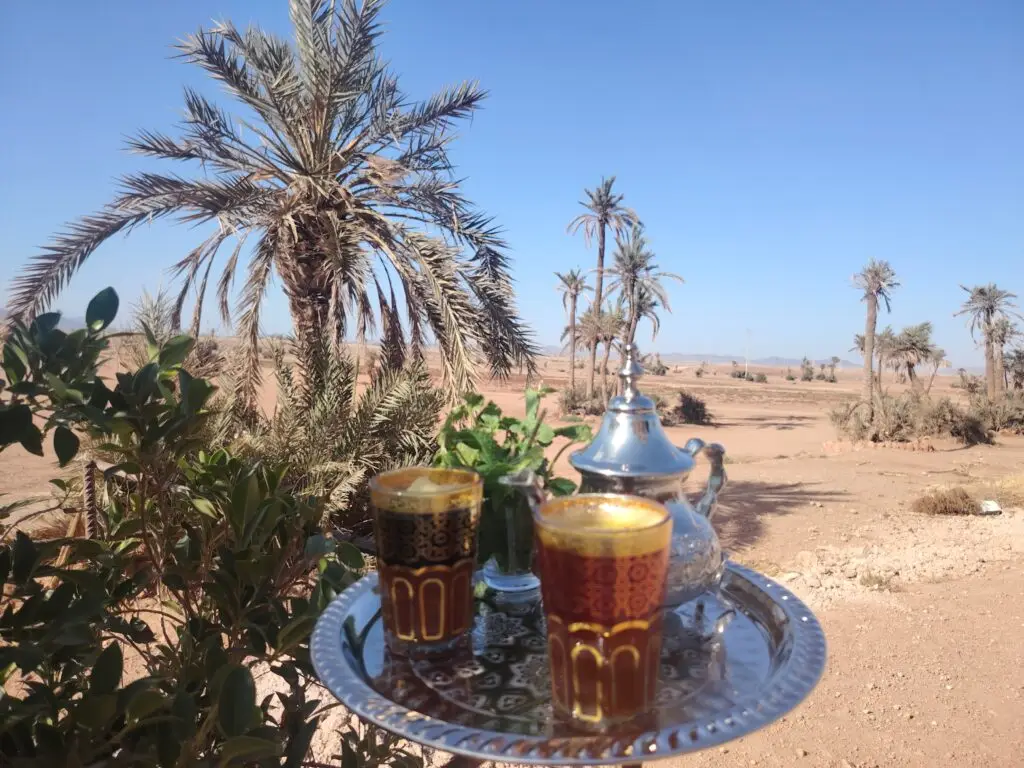
- If invited for mint tea or a meal, remove shoes if your hosts do. Accept at least a sip of tea, even if you’re full-hospitality runs deep in moroccan culture. It’s polite to refuse once or twice before accepting, which is part of the local etiquette rhythm.
- Compliment the food and the home. These gestures mean more than you might expect.
Money, Payments, and Avoiding Tourist Traps
The local currency is the moroccan dirham (Dh)-a closed currency, meaning you generally obtain it inside the country. You can’t easily buy dirhams abroad, so plan to exchange or withdraw upon arrival. Currently, 1 USD equals approximately 9 Dh.
Getting cash:
- Withdraw cash at ATMs on arrival at airports like casablanca airport (CMN) or Marrakech (RAK). Major banks like BMCE and Attijariwafa have machines in terminals. ATMs are available but not always easy to find outside major cities.
- Bring a backup card and some euros or us dollars in case an ATM is out of service. Currency exchange offices are common in tourist areas-stick to official bureaux de change or bank branches, never street changers.
- In small oases, desert villages, and the Erg Chegaga region, ATMs are absent. Get enough cash in cities like Marrakech, Ouarzazate, or Zagora. Carry cash for small purchases in Morocco, and keep small notes handy-exact change is often required for small purchases.
Paying and tipping:
- Tipping service staff is customary in Morocco. Leave roughly 10% in sit-down restaurants, round up in cafés, and give small coins to porters, luggage handlers, and bathroom attendants. Tip drivers and your tour guide at the end of multi-day tours.
- Street food, small taxis, and local markets expect cash. Card machines are more common in modern restaurants, hotels, and riads.
Haggling and bargaining:
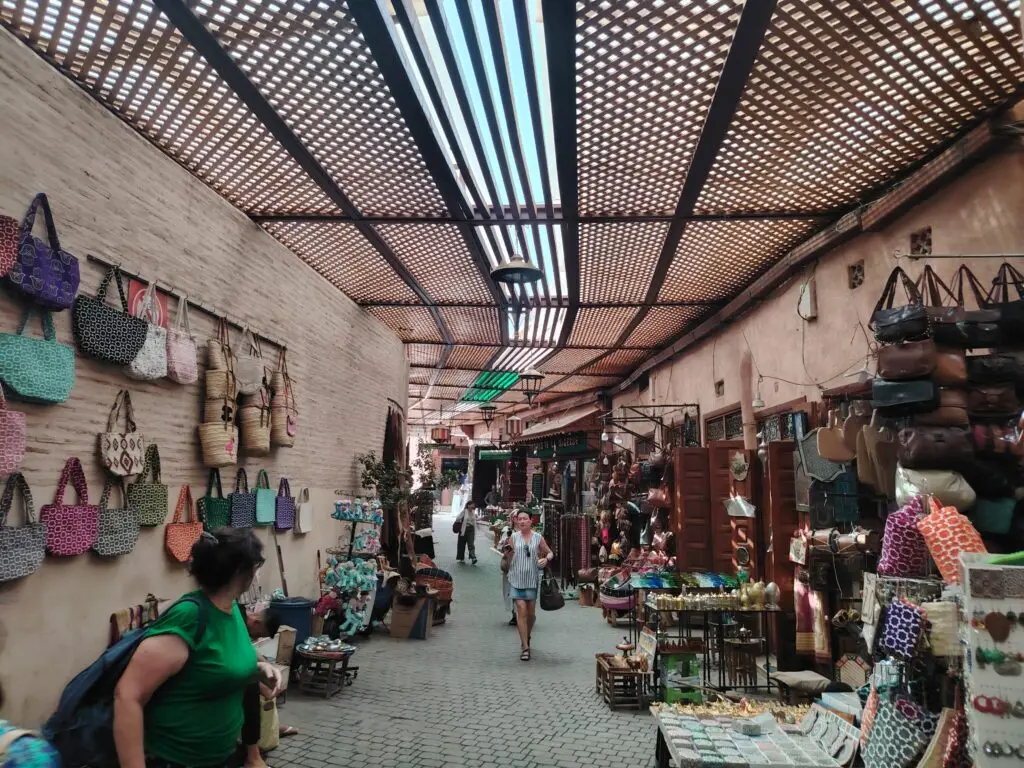
One mistake we frequently see on our tours is travelers accepting the first price they hear in a souk. In most traditional markets, negotiation is part of the shopping culture, and sellers generally expect visitors to make a counteroffer. If a shop owner in Marrakech’s souks quotes you 600 Dh for a pair of babouches, that’s not the best price-it’s the opening act. You can often negotiate prices down to 60-70% of the initial price. Never accept the first offer given to you in negotiations.
- Start with a counteroffer lower than the asking price-roughly 40–50% of what’s quoted. Meet somewhere in the middle with a smile.
- Expect to be haggled or harassed while shopping in souks. Stay calm and friendly. The walk-away tactic works: showing you’re ready to leave often brings the price down.
- Be prepared for aggressive haggling in souks. You can negotiate almost anything in a market setting-leather bags, lanterns, rugs, spices.
- As a side note, bargaining is not expected in supermarkets, established cafés, or at petrol stations.
- Watch out for “commission stops” where unlicensed guides steer tourists to specific shops so the shop owner pays them a cut. Be clear with any guide about not wanting shopping detours.
Common scams to watch for:
- Taxi drivers refusing to use the meter or quoting inflated fares. Insist on the meter, or agree on a price before entering.
- It’s rude to take help from strangers without payment-the “helpful stranger” who guides you somewhere and then demands more money is a well-known pattern. Avoid accepting help from strangers on the street. If you need the right direction, ask a shopkeeper or police officer instead.
- Money changing on the street risks fake bills. Use official exchange offices only.
Common Mistakes First-Time Visitors Make in Morocco
Most first-time visitors enjoy Morocco more when they avoid a few common planning mistakes. Here’s what we see go wrong most often:
- Cramming too many cities into a short trip and spending the entire trip in transit rather than actually experiencing each place.
- Underestimating travel time between destinations. Marrakech to Fes is roughly 7 hours by car. Marrakech to the sahara desert takes multiple days on winding roads through mountain passes. Distances are longer than the map suggests.
- Arriving without enough cash for smaller towns, markets, and local services where card payments don’t exist.
- Packing only summer clothes and forgetting that evenings in the atlas mountains and sahara desert can be genuinely cold-even in shoulder seasons.
- Booking from unofficial street sellers instead of licensed operators. This is especially risky for desert camps, camel treks, and off-road tours where safety and logistics matter.
- Photographing people without asking permission first. This applies everywhere, but especially to local women and children in non-touristic villages.
- Expecting every merchant to accept credit cards. Outside major cities, cash is king.
- Accepting the first quoted price in souks without polite negotiation. The shop owner expects you to counter.
- Forgetting to buy a local SIM card or eSIM upon arrival, then struggling with navigation in unfamiliar medinas.
Flexibility, patience, and cultural respect usually lead to the best travel experiences in Morocco. Leave buffer days in your itinerary-Morocco rewards those who slow down. For practical route ideas and recommended trip lengths, see our Morocco Itineraries guide before finalizing your travel plans.
Safety, Health, and Respectful Photography
Most trips to Morocco are safe and trouble-free, especially on organized private tours. But first time visitors should be aware of a few things. For a deeper look, read our guide on Is Morocco Safe?.
General safety:
- Stay aware of surroundings to ensure safety in crowded areas. Pickpocketing happens in busy medinas, train stations, and squares like Jemaa el-Fna. Use a money belt or cross-body bag and keep your passport locked in your riad safe.
- Don’t walk completely alone in unlit alleys late at night. Use petit taxis or arrange transfers through your accommodation.
Women travelers:
- Solo female travelers: dress modestly to reduce unwanted attention, walk with confidence, and ignore catcalls rather than engaging. Staying in central riads and using vetted drivers makes a real difference.
- For a first trip, traveling with a local operator or driver-guide can greatly simplify both safety and logistics.
Health and water:
- Don’t drink tap water in Morocco. Use bottled water for drinking and brushing teeth, especially during your first day. Carry toilet paper-not every restroom provides it.
- Avoid unpeeled raw salads and juices from questionable stands at the beginning of your trip. Start with cooked tagines and grilled food until your stomach adjusts. An upset stomach during the first few days is common; pack rehydration salts, anti-diarrheal medication, painkillers, and any personal prescriptions.
- Bring SPF 30+ sunscreen, a wide-brimmed hat, and at least 1.5L of water when sightseeing. In places like Marrakech in July or the sahara desert around Erg Chegaga, daytime temperatures can exceed 40°C (104°F). Sightsee early morning and late afternoon. Winter can be quite cold, especially in mountainous areas, so pack a warm layer for those regions.
Taking photos and photography etiquette:
- Always ask before taking photos of people, especially women and children. Accept “no” graciously. Some people-snake charmers, water sellers on Jemaa el-Fna-expect a small tip for posed photos.
- Never photograph police, military personnel, or certain government buildings. Drones are heavily restricted in Morocco and require pre-approved permits.
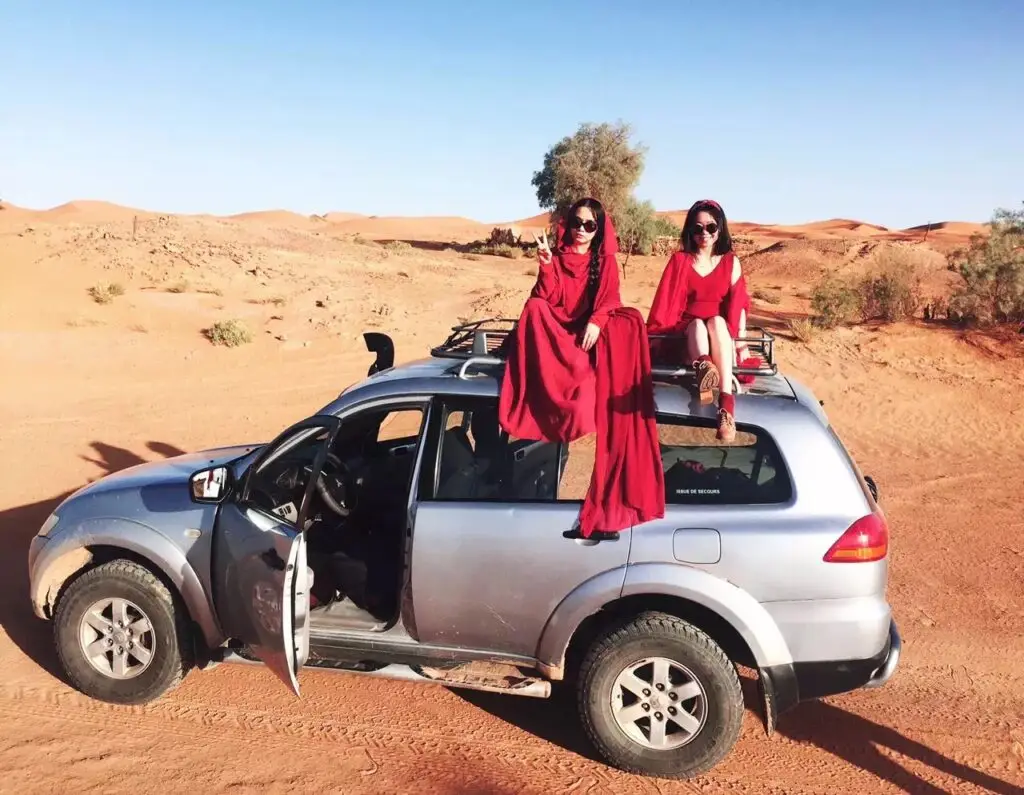
Joining an organized sahara desert trip with a licensed operator increases safety in remote areas compared to self-driving off-road without experience.
Transport, Getting Around, and Day Trips
Morocco’s transport network mixes modern trains, reliable intercity buses, shared grand taxis, domestic flights, private drivers, and 4×4 vehicles for desert and mountain tracks. Knowing which to use-and when-saves time and stress.
Arriving in Morocco:
- Common entry points include Casablanca, Marrakech, Fes, Agadir, and Tangier. First time visitors often start in Casablanca or Marrakech.
- Book an airport pickup through your riad or tour operator. It eliminates the confusion of haggling with taxi drivers the moment you land at casablanca airport or Marrakech.
- Many travelers begin their Morocco adventure in Casablanca. Our Casablanca Trips provide an easy and authentic introduction to the country’s culture, architecture, and history.
Trains and buses:
- ONCF trains connect Casablanca–Rabat–Fes–Tangier, including the Al Boraq high-speed line between Casablanca and Tangier. Reliable and affordable.
- Bus companies like CTM and Supratours cover routes where trains don’t reach-Marrakech to Essaouira, Atlas valleys, and desert-edge towns.
Taxis:
- Petit taxis operate within cities (metered, color-coded). Grand taxis run shared routes between towns-they depart when seats fill.
- If the meter is “broken,” agree on a fare before entering. Within Marrakech, short rides rarely exceed 20–30 Dh.
- In medinas, taxis cannot enter the narrow lanes. Expect a short walk with luggage to reach your riad-this is normal everywhere.
Car rental and driving:
- Renting a car offers flexibility on paved highways and coastal routes. Driving in major cities such as Casablanca and Marrakech can feel hectic for first-time visitors due to heavy traffic and different driving habits.
- Avoid night driving on rural roads due to pedestrians, animals, and unlit vehicles.
- For remote regions like Erg Chegaga or deep in the Anti-Atlas, a 4×4 with an experienced local driver is far safer than self-driving off-road.
Day trip ideas for first-timers:
- From Marrakech: atlas mountains villages like Imlil, Ouzoud Waterfalls, an Agafay desert sunset experience, or a guided day tour to Essaouira.
- From Fes: a day trip to the Roman ruins of Volubilis and the imperial city of Meknes.
- For the sahara desert, a rushed same-day excursion misses the point. Two nights in the Sahara is recommended for a full experience-enough time for sunset, sunrise, stargazing, and a proper camel ride.
Packing, Dress Modestly, and What to Bring for the Sahara Desert
Morocco’s climate varies wildly between coast, mountains, and desert, so layers are essential. Pack for three climates, not one.
General packing:
- Lightweight, breathable fabrics (cotton, linen) in a mix of short and long sleeves for city sightseeing.
- A light jacket or fleece for evenings year-round-especially in the atlas mountains and desert camps where temperatures drop sharply after sunset.
- Comfortable closed-toe walking shoes for cobbled medina streets. Sandals for riads and beaches.
For female travelers:
- Two or three maxi or midi dresses with sleeves, loose trousers, long skirts, and a couple of light scarves. These work for city visits, mosque sites, and village walks where you need shoulders covered.
- Bikinis are fine at riad pools, hotel pools, and private sahara desert camps. Use a cover-up when walking between rooms or through villages.
Sahara desert packing:
- A scarf or cheche to wrap around your head and face against sun and sand. Your guide can show you how to tie it-it’s part of the experience.
- Sunglasses, SPF 30+ sunscreen, lip balm, and a reusable water bottle.
- A small backpack, power bank for charging electronics (desert camps may have limited solar power), and a headlamp or small torch for walking around camp at night. Small wild animals like scorpions exist in the desert-don’t walk barefoot in the dark.
Electronics and connectivity:
- Moroccan plugs use types C and E (220V). Bring a universal adapter.
- Buy a local SIM card or eSIM for navigation and translation. Many desert camps now have limited mobile signal, but don’t count on fast Wi-Fi.
Where to Go on Your First Trip to Morocco (With Sample Experiences)
We specialize in custom private tours, so rather than a rigid daily plan, here are the regions and experiences that make a first trip to Morocco unforgettable.
Classic first-time destinations:
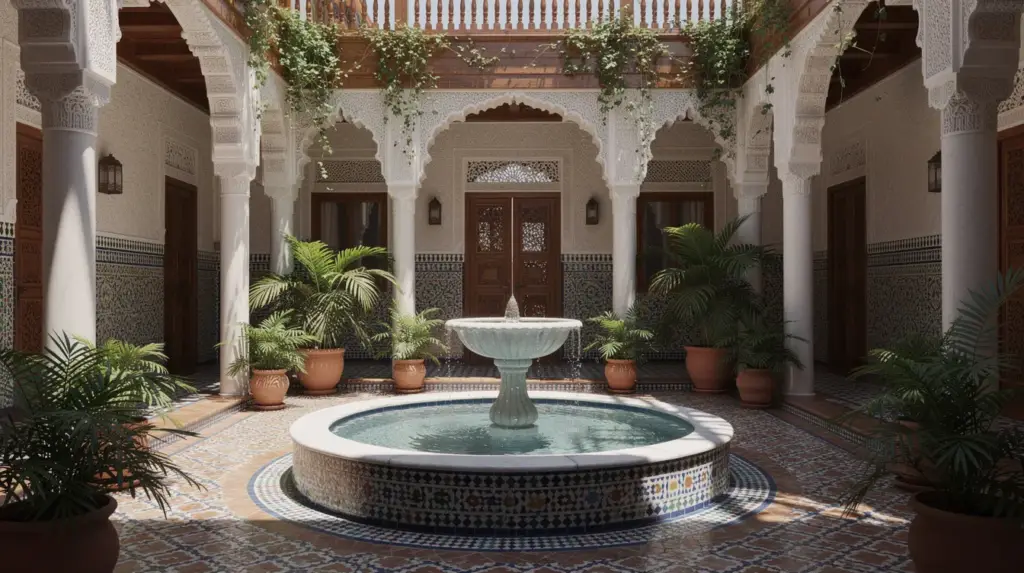
- Marrakech: A sensory introduction-the medina’s old town alleys, Jemaa el-Fna square, Bahia Palace, and rooftop terraces. Riads offer beautiful spaces with traditional Moroccan decor, and many riads provide mint tea upon arrival for guests. Staying in a riad enhances your cultural experience in Morocco. Riad rooms often feature intricate tile work and handcrafted furnishings, and rooftop terraces in riads provide stunning views of the city. A guided half-day walking tour helps first time visitors orient themselves. Use local guides for enhanced navigation in Moroccan medinas.
- Fes: The medieval medina is a maze. Tanneries, artisan workshops, and a licensed tour guide transform what could be overwhelming into something genuinely helpful and fascinating.
- Chefchaouen: Blue-washed streets, a relaxed pace, and great opportunities for taking photos-just always ask permission from locals before pointing your camera.
The Sahara desert:
This is where a trip to Morocco becomes pure magic. The popular Merzouga dunes are more accessible but busier. The wilder, more remote Erg Chegaga region offers real solitude-a magical place where you may not see another tourist for hours.
- Sahara desert camps offer luxury tents with hot showers alongside more basic options. Always verify that your camp is deep in the dunes, not just on the desert edge near town.
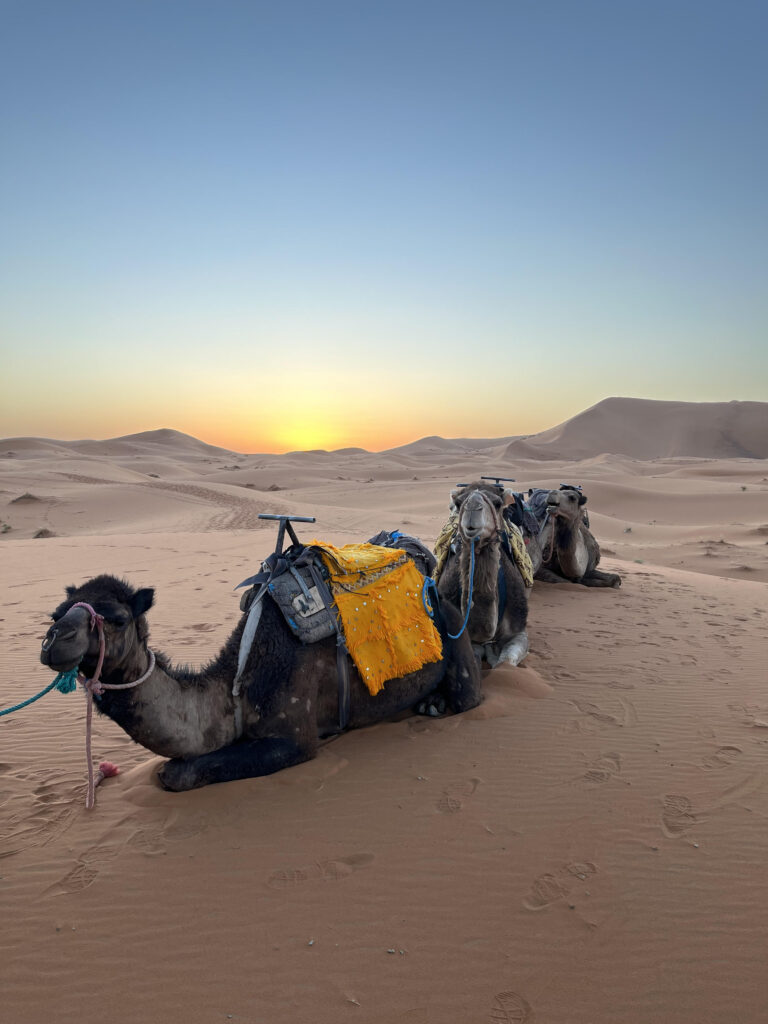
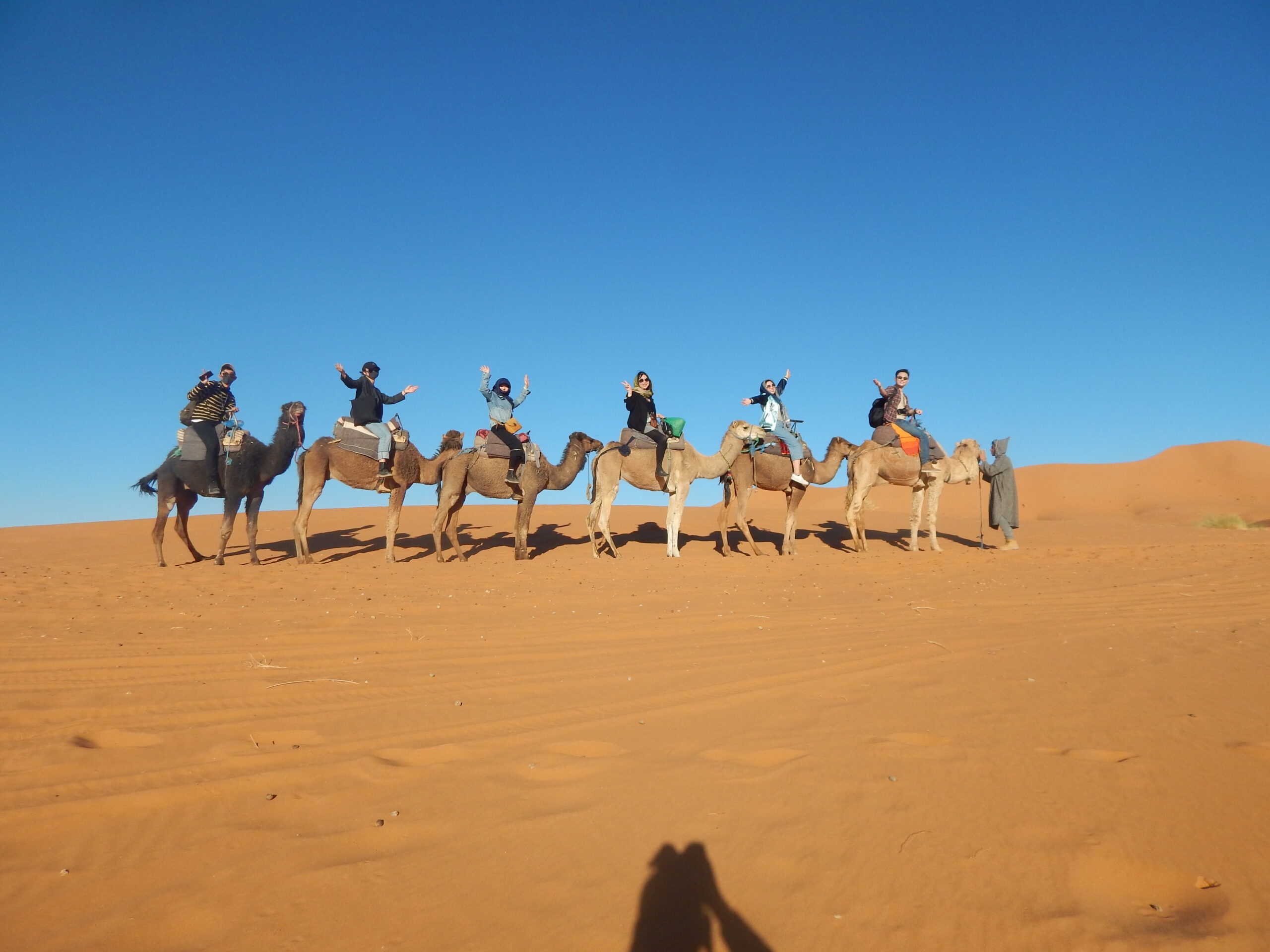
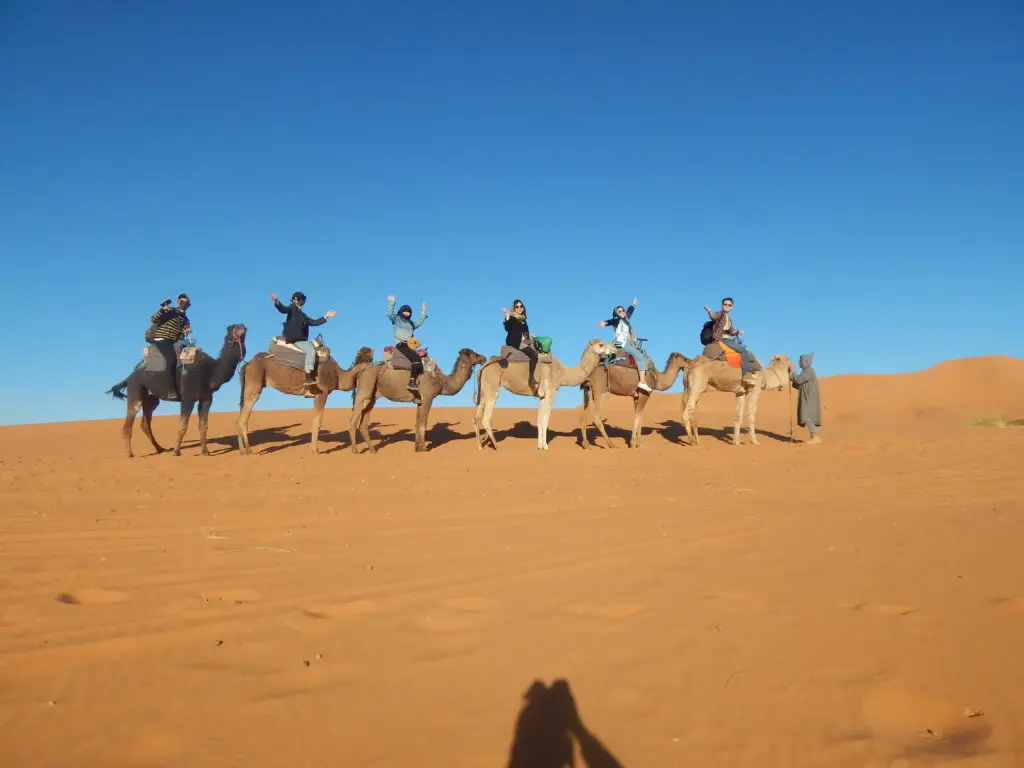
- Camel rides in the Sahara typically last 1.5 to 2 hours-long enough to feel the rhythm without exhaustion. A camel ride at sunset or sunrise is one of those experiences that stays with you.
- Sandboarding is a popular activity in the Sahara desert. Jeep tours in the Sahara visit nomadic tribes and fossil sites. Stargazing far from any city lights is another highlight.
- Attractions beyond urban areas include the Sahara desert and the High Atlas Mountains. Both deserve at least a night or two each.
Off-the-beaten-path:
- Atlas mountains: small village stays, short hikes, tea with local families. This is Morocco at its most authentic-a nice place to decompress between busy city days.
- Draa Valley and Skoura: palm groves, ancient mud-brick ksars, and quiet boutique lodges.
A local operator can help sequence cities, mountains, and sahara so travel days stay reasonable and you’re not spending your next trip staring out a car window.
Digital Prep, Language Basics, and Using Guides Wisely
A little preparation with apps and language turns a stressful first trip into a smooth one.
Language:
- Moroccan Arabic (Darija), Amazigh (Berber), and French are widely spoken. Many moroccans in tourist areas speak english, but it’s not guaranteed everywhere.
- Learn a few phrases: “Salam” (hello), “Shukran” (thank you), “B-shhal?” (how much?). Basic French numbers help at markets. Use google translate offline mode for trickier conversations-download the Arabic and French packs before your trip.
Digital tools:
- Download offline Google Maps or Maps.me before visiting remote regions. Save riad addresses and desert meeting points in both Arabic and French to show taxi drivers.
- A currency converter app helps you think in dirhams quickly. At 1 USD to roughly 9 Dh, mental math gets easier after the first day.
Hiring guides:
- Licensed local guides add real value for medina tours, sahara desert excursions, atlas hikes, and historical sites like Ait Ben Haddou. Book through licensed agencies, riads, or directly with local tour operators-not through random offers in the street.
- Good guides don’t rush guests or force shopping stops. They adapt to your interests-food, architecture, photography.
- If logistics feel overwhelming, consider booking a fully private, custom itinerary combining cities, atlas mountains, and Erg Chegaga or other sahara desert areas. Our Morocco Tailor Made Tours page explains how this works, with all transfers and guides included.
Internet, SIM Cards, and Staying Connected in Morocco
Mobile internet is affordable and reliable in most Moroccan cities and tourist destinations. Having a data connection transforms your experience-from real-time navigation to translating menus.
- Providers: Maroc Telecom (best rural coverage), Orange Morocco, and Inwi. All offer tourist-friendly data plans.
- Buying a SIM: Available at airports, official stores, and city-center shops. Bring your passport for registration. Basic 5–10 GB packages cost modest amounts-usually under 100 Dh.
- eSIM options: Increasingly reliable for travelers who want instant connectivity before arrival. Compare available eSIM providers before your trip to find the best coverage and pricing for your Morocco itinerary.
- Coverage gaps: Remote parts of the sahara desert and atlas mountains may have weak or no signal. Download offline maps and key information before heading into remote areas.
- Recommended apps: Google Maps (offline), google translate (offline packs), XE Currency Converter, and WhatsApp for communicating with riads and drivers.
Having internet access makes transportation, communication, and planning your entire trip significantly easier-especially when you need to confirm a pickup time or find the nearest ATM.
We hope these Morocco travel tips help you plan a smoother, safer, and more rewarding trip.
Once you have finished planning, browse our recommended Morocco Multi Day Tours to find the itinerary that best matches your interests and travel duration.
After reading these travel tips, explore our best Morocco tour packages to enjoy a stress-free journey planned by local travel experts.
Morocco Travel Tips FAQ
Can I brush my teeth with tap water in Morocco?
Many travelers use bottled water during their first few days, especially if they have sensitive stomachs. Tap water in major cities like Rabat and Casablanca is technically treated, but the mineral content differs from what most visitors are used to. To be safe, stick to bottled water until your system adjusts. It’s one of those things that seems overly cautious until you experience an upset stomach on your second day.
How far does $100 go in Morocco?
Morocco can be very affordable. With $100 (roughly 900 Dh), a budget traveler could cover a night in a clean guesthouse (150–250 Dh), three meals including a tagine lunch and street food dinner (100–200 Dh), a petit taxi ride (20–30 Dh), museum entry, and still have money left. Mid-range travelers might spend that on a riad room and a guided day tour. Your best advice is to carry a mix of small notes and larger bills.
What should I avoid doing in Morocco?
Photographing people without permission, disrespecting local customs, public intoxication, and ignoring dress expectations in conservative areas. Also avoid trusting unlicensed “guides” who approach you on the street-they often expect payment or steer you toward commission shops.
Is Morocco safe for solo female travelers?
Morocco is generally safe. Thousands of women travel solo here every year. Dress modestly in conservative regions, stay in well-reviewed riads, use licensed guides, and avoid deserted alleys after dark. Confidence and polite firmness go a long way.
Should I carry cash or credit cards?
Cards are accepted in hotels, upscale restaurants, and some shops in major cities. But cash remains essential for souks, taxis, rural areas, and small businesses. Don’t expect to pay by card in a village shop or at a desert camp. Withdraw enough dirhams in cities and keep some euros or us dollars as backup.
Do I need a guide in Morocco?
No, many travelers explore Morocco independently. However, a licensed local guide can be extremely helpful in large medinas such as Marrakech and Fes, where navigation can be confusing for first-time visitors. Guides are also recommended for Sahara Desert excursions, mountain treks, and historical sites where local knowledge adds significant value.
Do I need a visa to visit Morocco?
Visa requirements depend on your nationality. Citizens of many countries, including the United States, Canada, the United Kingdom, Australia, and most EU countries, can enter Morocco visa-free for short tourist stays. Always check official government sources before traveling because entry requirements can change.
Ready to Plan Your First Trip to Morocco?
Planning your first trip to Morocco can feel overwhelming when you’re trying to balance cities, mountains, desert experiences, transportation, and local customs. The good news is that with the right itinerary and local advice, Morocco is surprisingly easy to travel and incredibly rewarding. With a little preparation, realistic expectations, and an understanding of local customs, your first visit can be smooth, safe, and unforgettable.
If you’d like personalized advice, a custom itinerary, or help planning a Sahara Desert experience, the local team at Chegaga Travel can help you design a trip that matches your interests, travel style, and schedule. Whether you’re looking for a private Morocco tour, a desert adventure, cultural experiences, or an off-the-beaten-path itinerary, working with experienced local guides can make your journey easier and more rewarding.
Have questions about traveling in Morocco? Our local team can help you choose the right route, avoid common mistakes, and build an itinerary that matches your interests, schedule, and budget.