2027 Total Solar Eclipse in Morocco: Where to Watch, Best Locations, Times & Travel Guide
2027 Solar Eclipse Morocco: Where to Watch, Times & Travel Guide
On August 2, 2027, the moon will slide directly in front of the sun and plunge northern Morocco into midmorning darkness for nearly five minutes. The August 2, 2027 total solar eclipse will be one of the longest total solar eclipses of the 21st century, with maximum totality lasting 6 minutes 23 seconds.
If you are planning to be among them, this guide covers everything you need: where to stand, when to look up, how to get there, and what else to experience while you are in Morocco.
Overview of the 2027 Total Solar Eclipse in Morocco
A total solar eclipse occurs when the moon passes between the earth and the sun, completely blocking the sun’s bright disc and revealing the ethereal glow of the solar corona. Unlike partial solar eclipses, where only a portion of the sun is covered, totality transforms the sky into twilight, drops the temperature, and makes stars and planets visible in the middle of the day. It is, by every account, one of the most profound natural spectacles a human being can witness.
On August 2, 2027, the path of totality will sweep from the Atlantic Ocean across the Strait of Gibraltar, enter Morocco near Tangier, and continue east through northern Africa and the Middle East – crossing Algeria, Tunisia, Libya, Egypt, the Arabian Peninsula, and Saudi Arabia before ending near the Red Sea. An estimated 89 million people live directly in the eclipse’s path of totality, and the event may attract over 200 million viewers worldwide.
Here is why Morocco stands out as a premier destination:
- The eclipse path crosses directly over Tangier and the northern Mediterranean coast, delivering up to 4 minutes and 50 seconds of totality – among the longest durations available anywhere on the path’s western half.
- Northern Morocco is expected to attract many international eclipse tourists thanks to excellent air, rail, and ferry connections from Europe.
- Morocco offers a rich cultural backdrop that turns a single astronomical event into a multi-day adventure through medinas, mountains, and desert landscapes.
- August weather in the region is predominantly clear and dry, giving travelers strong odds of an unobstructed view of the eclipsed sun.
- The 2027 total solar eclipse is one of the longest total solar eclipses of the 21st century, with a maximum duration of 6 minutes and 23 seconds reached in Luxor, Egypt – but Morocco’s nearly five-minute window is extraordinary by any standard.
This article focuses on practical travel advice for eclipse chasers coming specifically to Morocco in 2027. You will find viewing locations, transport logistics, accommodation strategy, weather analysis, safety essentials, and ideas for extending your trip into one of North Africa’s most rewarding countries.
Key Facts for Eclipse Day: August 2 2027
Before diving into locations and logistics, here are the essential facts you need at a glance:
- Date: Monday, August 2, 2027.
- Eclipse type: Total solar eclipse visible across a narrow path through southern Europe, northern Africa, and the Middle East.
- Start of partial phase in Morocco: The eclipse will start at approximately 7:33 a.m. GMT (local time in Morocco, which follows UTC year-round).
- Totality begins in Tangier: Around 8:44 a.m. local time.
- Maximum eclipse in Tangier: The eclipse will peak around 8:47 a.m. local time.
- Duration of totality in northern Morocco: Roughly 4 to 5 minutes depending on how close the viewing site is to the centerline. Tangier, Morocco offers 4 minutes and 50 seconds of totality.
- End of partial phases: Approximately 10:00 a.m. local time in the Tangier area.
- Path width: The narrow path of totality is roughly 150 to 260 km (100 to 160 miles) wide through Morocco. Locations outside this band will see only a partial eclipse.
- Sun altitude during totality: The sun will be at a comfortable mid-sky angle (roughly 38° to 42°), so you do not need a flat ocean horizon – but an unobstructed view toward the east-southeast is important.
Visitors are advised to arrive early on eclipse day due to high demand. Plan to reach your viewing site well before 7:30 a.m. Account for traffic, secure food and water in advance, and bring shade. After totality ends, the partial phase continues for over an hour – but the few minutes of total darkness are what you came for.
Exact contact times (first contact, start of totality, end of totality, fourth contact) vary by specific viewing location and should be checked with reliable astronomical sources such as NASA’s eclipse page or interactive tools like TheEclipse.app as the date approaches.
Where the Path of Totality Crosses Morocco
The path of totality enters Morocco from the Atlantic Ocean, making landfall near the Tangier peninsula. From there, it runs roughly west to east across the far north of the country, clipping the coastal zones along the Mediterranean Sea and some inland Rif Mountains foothills. After crossing the Oriental region near Nador and Saïdia, the shadow exits Morocco and continues into Algeria.
Key geographic points:
- The centerline – where totality lasts longest – passes just south of Tangier, through the Tamuda Bay area near Tétouan, and continues along the northern Mediterranean coast.
- Only locations inside this narrow band will experience a total eclipse. Every other part of Morocco, no matter how close, will see a partial eclipse – impressive, but fundamentally different from totality.
- The path does not reach central or southern Morocco. Cities like Fes, Meknès, Rabat, Casablanca, Marrakech, the Atlas Mountains, and the Sahara desert are all outside the totality zone.
- Travelers should use authoritative eclipse maps from organizations like the National Solar Observatory to confirm that their planned hotel or viewing site actually falls inside the path. A difference of just a few kilometers can mean the difference between witnessing totality and missing it entirely.
If you are already planning a classic Morocco tour through the imperial cities or the desert, you will need to add a specific northern leg to your itinerary to be inside the path of totality on eclipse day.
Major Moroccan Cities: Total vs Partial Eclipse
This is the most common source of confusion for travelers, so let’s be direct. Major cities further south will experience a partial solar eclipse only – not the total phase with its darkness, corona, and full sensory drama. Here is where things stand:
Cities inside the path of totality (will see total eclipse):
- Tangier – directly on the centerline, longest duration in Morocco (~4 min 50 s)
- Tétouan – very close to the centerline, similarly long totality
- Tamuda Bay, Martil, and nearby coastal areas – excellent durations within a few seconds of the maximum
- Al Hoceima and Cap des Trois Fourches – along the Mediterranean coast, with totality around 4 to 4.5 minutes
- Nador and Saïdia – in the eastern portion of the path, with shorter but still significant totality (~3.5 to 4 minutes)
Cities outside the path of totality (partial eclipse only):
- Casablanca, Rabat, Kénitra – deep partial eclipse (97–99% coverage), but no corona
- Fes and Meknès – similar deep partial, impressive but not total
- Marrakech – partial eclipse, too far south for totality
- Atlas Mountains, Erg Chegaga, Erg Chebbi, and all Sahara desert regions – partial eclipse only
The practical implication is clear: if you want the full experience of a total eclipse – the sudden darkness, the solar corona blazing around the moon’s silhouette, the temperature drop, the strange twilight – you must be in northern Morocco on eclipse day. Travelers already planning imperial city tours, desert camps, or Atlas treks should build their itinerary to include a specific stop in the Tangier–Tétouan region for August 2.
Best Places to See the 2027 Total Solar Eclipse in Morocco
Choosing your viewing base within Morocco’s path of totality comes down to three factors: accessibility, open horizons, and travel infrastructure. Coastal locations near Tangier offer wide-angle views over the Atlantic Ocean or the Mediterranean Sea, while some elevated inland positions in the Rif foothills can provide dramatic foregrounds – as long as skies cooperate.
Major viewing cities in Morocco include Tangier and Tétouan, both of which sit squarely in the totality zone with excellent travel connections and accommodation options. Beyond those two anchors, the Mediterranean coast and rural areas along the centerline corridor offer alternatives for travelers who prefer quieter, more natural settings.
Here are the spotlight locations, each discussed in detail below:
- Tangier – the prime city for logistics, views, and duration
- Tétouan and the northern coast – UNESCO culture plus open beach horizons
- Chefchaouen and the Rif Mountains – the blue city as a scenic base or side trip
- Other locations along the centerline corridor – for adventurous travelers seeking solitude
Tangier: Prime Total Eclipse City on the Strait of Gibraltar
Tangier is widely considered the single best place to watch the 2027 total solar eclipse in Morocco, and for good reason. The city sits at the point where the Atlantic Ocean meets the Mediterranean Sea, creating a visually dramatic setting for one of the most dramatic events in nature.
- Duration: Tangier delivers 4 minutes and 50 seconds of totality – the longest of any major city in Morocco. The eclipse will occur in the morning with the sun at a comfortable altitude above the eastern horizon, meaning you do not need to find a cliff edge or perfect sea-level spot.
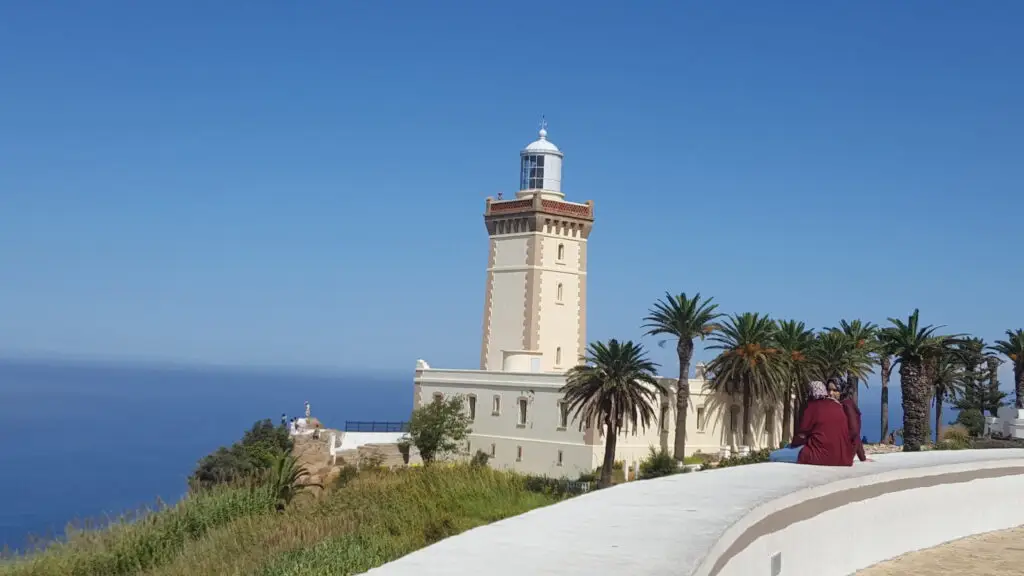
- Viewing environments: The seafront promenade along the Bay of Tangier, the beaches west toward Cape Spartel, hotel rooftops in the city center, and elevated terraces near the Kasbah all provide open sky toward the east-southeast. The old town’s medina rooftops could offer intimate viewing spots with the strait as a backdrop.
- Transport links: Tangier has an international airport (TNG) with flights from many European cities. Ferries from Spain cross the strait daily (Tarifa and Algeciras to Tangier Med or Tangier Ville). The city is also connected by Morocco’s rail network, including a high-speed train line from Casablanca and Rabat.
- Accommodation: Tangier offers a wide range – from modern seafront hotels to traditional riads tucked inside the medina. Book sea-facing rooms or rooftop access early; demand will be intense.
- Cultural appeal: Tangier has a rich multicultural heritage and scenic coastal views that have drawn international visitors for over a century. The medina has inspired artists and writers for generations. A day exploring Tangier before or after the eclipse is time well spent.
If you can only be in one place in Morocco on August 2, 2027, Tangier is the safest bet – strong duration, strong infrastructure, and strong odds of clear sky.
Tetouan and the Northern Coast
Tétouan is a historic Andalusian-influenced city approximately 60 km southeast of Tangier. It sits within or very near the path of totality – travelers should confirm with detailed eclipse maps that their specific accommodation is inside the band.
- UNESCO world heritage site: Tétouan’s medina is a UNESCO World Heritage Site, known for its Andalusian architecture, winding streets, and vibrant streets filled with artisan workshops. An ethnographic museum in the old quarter documents the region’s layered history.
- Nearby beaches: Coastal resorts at Martil, Cabo Negro, and the Tamuda Bay area offer open sea horizons and less urban density than central Tangier. These beachfront zones may provide quieter, more spacious eclipse viewing conditions.
- Elevated options: Some Rif Mountains foothills near Tétouan could serve as elevated vantage points. However, access roads may be narrow, and morning haze conditions should be scouted in advance or navigated with local guidance.
- Transport from Tangier: Tétouan is not served by passenger rail. The journey from Tangier takes about one hour by grand taxi, CTM bus, or private car along the N2 road – but expect heavier traffic on eclipse morning. Consider basing in Tétouan the night before rather than attempting a dawn transfer.
Tétouan and its coast work well as a quieter alternative to Tangier, especially for travelers who want to combine a culturally rich medina visit with relaxed beachside viewing.
Chefchaouen and the Rif Mountains Region
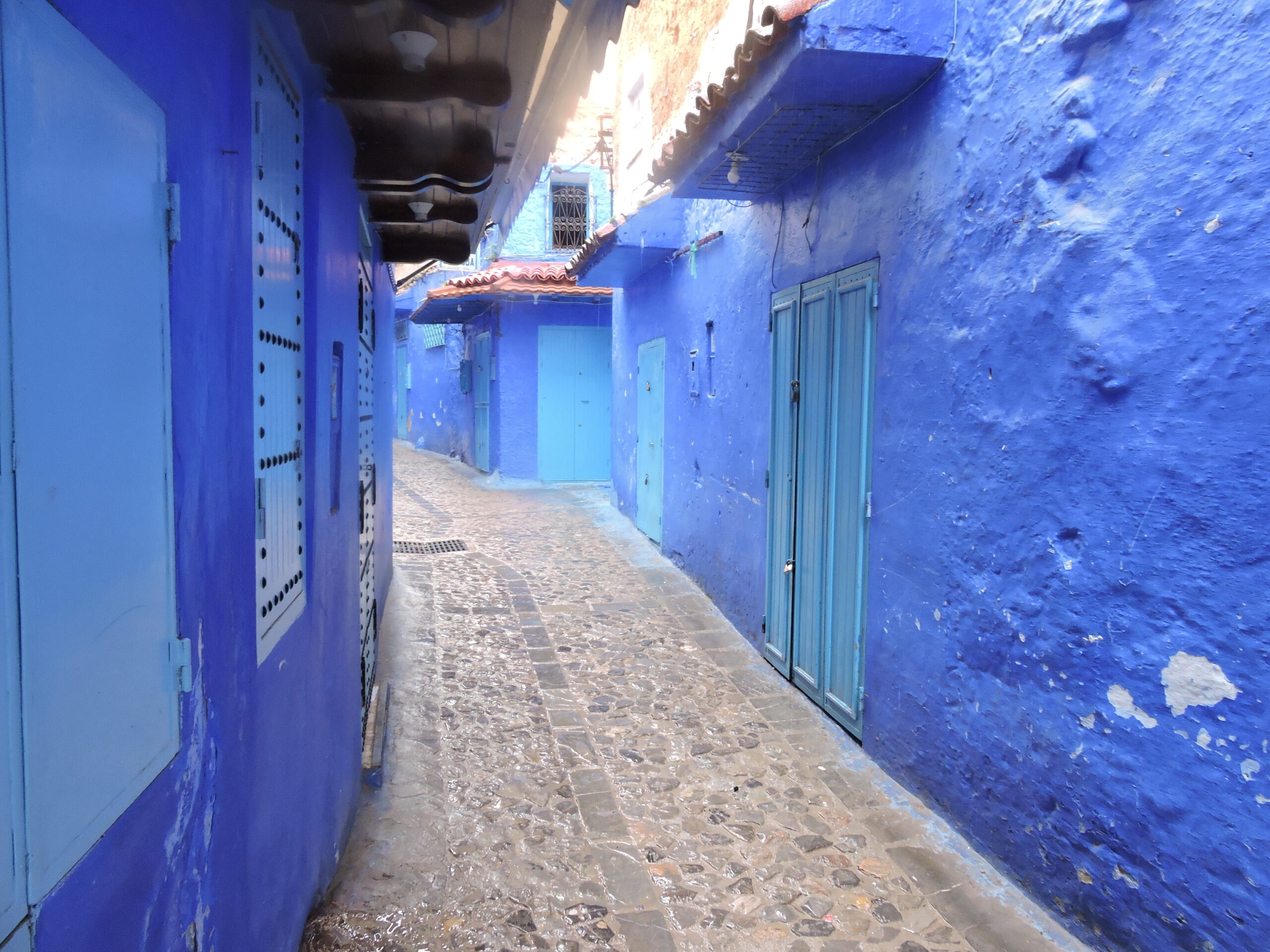
Chefchaouen – Morocco’s famous blue city – sits in the western Rif Mountains about 110 km southeast of Tangier. Its blue washed buildings, narrow streets, and mountain scenery make it one of Morocco’s most photographed destinations. But there is an important caveat for eclipse chasers.

- Eclipse status: Chefchaouen lies near, but not necessarily exactly on, the center of the totality path. The exact degree of eclipse – total versus deep partial – depends on the town’s position relative to the southern edge of the band. Travelers must verify with updated maps before committing to Chefchaouen as their primary eclipse base.
- Day-trip option: Even if only a partial eclipse is visible from the town itself, travelers could stay in Chefchaouen and drive north on eclipse morning into the confirmed totality zone. Roads toward Tétouan or the coast are scenic but winding; allow ample time.
- Scenic foregrounds: The Rif Mountains landscapes offer photogenic foregrounds for eclipse photography – mountain silhouettes, terraced hillsides, cedar forests. However, mountains can also generate local weather variability, including clouds that form around peaks.
- Best use: Spend several nights in Chefchaouen for its atmosphere and charm as a side-excursion before or after eclipse day, using Tangier or Tétouan as your actual viewing base. For a full guide to this destination, see our Chefchaouen Morocco travel guide.
Chefchaouen is a must-visit on any northern Morocco itinerary. Just do not let its beauty seduce you into staying there on the one morning when you need confirmed totality overhead.
Other Viewing Options Along the Moroccan Centerline Corridor
Beyond the major cities, lesser-known stretches of Morocco’s northern coastline and countryside within the path of totality may appeal to travelers seeking quieter, more natural settings.
- West of Tangier: The Atlantic coast near Cape Spartel and the southernmost point of the Strait of Gibraltar offers dramatic cliff-top views. This is the area where the Atlantic Ocean meets the Mediterranean – a symbolically powerful place to watch the eclipse.
- East along the coast: Small villages and beach towns between Al Hoceima and Saïdia provide big skies and low light pollution. Duration decreases as you move east (Nador around 4 minutes, Saïdia around 3.5 minutes, Oujda approximately 1 minute near the extreme edge).
- Inland Rif foothills: Rural areas between Tangier and Tétouan can offer elevated positions away from crowds. However, road quality, food, water, medical services, and restroom access can be limited.
For remote viewing locations, working with a local guide or Morocco-based tour operator is strongly recommended. They can identify safe, accessible, and logistically feasible spots that independent travelers might struggle to reach – or might not know about at all.
Weather and Climate Considerations for Northern Morocco in Early August
Weather can make or break an eclipse experience. Here is what the climate data tells us about early August in northern Morocco.
- Overall conditions: August in North Africa is extremely hot, requiring hydration and sun protection. Daytime temperatures in the Tangier area typically range from 25°C to 32°C (77°F to 90°F), with strong sunshine and very low rainfall probability.
- Cloud cover: Morocco’s average cloud cover in early August is about 20 to 30 percent, with most days rated clear or mostly clear. Climate statistics from WeatherSpark show roughly 70 to 90 percent of August days in Tangier have favorable viewing conditions.
- Morning marine clouds: Morning marine clouds can affect visibility along the coast. Tangier may experience lingering morning stratus clouds on eclipse day – thin fog or haze rolling in from the Atlantic that typically burns off as the sun rises. Since the partial phase begins around 7:33 a.m. and totality hits at 8:44 a.m., there is about an hour for morning haze to clear.
- Inland advantage: Inland Morocco generally has clearer skies than coastal areas. If morning stratus is forecast, a short drive southeast from Tangier into the Rif foothills could provide clearer conditions.
- Cloud cover near the Sahara: Cloud cover is lowest near the Sahara Desert in August, though those areas are outside the totality path.
- Dust storms: Dust storms can occur but are not a frequent problem in August in northern Morocco.
- Tangier’s outlook: Despite the coastal fog risk, Tangier has a high probability of clear skies for viewing the eclipse overall. The odds favor you – but weather is never guaranteed.
Practical advice:
- Check 7-to-10-day weather forecasts as eclipse day approaches.
- Have a backup plan: know alternate viewing spots 30 to 60 minutes’ drive inland or along the coast.
- Bring water, hats, sunscreen SPF 50+, and portable shade. You may be standing in the sun for over two hours from first contact through fourth contact.
Eclipse Safety: How to Watch the Sun Safely
This section is non-negotiable. Looking directly at the sun without proper eye protection during any phase of a solar eclipse – total or partial – is dangerous and can cause permanent, irreversible eye damage.
- Certified solar filters are necessary for viewing before and after totality. Eclipse glasses must meet the ISO 12312-2 international standard. Buy them from reputable vendors well in advance; counterfeit glasses circulate before major eclipses.
- During totality only – the brief period when the sun is entirely covered by the moon – it is safe to look at the eclipsed sun with the naked eye. This is the only time you can do so. The instant any bright crescent reappears, put your glasses back on immediately.
- Do not use improvised filters: Regular sunglasses, smoked glass, stacked neutral-density camera filters, or exposed film are not safe substitutes.
- Camera and telescope safety: Use proper solar filters on all optics. An unfiltered telephoto lens or binoculars pointed at the sun can damage equipment and – more importantly – your eyes. If using a tripod in a crowded area, position it considerately and secure it against bumps.
- For beginners: If this is your first total eclipse, consider simply watching with your own eyes (safely) rather than stressing over camera settings. The total phase lasts under five minutes. You will not get those minutes back.
Major astronomical organizations, including the American Astronomical Society, publish detailed eclipse safety guidelines that every traveler should review before August 2, 2027.
Travel Logistics: Getting to Northern Morocco for the Eclipse
Getting into the eclipse zone requires advance planning. Here is a checklist of arrival options:
- Flights into Tangier (TNG): Direct flights operate from several European cities (Madrid, Barcelona, Paris, London, Amsterdam, Brussels, and others). Tangier’s airport is about 15 km from the city center.
- Connections via Casablanca (CMN) or Rabat (RBA): These larger international airports connect to Tangier by high-speed train (Al Boraq, approximately 2 hours from Casablanca) or domestic flights.
- Ferries from Spain: Multiple daily ferries cross from Tarifa and Algeciras to Tangier Med port or Tangier Ville. The crossing takes 35 minutes to 2 hours depending on the route. Note that Tarifa, Spain will also see totality – approximately 4 minutes and 39 seconds – so ferry demand will be exceptional. Totality in Tarifa, Spain is approximately 4 minutes and 39 seconds, making the entire Strait of Gibraltar area a global hotspot.
- Domestic buses and trains: ONCF trains and CTM/Supratours buses connect Tangier with Fes, Rabat, Casablanca, and Marrakech. Tétouan is accessible only by road from Tangier (bus, grand taxi, or private car).
- Booking timeline: Book international flights and ferries well ahead of August 2, 2027. Demand along the eclipse path will surge across Spain, Morocco, and the wider region – this is not a normal summer.
- Buffer days: Allow at least one buffer day on each side of eclipse day in case of travel disruptions, flight delays, or ferry cancellations. Arriving in Tangier by July 31 at the latest is prudent.
Accommodation Strategy and Early Booking Advice
Regions in Morocco reported early hotel sell-outs by December 2025 – more than 18 months before the eclipse. That tells you everything about timing.
- Book 1 to 2 years in advance for properties in the path of totality, especially in Tangier, Tétouan, and coastal resorts. By mid-2026, the best-positioned rooms may already be gone.
- Prioritize sky access: Look for hotels or riads with rooftop terraces, east-facing balconies, or direct beach access. A beautiful interior courtyard does you no good if you cannot see the sky at 8:44 a.m.
- Cancellation flexibility: Choose properties with flexible cancellation policies if you hope to adjust your location based on weather forecasts closer to the date.
- Lodging styles in northern Morocco: Modern seafront hotels in Tangier, traditional riads in the medinas of Tangier and Tétouan, boutique guesthouses in coastal villages, and rental apartments are all options. Each has trade-offs between comfort, location, and sky visibility.
- Eclipse day events: Some properties may organize rooftop viewing events, guided commentary, or celebratory breakfasts. Confirm in advance and factor crowd size and noise into your choice – watching totality requires focus, not a DJ.
Combining the Eclipse with a Wider Morocco Itinerary
The 2027 solar eclipse in Morocco deserves more than a one-night trip. Treat it as the anchor event within a 7-to-14-day journey through one of the world’s most diverse countries.
- Before eclipse day: Fly into Tangier or Casablanca a few days early. Spend time in the north – explore Tangier’s medina, visit Tétouan, take a side trip to Chefchaouen. Use August 2 for the eclipse itself.
- After eclipse day: Head south through the imperial cities. A day exploring Fes, with its sprawling medieval medina and century-old tanneries, connects naturally with Meknès and the Roman ruins of Volubilis. Continue to Rabat, the capital, for a change of pace – our Rabat travel guide covers the highlights.
- Atlas Mountains: Cross the High Atlas on the way to Ouarzazate for dramatic mountain passes, fortified ksars, and Berber villages.
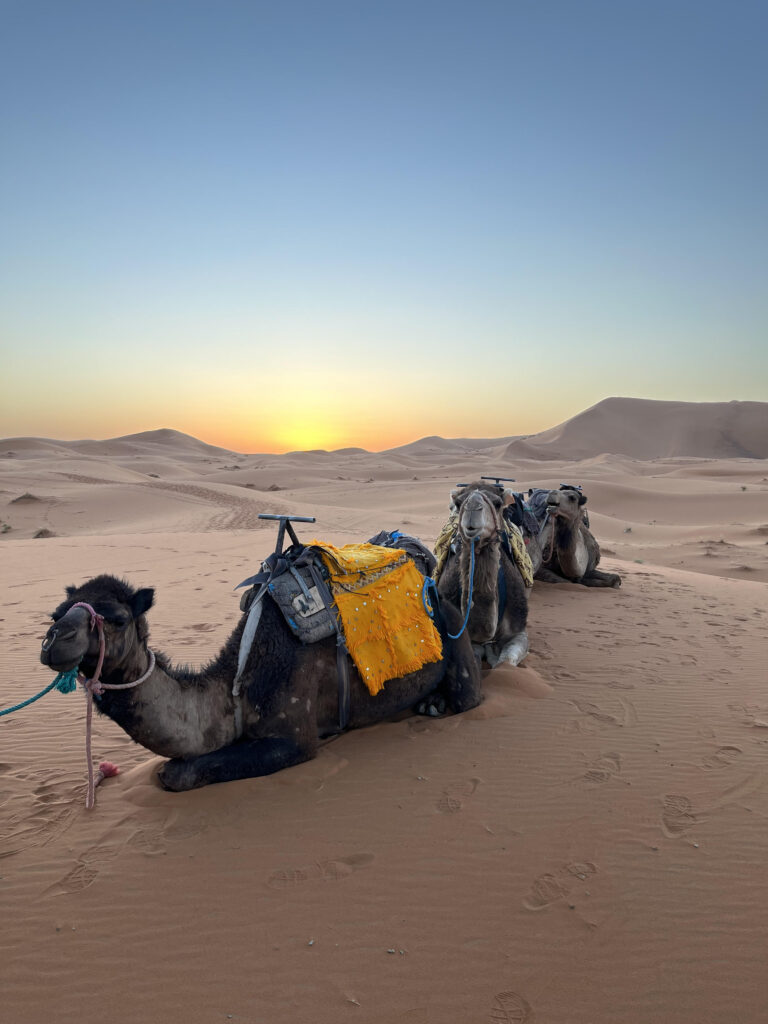
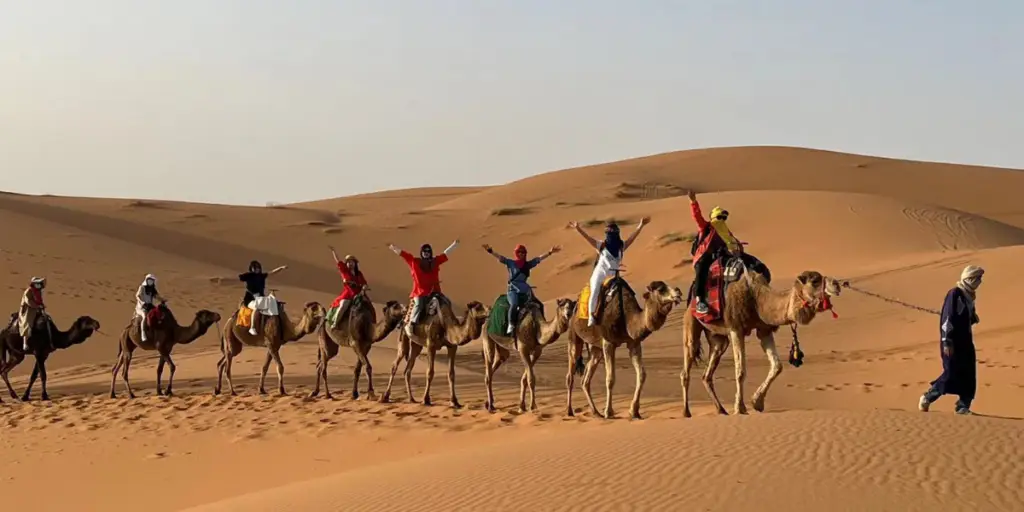
- Desert extension: The Sahara desert regions of Erg Chegaga and Erg Chebbi are outside the totality path but offer some of Morocco’s most unforgettable experiences – camel treks, stargazing, and immense silence. More on this below.
- Itinerary structure: Build your plan so eclipse day falls in the middle of your trip. This way, if weather or logistics force a last-minute location change, you have flexibility. After the eclipse, you can decompress and explore at leisure rather than rushing to an airport.
For inspiration on combining north and south, browse itineraries like our Tangier to Marrakech private tour or the 2-week Morocco itinerary.
Experiencing the Sahara: Erg Chegaga and Other Desert Regions (Partial Eclipse)
Let’s be clear again: the Sahara desert areas of Morocco, including Erg Chegaga near M’Hamid and Erg Chebbi near Merzouga, will see only a partial eclipse on August 2, 2027. The partial coverage will be deep – likely 97 to 99 percent – but without the corona, the darkness, or the visceral shock of totality.
That said, these deserts still make superb additions to an eclipse trip:
- Erg Chegaga: Morocco’s most remote and largest dune field, reached by 4×4 from M’Hamid. Wild camping under stars, no light pollution, no crowds. Summer temperatures are extreme – plan for heat, hydrate relentlessly, and choose comfortable camps with shade.
- Erg Chebbi: Towering orange dunes near Merzouga, more accessible, with a wider range of desert camps and activities. Our Merzouga travel guide covers the essentials.
- Sample flow: Arrive in Morocco, travel north for the total eclipse around Tangier on August 2, then head south over the Atlas Mountains to Ouarzazate and onward to a desert camp. Enjoy lunch in a roadside kasbah, spend the afternoon crossing the Draa Valley, and check in to your desert camp by sunset.
Chegaga Travel, as a Morocco-based operator, can arrange logistics like private 4×4 transfers, authentic desert camps, and multi-day journeys connecting the eclipse region with the Sahara – ensuring you experience both the celestial event in the north and the earthly grandeur of Morocco’s deep south.
Cultural Highlights in and around the Eclipse Zone
Northern Morocco is culturally rich enough to justify a visit even without an eclipse overhead. Here are the highlights worth weaving into your trip:
- Tangier: The bustling medina, Kasbah Museum, and the panoramic café terraces overlooking the Strait of Gibraltar. Tangier has served as a crossroads between Europe and Africa for centuries, and its old town reflects layers of Phoenician, Roman, Arab, Portuguese, and French influence. Enjoy lunch at a harbor-side restaurant watching ferries cross to Spain.
- Tétouan: The walled medina is a UNESCO World Heritage Site with narrow streets lined by Andalusian-style houses, ironwork balconies, and craft workshops. The ethnographic museum in the old town offers context on the Rif region’s heritage and traditions.
- Chefchaouen: The blue city’s blue washed buildings, vibrant streets, and mountain setting create one of Morocco’s most photogenic environments. Hike to the Spanish Mosque above the town for panoramic views of the Rif Mountains – a worthwhile excursion on any day that is not eclipse day.
- Culinary experiences: Northern Morocco has its own distinct cuisine – seafood in Tangier, mountain dishes in the Rif, and Andalusian-influenced pastries in Tétouan. Food tours, cooking classes, and market visits are excellent ways to fill pre- and post-eclipse days.
For a broader overview of Morocco’s best places to visit, including destinations to add after the eclipse, see our full destination guide.
Practical Tips for International Visitors (Visas, Money, Health)
- Visas: Many nationalities – including U.S., U.K., EU, Canadian, and Australian citizens – do not need a visa for tourist stays up to 90 days in Morocco. Check current requirements for your nationality on the Moroccan “Accès Maroc” portal and ensure your passport is valid well beyond August 2027.
- Currency: The Moroccan dirham (MAD) is the local currency and a closed currency – difficult to exchange outside Morocco. ATMs are widespread in Tangier, Tétouan, and other cities. Credit cards work in most hotels and restaurants, but carry cash for taxis, smaller shops, and markets.
- Health: Standard travel vaccinations should be current. Sun protection is critical – SPF 50+ sunscreen, wide-brimmed hat, and reusable water bottle are essential. Travel insurance that covers medical care, trip changes, and baggage loss is strongly recommended.
- Safety: Northern Morocco is generally safe for tourists. Exercise normal city awareness – watch valuables in crowded medinas, use registered taxis, and stay aware of your surroundings. For a more detailed assessment, read our guide on whether Morocco is safe for travelers.
- Cultural etiquette: Dress modestly away from beaches – cover shoulders and knees, especially in medinas and rural areas. Ask permission before photographing people. Be aware of prayer times; the pace of life slows around them. Respect local customs, and you will be warmly received.
- Time zone: Morocco follows UTC year-round (no daylight saving time). Confirm this before your trip, as it affects all eclipse timing calculations.
Working with a Local Tour Operator like Chegaga Travel
A total solar eclipse trip to Morocco involves moving parts that most independent travelers underestimate: early-morning positioning, backup locations, regional road knowledge, and accommodation logistics during peak demand.
- Customized routes: Chegaga Travel specializes in private, tailor-made tours throughout Morocco. For the 2027 eclipse, this means building an itinerary around the August 2 anchor date – with private transportation to your chosen viewing site, local knowledge of alternative spots if weather shifts, and a seamless transition to post-eclipse exploration.
- Authentic experiences: Beyond eclipse logistics, Chegaga Travel offers the kinds of authentic Morocco travel experiences that turn a trip into a story – Sahara desert camps, 4×4 off-road journeys through the Draa Valley, nights in remote ksars, and guided cultural immersion in Berber villages.
- Eclipse day coordination: Tour operators are arranging eclipse-related events and viewing tours across northern Morocco. A local operator can secure early-morning transfers, organize supplies (water, snacks, solar viewers), and provide a driver who knows backroads and alternate routes – essential if main roads into Tangier or the coast become congested.
- Post-eclipse extensions: After totality, your private tour can continue south – through Fes, across the Atlas Mountains, and into the desert – without the stress of rebooking or navigating unfamiliar transport systems on your own.
The tone here is simple: you can absolutely do this trip independently. But a locally based partner who knows the roads, the hotels, and the landscape can protect your travel investment and maximize the chances that eclipse day goes exactly as planned.
Sample Itinerary Ideas Centered on the 2027 Solar Eclipse
Here are three itinerary concepts to spark your planning. Each is designed around the fixed anchor of August 2 in northern Morocco.
Concept 1: One-Week North Morocco Eclipse Trip (7 days)
- Arrive Tangier, 2 nights exploring the city and coast
- Day trip to Chefchaouen (overnight)
- Transfer to Tétouan coast for eclipse eve positioning
- Eclipse day: viewing from Tangier or Tamuda Bay area
- Return to Tangier, explore Cape Spartel, afternoon at leisure
- Depart Tangier
Concept 2: 10–12 Day Eclipse Plus Imperial Cities
- Arrive Tangier, 2 nights
- Eclipse day: Tangier
- Transfer south to Chefchaouen (1 night)
- Continue to Fes (2 nights) – medina, culture, dinner in the old city
- Meknès and Volubilis (day trip)
- Rabat (1 night)
- Casablanca or Marrakech (1–2 nights)
- Depart
See our 10-day Morocco itinerary for a similar framework that can be adapted around the eclipse.
Concept 3: Two-Week Eclipse Plus Sahara and Atlas Adventure (14 days)
- Arrive Tangier (2 nights)
- Eclipse day: Tangier seafront
- South to Chefchaouen (1 night), then Fes (2 nights)
- Cross the Middle Atlas to Midelt, then through Ziz Gorge to Merzouga or onward to Erg Chegaga
- Desert camp (1–2 nights) – camel trek, sunrise over dunes, stargazing
- Ouarzazate and Aït Benhaddou (1 night)
- High Atlas pass to Marrakech (2 nights)
- Depart Marrakech
Each concept is a starting point. Private tours through Chegaga Travel can adjust pacing, hotel categories, and specific stops according to your interests, fitness level, and budget.
Photography and Capturing the Moment
The 2027 eclipse is expected to be the most photographed event ever, and Morocco’s coastal and architectural backdrops will feature in countless images. Here are practical tips:
- Plan ahead: Scout your foreground in advance. Morocco offers distinctive options – the Strait of Gibraltar from Tangier’s seafront, medina rooftops with minarets, Rif mountain silhouettes, or a simple wide-angle shot over the Mediterranean Sea.
- Use solar filters: For all non-total phases, a proper solar filter must cover your camera lens. Remove the filter only during the total phase, then replace it the instant the diamond ring appears.
- Manual settings: Practice manual exposure settings before eclipse day. Auto-exposure will struggle with the rapidly changing light. Bracket your exposures during totality.
- Prioritize experience: If this is your first total eclipse, seriously consider putting the camera down during totality. The total phase lasts under five minutes. No photograph can capture what your eyes and brain will process in those moments – the corona, the horizon glow, the planets visible in the sky, the emotional response. Witness it first; photograph it second.
- Respect people and places: When photographing in medinas, rural villages, or crowded viewing areas, respect local privacy. Ask before photographing individuals and be mindful of your tripod placement in shared spaces.
Frequently Asked Questions about the 2027 Solar Eclipse in Morocco
Is Tangier the best place to see the solar eclipse in Morocco?
For most travelers, yes. Tangier offers the longest duration of totality in Morocco (4 minutes and 50 seconds), strong transport links, wide accommodation options, and a location directly on the centerline. It is the most accessible and practical base for international visitors.
Will Marrakech see a total or partial eclipse?
Marrakech will see only a partial eclipse. It is well outside the path of totality. Coverage will be deep (around 97–99%), but there will be no corona, no darkness, and no dramatic totality experience. The same applies to Casablanca, Rabat, Fes, and all of southern Morocco.
How far in advance should I book accommodation?
As far as possible. Some regions in Morocco reported early hotel sell-outs by December 2025. If you know your dates, book now and choose properties with flexible cancellation in case you need to adjust.
What if it’s cloudy on eclipse day?
This is every eclipse chaser’s fear. Northern Morocco has favorable August climate statistics, but clouds can still occur – especially morning marine haze near the coast. Have a backup plan: know a viewing location 30 to 60 minutes inland where skies may be clearer. Inland Morocco generally has clearer skies than coastal areas. A local driver or tour operator can help you make a last-minute move.
Is it safe to travel in northern Morocco for the eclipse?
Yes. Northern Morocco is a well-established tourist region with good infrastructure. Exercise normal precautions – be aware of your belongings in crowded areas, use reputable transport, and follow local advice. Thousands of international visitors will be in the same area.
Can I combine Morocco with other countries on the 2027 eclipse path?
Absolutely. The path of totality crosses Spain (Tarifa area), Morocco, Algeria, Tunisia, Libya, Egypt, and Saudi Arabia. Travelers could watch from Spain and ferry to Morocco the same day – or experience totality in Tangier and later fly to Egypt to visit Luxor, which is famous for its ancient temples and the Valley of the Kings. The eclipse will last 6 minutes and 23 seconds in Luxor, Egypt – the longest duration of any land-based site. Combining Morocco with Egypt creates an extraordinary eclipse and cultural journey across northern Africa and the Middle East.
Where can I find exact local eclipse times for my specific location?
Use interactive tools from NASA, the National Solar Observatory, or sites like TheEclipse.app. Enter your exact coordinates or city name to get precise contact times for first contact, totality start, maximum eclipse, totality end, and fourth contact. Do not rely on generalized times – a few kilometers can shift timings by several seconds.
Do I need eclipse glasses? Yes. Certified eclipse glasses or solar viewers meeting the ISO 12312-2 standard are required for all partial phases of the eclipse. You may look at the sun with the naked eye only during the complete total phase, when the sun is entirely covered. Put glasses back on immediately as totality ends.
The 2027 total solar eclipse in Morocco is a convergence of celestial spectacle, geographic fortune, and cultural richness that will not repeat in our lifetimes. Northern Morocco sits in the path of shadow with nearly five minutes of totality, accessible infrastructure, favorable summer weather, and a country full of reasons to stay longer.
Start planning now. Book your accommodation, secure your eclipse glasses, and build an itinerary that does justice to both the event in the sky and the land beneath it. If you want a private, fully customized journey that connects the eclipse in Tangier with the imperial cities, the Atlas Mountains, and the Sahara desert, contact Chegaga Travel to begin designing your trip today.
Whatsapp: +212 6 62 78 28 88
Email: chegagatravel@gmail.com