Moroccan Crafts: A Guide to Traditional Arts and the Artisans Behind Them
In short: Morocco’s best-known traditional crafts are zellige tilework, rug weaving, pottery, leatherwork, metalwork and lanterns, woodwork, zwaq painting, embroidery and silver jewellery. Each is tied to particular cities: Fes for zellige, blue pottery, leather and embroidery; Marrakech for leather, metal and lanterns; Safi for pottery; Essaouira for thuya wood; Tiznit and Taroudant for silver. Most are still made by hand in medina workshops and cooperatives.
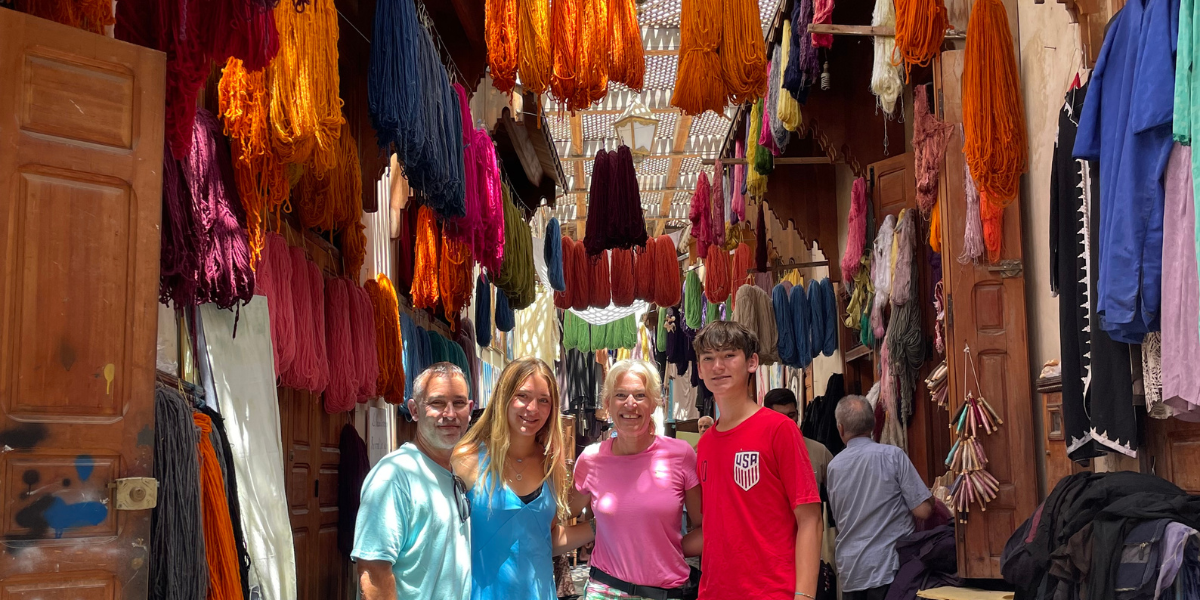
In a Moroccan medina, crafts are not kept behind museum glass. You hear coppersmiths hammering, see dyers carrying skeins of wool and smell cedar shavings outside a carpenter’s door. Many crafts are still made in the same quarters, with the same tools, as centuries ago.
This guide covers Morocco’s main traditional crafts, where each one comes from, how to tell handmade work from mass-produced copies, and how to meet the artisans themselves on your trip.
What Makes Moroccan Crafts Unique?
Moroccan crafts grew from several cultures living side by side. Amazigh (Berber) communities brought weaving, pottery and silver jewellery rich in symbols. Arab and Islamic traditions brought calligraphy and geometric design. Andalusian Muslims and Jewish craftsmen, many of whom came from Spain, shaped the refined workshops of Fes, Marrakech, Essaouira and Tiznit; Jewish artisans in particular were known for jewellery and metalwork until the middle of the 20th century.
Two other things make Moroccan crafts special:
- Town crafts and country crafts. Fine embroidery, zellige and carved plaster were mostly urban arts. Rug weaving, rustic pottery and silver jewellery belonged mainly to rural Amazigh communities.
- Crafts work together in buildings. In a traditional Moroccan building, zellige covers the lower walls, carved plaster the middle and carved or painted cedar wood the top and ceilings. Visiting a madrasa or palace is like seeing every craft at once.
Moroccan Crafts by City
| City or region | Best known for |
|---|---|
| Fes | Zellige, cobalt-blue pottery, leather and the Chouara tannery, copper and brass (Seffarine square), Fassi embroidery, carved cedar |
| Marrakech | Leather and babouche slippers, metal lanterns, zwaq painted wood, a huge variety of souks |
| Safi | Morocco’s largest pottery centre, colourful glazed ceramics |
| Essaouira | Thuya wood marquetry, silver jewellery |
| Tiznit and Taroudant | Amazigh silver jewellery |
| Tamegroute (Draa Valley) | Green-glazed pottery |
| Atlas Mountains | Amazigh rug weaving by women’s cooperatives |
| Rabat, Salé, Tetouan, Chefchaouen | Regional embroidery styles, weaving, painted wood |
Morocco’s Main Traditional Crafts
1. Zellige tilework
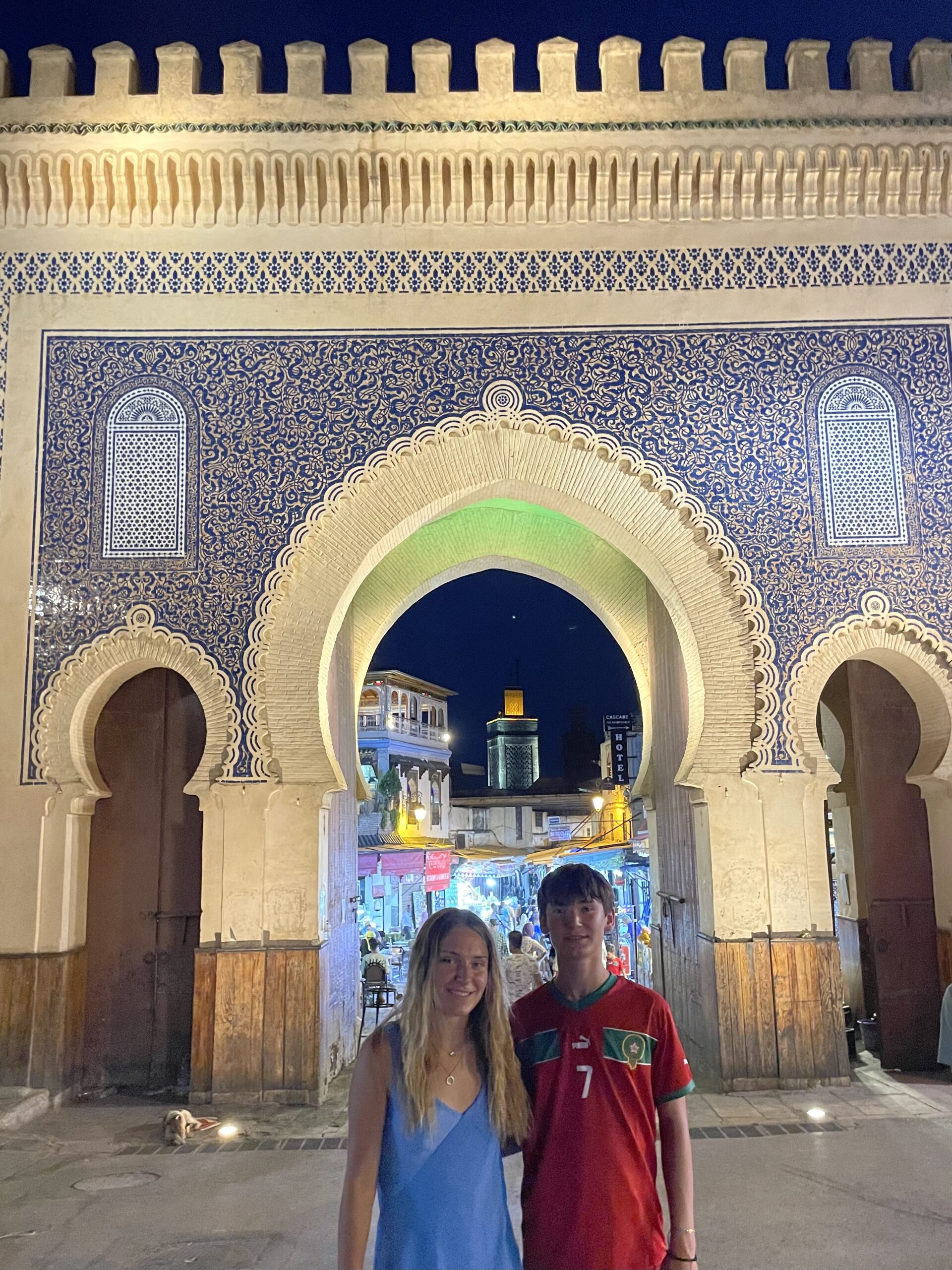
Zellige is a mosaic of small, hand-cut pieces of glazed terracotta, assembled into geometric star patterns. Fes has been its capital since the 14th century, when the Marinid sultans covered their madrasas in it. Read our full guide to Moroccan zellige.
2. Rug weaving
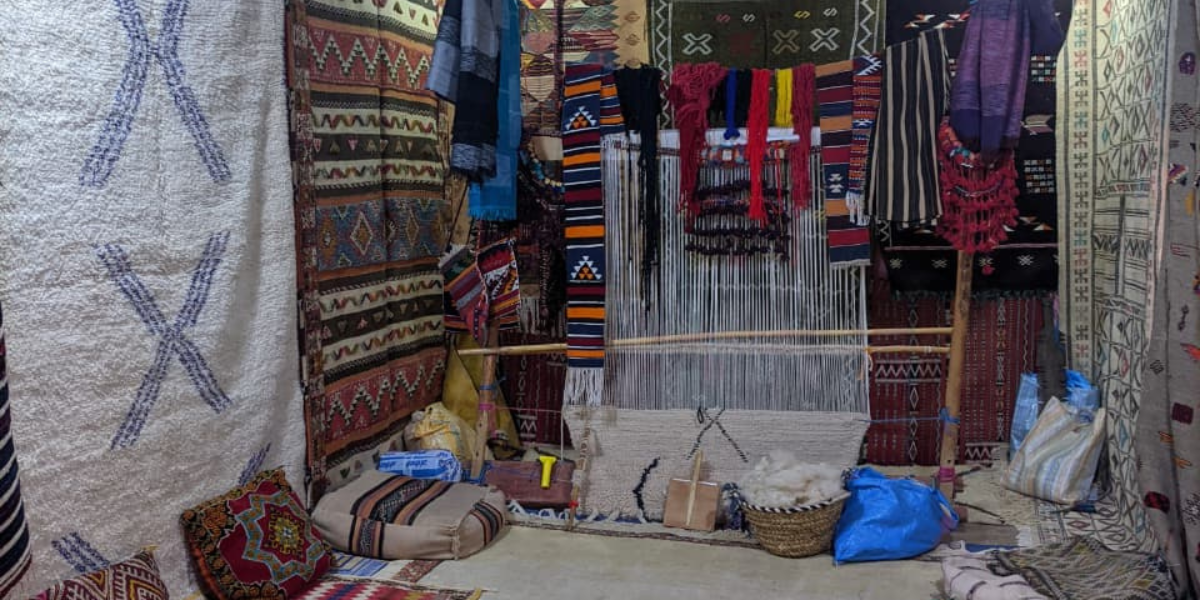
Rugs are mostly woven by Amazigh women in the Atlas Mountains and rural Morocco, in styles that change from tribe to tribe: thick, cream Beni Ourain rugs, colourful Azilal rugs, flat-woven kilims and boucherouite rag rugs. Many patterns carry symbols linked to protection, fertility and family life.
3. Pottery and ceramics
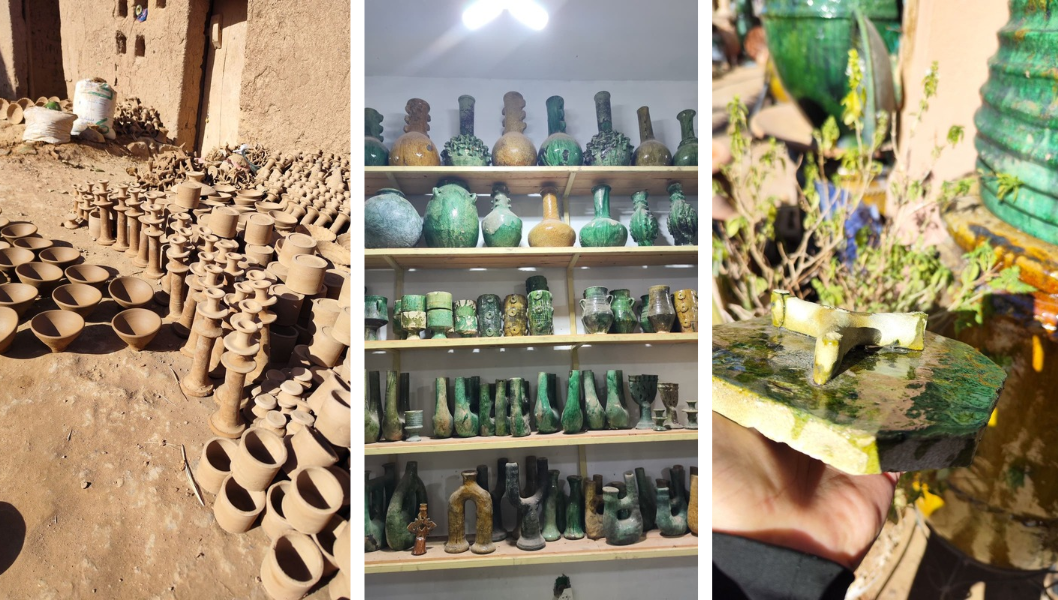
Each pottery centre has its own colours: cobalt blue in Fes, colourful glazed pieces in Safi, Morocco’s largest pottery centre, and the unmistakable green glaze of Tamegroute, an oasis village near Zagora. In the countryside, potters still make rustic, unglazed tagines and water jars. You can shape your own piece at our Fes pottery and handicraft workshop.
4. Leather and the tanneries
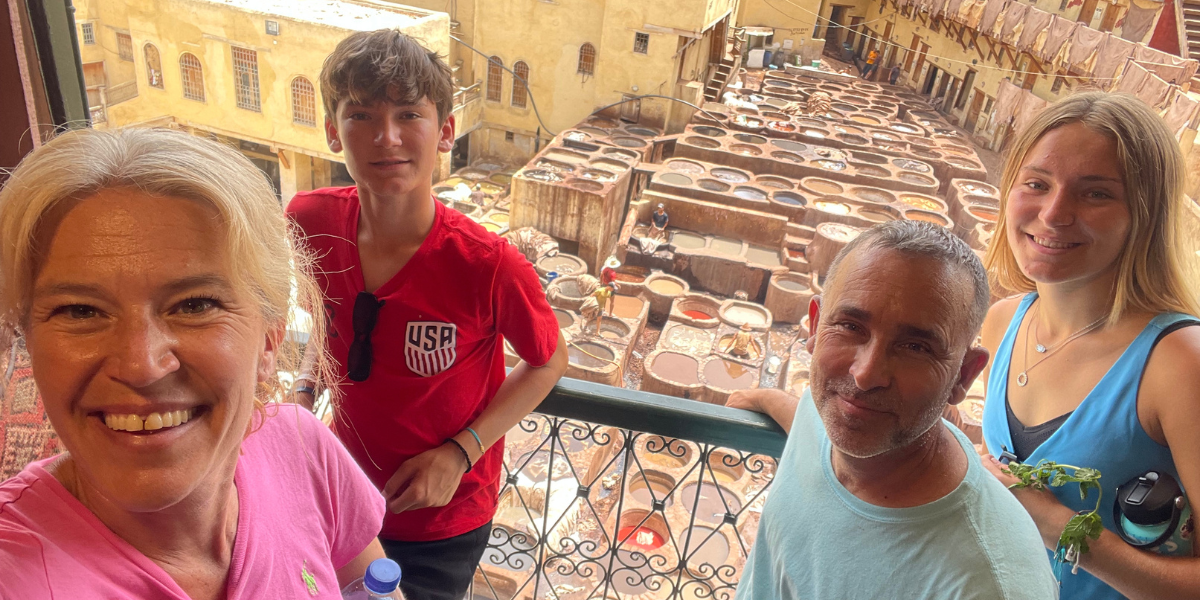
Fes and Marrakech are Morocco’s great leather cities. In the Chouara tannery of Fes, hides are still soaked and dyed in open-air stone vats. The leather becomes bags, poufs, belts, book covers and the famous pointed babouche slippers.
5. Metalwork, copper and lanterns
In Seffarine square in Fes, coppersmiths still hammer teapots, trays and cauldrons by hand. Marrakech is famous for its pierced metal lanterns, which throw star-shaped patterns of light across a room. Brass, copper and silver are also engraved with fine geometric designs.
6. Woodwork and thuya marquetry
Cedar wood from the Rif and Middle Atlas forests is carved into doors, ceilings and latticework screens. On the Atlantic coast, the artisans of Essaouira work the root of the fragrant thuya tree, which grows near the town, inlaying boxes, chess sets and tables with lemonwood, ebony and mother-of-pearl.
7. Zwaq painting and carved plaster
Zwaq is the colourful painted decoration of wooden ceilings, doors and furniture, with flowers and geometric patterns in bright colours. Beside it, gebs, carved plaster, covers walls and arches with lace-like patterns and Arabic calligraphy. The Bahia Palace in Marrakech is a wonderful place to see both.
8. Embroidery
Moroccan embroidery has seven town styles, from the double-sided counted-thread stitch of Fes to the bold colours of Rabat and the animal motifs of Azemmour. Read our guide to Moroccan embroidery.
9. Silver jewellery
Amazigh silver jewellery, heavy and full of symbols, comes mainly from the south: Tiznit and Taroudant are the best-known jewellery towns. Look for fibulas (decorative clasps used to fasten clothing), hand-of-Fatima pendants and enamel-inlaid pieces.
10. Arabic calligraphy
Calligraphy decorates mosques, madrasas, plaster and tiles all over Morocco. Today you can still watch calligraphers write with reed pens, and even have your own name written in Arabic script.
How to Tell Handmade Moroccan Crafts From Copies
Many items sold in the souks are made by machine or imported. These simple checks help you spot real handwork:
| Craft | Signs of handwork |
|---|---|
| Zellige | Slightly irregular, bevelled edges and small colour variations |
| Rugs | Knots visible on the back, small irregularities in the pattern, natural wool smell |
| Embroidery | Fes work looks the same on both sides; machine work has a messy back |
| Pottery | Brush marks, slight asymmetry, the potter’s hand visible in the glaze |
| Silver | A hallmark, and weight: plated metal feels lighter. Ask the seller to confirm in writing |
| Thuya wood | A strong, pleasant cedar-like scent and swirling grain from the root |
Best tip: buy directly from cooperatives and the artisans you meet in workshops. You see the piece being made, and more of your money goes to the maker.
Visiting Moroccan Workshops Respectfully
- Ask before taking photos of artisans, especially women. Most are happy to show their work, but a smile and a question go a long way.
- You never have to buy. A real workshop visit is about learning. If you want something, it is fine to ask the price and politely say no.
- Take your time. Many crafts are slow and precise. Watching quietly is the best compliment you can give.
- Prefer cooperatives and workshops where you can see the work being done, rather than large showrooms.
Where to Learn Moroccan Crafts Yourself
Fes: Anou Cooperative
Weave on a loom, dye wool with natural dyes or spin yarn by hand with the artisan leaders of the Anou Cooperative, a cooperative owned and run by Moroccan artisans in the Fes medina.
Marrakech: Art House Marrakech
Try zwaq painting, babouche making, zellige painting, calligraphy, leather, metal, pottery or weaving in 2-hour sessions with skilled artisans.
Our 12-day Morocco arts and crafts tour includes seven workshops in Fes and Marrakech, with all fees included and no shopping stops. We can also add any workshop to a private itinerary: see our Morocco artisan tours.
Moroccan Crafts: Frequently Asked Questions
What are the most famous Moroccan crafts?
The most famous Moroccan crafts are zellige tilework, Amazigh rugs, pottery, leather goods and babouche slippers, metal lanterns, thuya wood marquetry, zwaq painted wood, embroidery and silver jewellery.
Which Moroccan city is best for crafts?
Fes is the most traditional craft city, with zellige, pottery, leather, copper and embroidery workshops in its medina. Marrakech offers the greatest variety in one place. Safi is best for pottery, Essaouira for thuya wood and Tiznit for silver jewellery.
What should I buy in Morocco?
Popular handmade souvenirs include a small rug, babouche slippers, a leather pouch, a Fes pottery bowl, a thuya wood box, a metal lantern and silver jewellery. Buy from cooperatives or workshops where you can see the work being made.
How can I tell if a Moroccan craft is handmade?
Look for small irregularities: uneven zellige edges, visible knots on the back of a rug, brush marks on pottery, and Fes embroidery that looks the same on both sides. Perfectly identical pieces are usually machine-made.
Can tourists take craft workshops in Morocco?
Yes. In Fes you can weave, dye or spin wool with the Anou Cooperative, and in Marrakech you can try zwaq painting, babouche making, calligraphy and more at Art House Marrakech. Chegaga Travel includes these workshops in its private artisan tours.
Do I have to buy something when I visit a workshop?
No. On our tours there are no shopping stops and workshops are already paid for. You are always free to buy from the makers you meet, but never obliged to.
Discover Moroccan Crafts With Local Artisans
Weave, paint, stitch and cook with Moroccan makers on a private journey through Chefchaouen, Fes and Marrakech, with all workshops included.
Sources
More Moroccan Craft and Culture Guides
📅 Last updated: