Traditional Moroccan Food: 15 Dishes, Spices and Food Customs to Know
In short: Traditional Moroccan food is built on slow cooking, warm spices and sharing. The best-known dishes are tagine, couscous (traditionally eaten on Fridays), pastilla, harira soup and Marrakech tanjia. Meals are seasoned with blends like ras el hanout, cumin, saffron, ginger and preserved lemons, eaten from a shared plate with bread, and finished with mint tea.
Moroccan cuisine brings together Amazigh (Berber), Arab, Andalusian and Jewish traditions, along with spices that arrived along the old trade routes. Every region adds its own touch: pastilla in Fes, tanjia in Marrakech, medfouna near the Sahara, grilled sardines on the Atlantic coast.
This guide covers the 15 traditional dishes worth knowing, the spices behind them, regional specialities, how Moroccans eat at the table and where to taste or cook Moroccan food yourself on your trip.
15 Traditional Moroccan Dishes to Know
| Dish | What it is | When or where to eat it |
|---|---|---|
| Tagine | A slow-cooked stew named after its cone-lidded clay pot: chicken with preserved lemon and olives, lamb with prunes, kefta with eggs, or vegetables | Everywhere, for lunch or dinner |
| Couscous | Steamed semolina grains topped with vegetables and meat, cooked in a two-part pot called a couscoussier | Traditionally Friday lunch with the family |
| Pastilla (bastilla) | A flaky pie of thin warqa pastry filled with spiced pigeon or chicken and almonds, dusted with sugar and cinnamon. A seafood version also exists | A Fes speciality, served at celebrations |
| Harira | A tomato soup with lentils, chickpeas, herbs and sometimes meat | Breaks the fast during Ramadan; served all year |
| Tanjia | Beef or lamb with preserved lemon, cumin and spices, sealed in a tall clay urn and slow-cooked in the ashes of a hammam furnace | A Marrakech speciality |
| Rfissa | Shredded flatbread with chicken, lentils and a fenugreek-scented broth | Family celebrations and after childbirth |
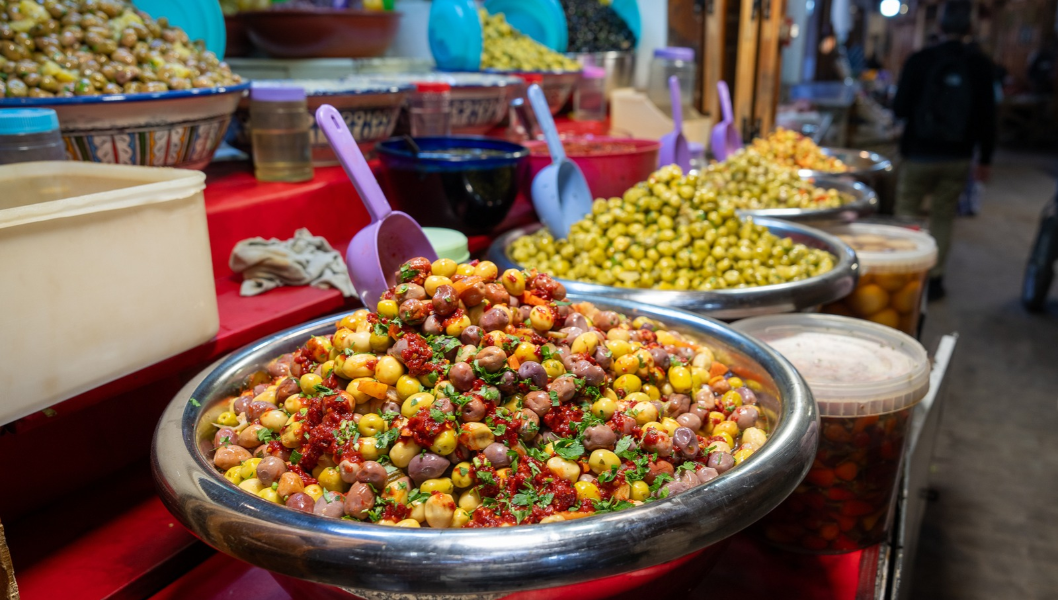
| Zaalouk | A smoky cooked salad of aubergine, tomato, garlic and spices | As a starter with bread |
| Taktouka | A cooked salad of grilled peppers and tomatoes | As a starter with bread |
| Bissara | A thick soup of dried fava beans with olive oil and cumin | A winter breakfast, especially in the north and Fes |
| Medfouna | A stuffed flatbread, often called “Berber pizza”, filled with spiced meat, onions and herbs and baked | Around Rissani, Erfoud and the Sahara |
| Msemen | Square, flaky pan-fried flatbread | Breakfast or afternoon tea, with honey |
| Baghrir | Spongy semolina pancakes full of tiny holes | Breakfast, with butter and honey |
| Kefta | Spiced minced beef or lamb, grilled on skewers or cooked in a tagine with tomato and eggs | Street grills and family meals |
| Seffa | Sweet steamed vermicelli or couscous with cinnamon, sugar and almonds | Celebrations and special meals |
| Chebakia | Flower-shaped fried cookies coated in honey and sesame | Especially during Ramadan, with harira |
Moroccan Spices and Key Ingredients
Moroccan food is fragrant rather than fiery. Spices are used to build warm, layered flavours, and chilli usually comes on the side as harissa.
- Ras el hanout: meaning “head of the shop”, it is each spice seller’s best blend, often mixing a dozen or more spices such as cinnamon, cardamom, ginger, nutmeg and rose petals.
- Cumin, ginger, turmeric and paprika: the everyday base of tagines, soups and grilled meat.
- Saffron: grown in Morocco around Taliouine, used in tagines, pastilla and couscous.
- Cinnamon: used in both sweet and savoury dishes, from pastilla to seffa.
- Preserved lemons: lemons cured in salt, giving tagines their typical tangy flavour.
- Smen: a salted, aged butter that adds depth to couscous and tanjia.
- Fresh herbs: coriander, flat-leaf parsley and, of course, mint for tea.
Tip: buy spices from busy spice stalls in the souks of Fes or Marrakech and ask the seller to let you smell the ras el hanout before buying. Every shop’s blend is different.
Regional Moroccan Cooking
Fes: refined city cooking
Fes is often called Morocco’s culinary capital. Its kitchens are known for pastilla, delicate sweet-and-savoury combinations and dishes inherited from Andalusian cooks.
Marrakech: tanjia and street food
Marrakech is the home of tanjia, the “daughter of ashes”, traditionally prepared by men and cooked overnight in the furnace that heats the neighbourhood hammam. In the evening, the food stalls of Jemaa el-Fna fill the square with smoke and noise.
The Sahara and the south
Near the desert, around Rissani and Erfoud, try medfouna, stuffed flatbread baked in the sand or in a clay oven, and the excellent local dates.
The Atlantic coast
In Safi, Essaouira and Agadir, fish takes centre stage: grilled sardines, fish tagines and seafood pastilla.
Moroccan Food Customs and Table Manners
- Bread is your spoon. Round loaves of khobz are torn by hand and used to scoop up tagine and salads.
- Eat with your right hand, from the part of the shared dish in front of you.
- Meals are shared. Family and guests eat from one large plate placed in the centre of a low round table.
- Friday means couscous. In many homes, families gather for couscous after Friday midday prayers.
- Hospitality comes first. Guests are offered tea and food again and again; it is polite to accept a little, and fine to say “baraka, shukran” (enough, thank you) when you are full.
- Ramadan changes the rhythm. During the holy month, families break the fast at sunset with harira, dates, chebakia and milk.
A world heritage dish
In December 2020, UNESCO added the knowledge, know-how and practices of couscous to its list of the Intangible Cultural Heritage of Humanity, after a joint application by Morocco, Algeria, Tunisia and Mauritania. UNESCO highlighted couscous as a dish linked to solidarity, conviviality and sharing meals.
And always, mint tea
No Moroccan meal or welcome is complete without sweet mint tea, poured from high above the glass. Read our guide to the Moroccan mint tea ceremony.
Vegetarian Food in Morocco
Morocco is easier for vegetarians than many travellers expect. Look for vegetable tagine, seven-vegetable couscous, zaalouk, taktouka, bissara, lentil dishes and Moroccan salads. Ask for dishes “bla lham” (without meat), and check whether soups like harira are made with meat stock. Our guides and drivers are always happy to help you order.
Where to Taste and Cook Moroccan Food
Food tours
Taste street food and local specialities with a guide on our Marrakech food tour or Fes food tour.
Cooking classes
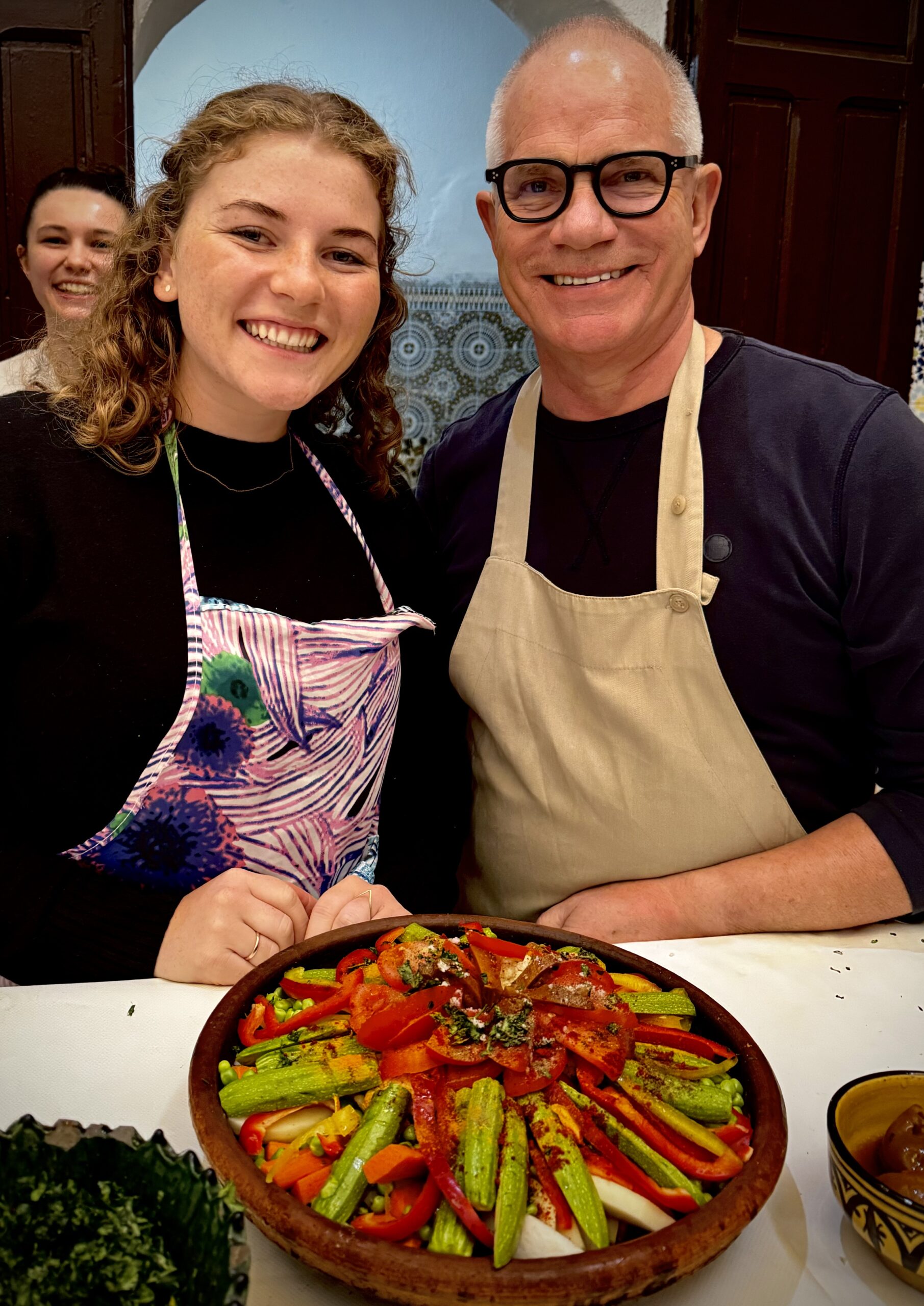
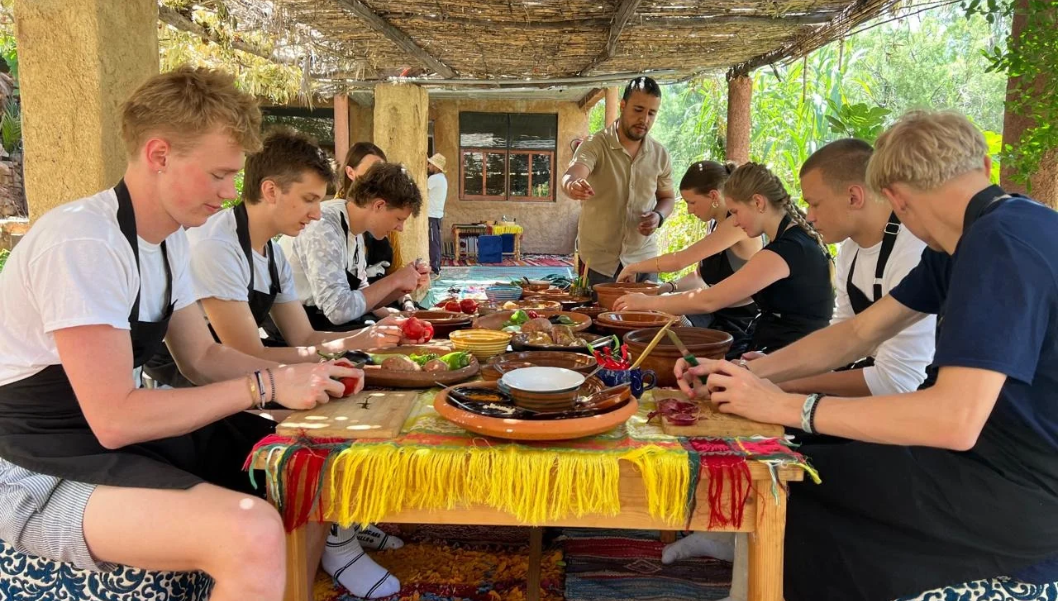
Learn to cook a tagine and Moroccan salads, then eat what you made. See our cooking class in Morocco.
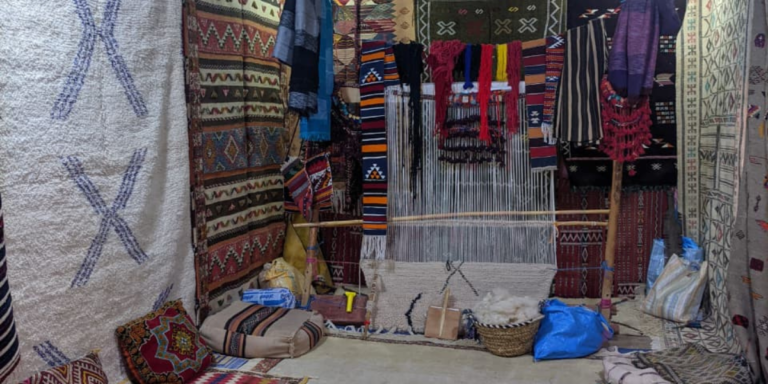
A Moroccan cooking class is also part of our 12-day Morocco arts and crafts tour, alongside weaving, zellige, embroidery and zwaq workshops. See all our Morocco artisan tours and our guide to Moroccan crafts.
Traditional Moroccan Food: Frequently Asked Questions
What is the national dish of Morocco?
Couscous is often considered Morocco’s national dish and is traditionally eaten on Fridays. Tagine is the most common everyday dish, and both are central to Moroccan food culture.
Is Moroccan food spicy?
Moroccan food is aromatic rather than hot. Dishes are seasoned with cumin, ginger, saffron, cinnamon and ras el hanout. Chilli is usually served separately as harissa, so you can add as much as you like.
What is the difference between tagine and tanjia?
A tagine is cooked in a shallow clay dish with a cone-shaped lid, usually over a fire or stove. Tanjia, a Marrakech speciality, is cooked in a tall clay urn that is sealed and slow-cooked for hours in the ashes of a hammam furnace.
What do Moroccans eat for breakfast?
A typical Moroccan breakfast includes bread, msemen or baghrir with honey and butter, olive oil, olives, eggs and mint tea. In winter, many people also eat bissara, a warm fava bean soup.
Is couscous a UNESCO heritage dish?
Yes. In December 2020, UNESCO added the knowledge, know-how and practices of couscous to its list of the Intangible Cultural Heritage of Humanity, after a joint application by Morocco, Algeria, Tunisia and Mauritania.
Is it easy to find vegetarian food in Morocco?
Yes. Vegetable tagine, vegetable couscous, zaalouk, taktouka, bissara and lentil dishes are widely available. Ask for dishes without meat and check whether soups are made with meat stock.
Cook With Moroccans on a Private Journey
Join our 12-day Morocco arts and crafts tour: a cooking class in Fes, weaving, zellige, embroidery and zwaq workshops, with all fees included and no shopping stops.
Sources
📅 Last updated: