Spain and Morocco Itinerary: How to Combine Both
The easiest way to combine Spain and Morocco is to spend the first part of your trip in southern Spain, cross the Strait of Gibraltar by ferry from Tarifa to Tangier (about one hour), then travel through Morocco by private driver and fly home from Marrakech or Casablanca. Most travelers need at least 12–14 days to enjoy both countries without rushing, with 6–8 of those days in Morocco.
This guide explains how to get between the two countries, which direction works best, how many days to give each country, and three sample itineraries you can adapt. It also covers seasons, border practicalities, and how the Moroccan part of the trip works when you travel privately with Chegaga Travel.
Is It Easy to Combine Spain and Morocco Itinerary: How to Combine Both
The easiest way to combine Spain and Morocco is to spend the first part of your trip in southern Spain, cross the Strait of Gibraltar by ferry from Tarifa to Tangier (about one hour), then travel through Morocco by private driver and fly home from Marrakech or Casablanca. Most travelers need at least 12–14 days to enjoy both countries without rushing, with 6–8 of those days in Morocco.
This guide explains how to get between the two countries, which direction works best, how many days to give each country, and three sample itineraries you can adapt. It also covers seasons, border practicalities, and how the Moroccan part of the trip works when you travel privately with Chegaga Travel.
Is It Easy to Combine Spain and Morocco in One Trip?
Yes. Southern Spain and northern Morocco are only about 14 km apart at the narrowest point of the Strait of Gibraltar, and ferries cross several times a day all year. There are also direct flights from several Spanish cities to Marrakech, Fes, Tangier and Casablanca.
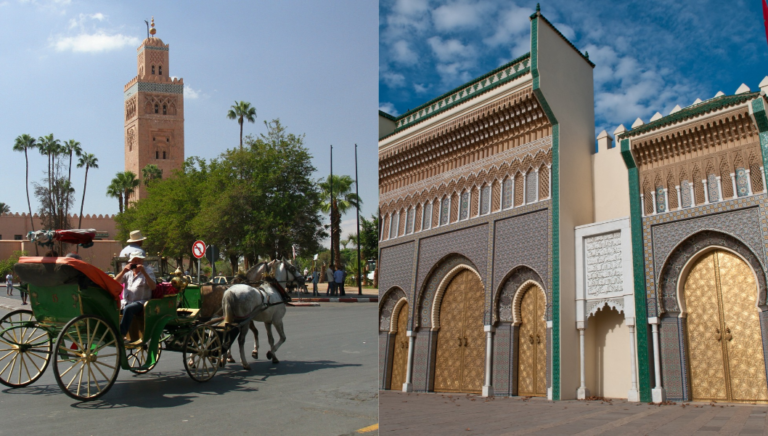
The two countries also make sense together historically. Andalusia (Seville, Granada, Córdoba) and Morocco (Fes, Marrakech, Tangier) share centuries of Moorish and Andalusian heritage. Seeing the Alhambra in Granada and then the medersas of Fes a few days later gives you a much fuller picture than either country alone.
The main thing to plan carefully is the Moroccan half. Distances in Morocco are longer than they look on a map, and the Sahara is a full day’s drive from Fes or Marrakech. That is why most travelers who combine the two countries choose a private driver for Morocco rather than trains, buses or a rental car.
How Do You Get from Spain to Morocco?
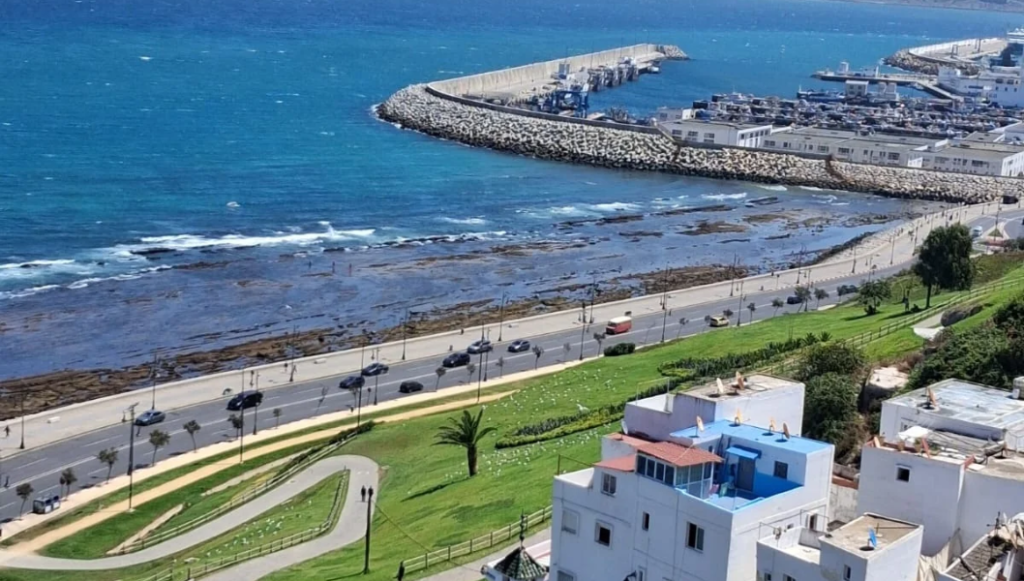
You have two practical options: the ferry across the Strait of Gibraltar, or a short flight.
By Ferry: Tarifa to Tangier (Recommended)
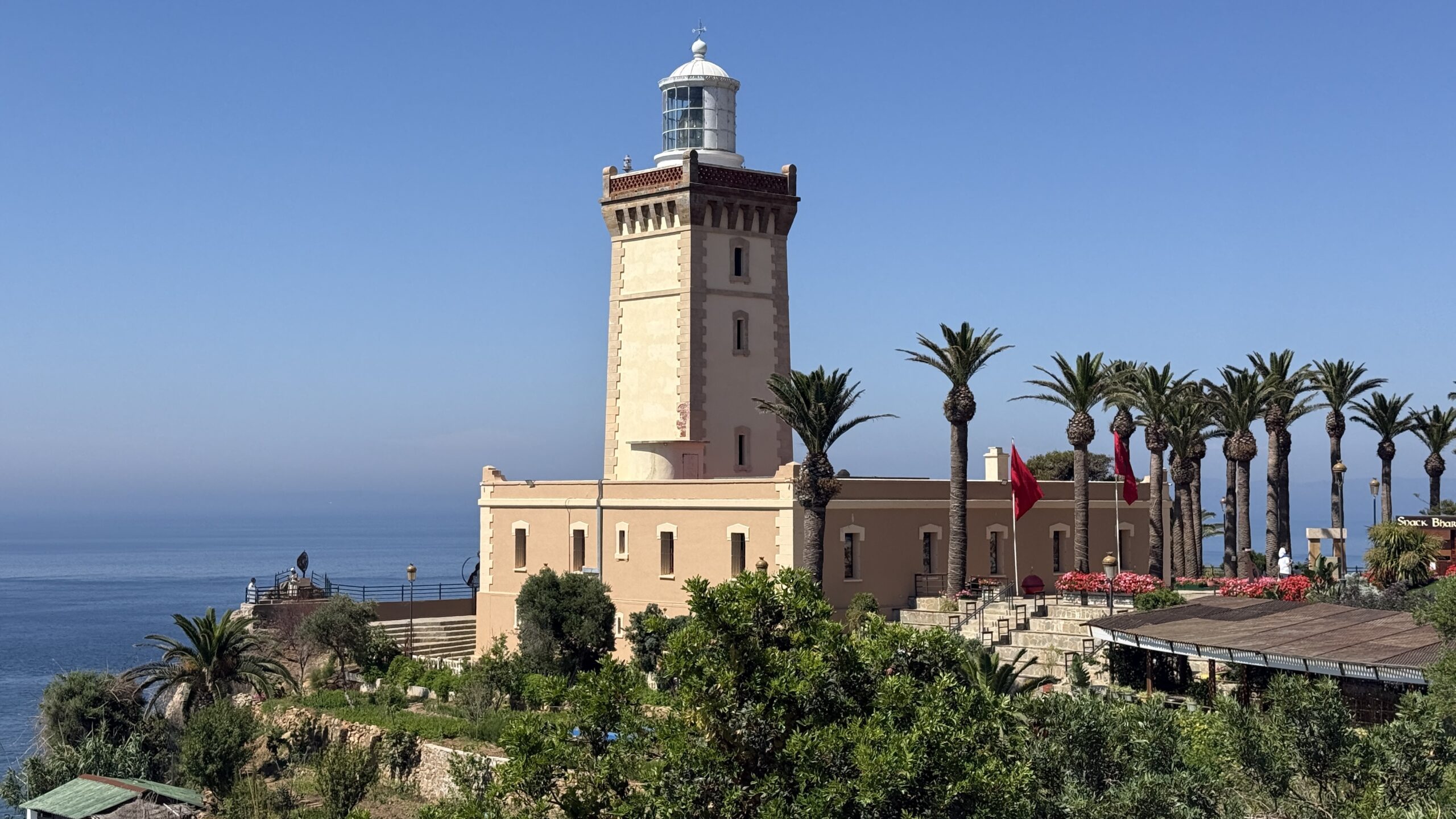
The Tarifa–Tangier Ville ferry is the simplest crossing for most travelers. The crossing takes about one hour, and the ferry arrives at Tangier’s city port, right next to the medina. Several companies run the route, with multiple daily sailings year-round.
- Tarifa → Tangier Ville: about 1 hour; arrives in central Tangier.
- Algeciras → Tanger Med: about 1.5 hours; mainly used by vehicles and freight. Tanger Med port is around 45 km from Tangier city, so you need a transfer.
- Longer routes (Barcelona, Motril or Almería to Morocco) take many hours or overnight and rarely suit a holiday with limited days.
Practical tips for the ferry:
- Buy foot-passenger tickets in advance in July and August and around Spanish and Moroccan holidays.
- Allow extra time for passport control. On the Tarifa–Tangier route, Moroccan passport formalities are usually completed on board, so join the passport queue as soon as you board.
- Summer is the busiest period on the Strait, when many Moroccan families living in Europe travel home. Morning crossings are usually calmer.
- Most Spanish car rental companies do not allow their cars to be taken to Morocco, so plan to return any rental car in Spain before crossing.
By Air: Direct Flights from Spain
Flying makes sense if you are coming from Madrid or Barcelona, or if you want to start your Moroccan trip in Marrakech instead of the north. Direct flights connect cities such as Madrid, Barcelona, Seville and Málaga with Marrakech, and some routes also serve Fes, Tangier and Casablanca. Flight times are roughly 1–2.5 hours depending on the route.
Should You Start in Spain or in Morocco?
For most travelers from the USA, Canada, Australia and New Zealand, starting in Spain and finishing in Morocco works best. Spain usually has more long-haul flight options, and ending in Marrakech lets you finish with the desert and the Atlas Mountains rather than rushing through them.
Book an open-jaw ticket: fly into Madrid, Barcelona or Málaga, and fly home from Marrakech or Casablanca. Casablanca has direct flights to North America on some routes, which can save a connection.
The reverse direction also works well. If you find a better fare into Marrakech, you can travel north through the desert, Fes and Chefchaouen, finish in Tangier, and take the ferry to Spain for the second half of your trip.
How Many Days Do You Need for Spain and Morocco?
Plan on at least 12–14 days in total, and give Morocco a minimum of 7 days if you want to include the Sahara Desert. Here is a realistic guide:
| Total trip | Days in Spain | Days in Morocco | What you can see in Morocco |
|---|---|---|---|
| 10 days | 3–4 | 6–7 | Tangier, Chefchaouen, Fes and Marrakech; the Sahara is possible but tight |
| 14 days | 5–6 | 8–9 | The north, Fes, Merzouga desert, Dadès Valley, Aït Benhaddou, Marrakech |
| 3 weeks | 8–9 | 11–12 | All of the above plus the Atlas Mountains, Essaouira or a slower pace |
If you only have 10 days, consider leaving out the Sahara and saving it for a separate trip. Fes to Merzouga is a full travel day in each direction, and squeezing it into a short trip means a lot of time in the car.
Sample Spain and Morocco Itineraries
These itineraries are starting points. Every day can be adjusted to your pace, interests and hotel style.
Day Spain and Morocco Itinerary (Andalusia + Northern Morocco)
- Days 1–2: Seville. The cathedral, the Real Alcázar and the Santa Cruz quarter.
- Days 3–4: Granada. The Alhambra (book tickets well ahead) and the Albaicín.
- Day 5: Tarifa → Tangier. Morning ferry, meet your private driver at the port, short visit of Tangier, drive to Chefchaouen (about 2–2.5 hours).
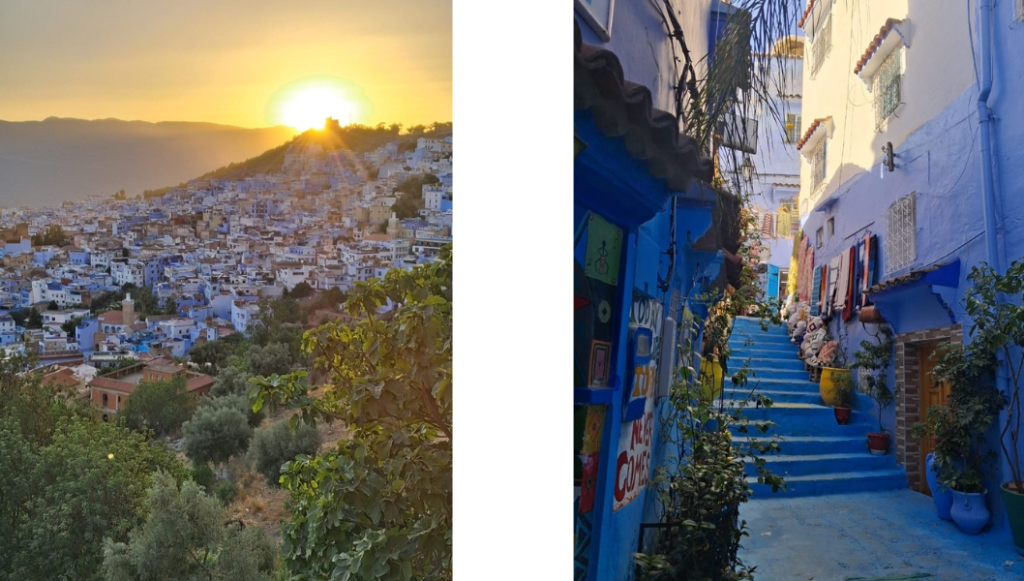
- Day 6: Chefchaouen. Walk the blue medina and the viewpoint over the town, then drive to Fes (about 3.5–4 hours).
- Day 7: Fes. A full day in the medina with a licensed local guide.
- Days 8–9: Fes → Marrakech. A long drive broken by stops in the Middle Atlas, or go via Rabat and Casablanca.
- Day 10: Marrakech. Explore, then fly home.
Day Spain and Morocco Itinerary (Including the Sahara)
This is the itinerary we recommend for most first-time visitors.
| Day | Route | Highlights |
|---|---|---|
| 1–2 | Madrid or Seville | Arrive and recover from the flight; museums or the Alcázar |
| 3–4 | Granada / Córdoba | The Alhambra, the Mezquita of Córdoba |
| 5 | Ronda or the white villages → Tarifa | Overnight in Tarifa for an early crossing |
| 6 | Tarifa → Tangier → Chefchaouen | Ferry, private driver from the port, the blue town |
| 7 | Chefchaouen → Fes | Optional stop at the Roman ruins of Volubilis |
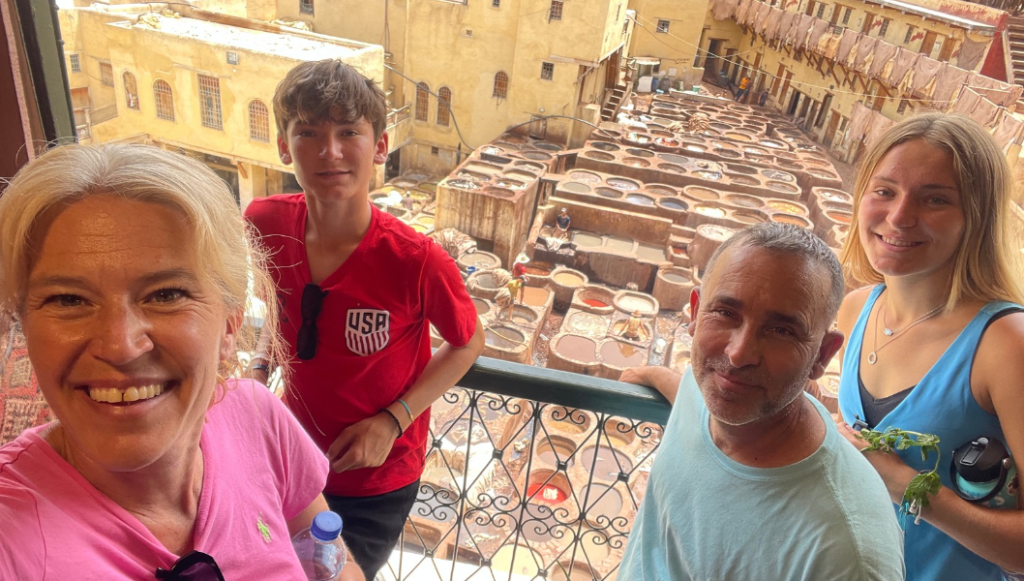
| 8 | Fes | Guided medina visit, tanneries, craft workshops |
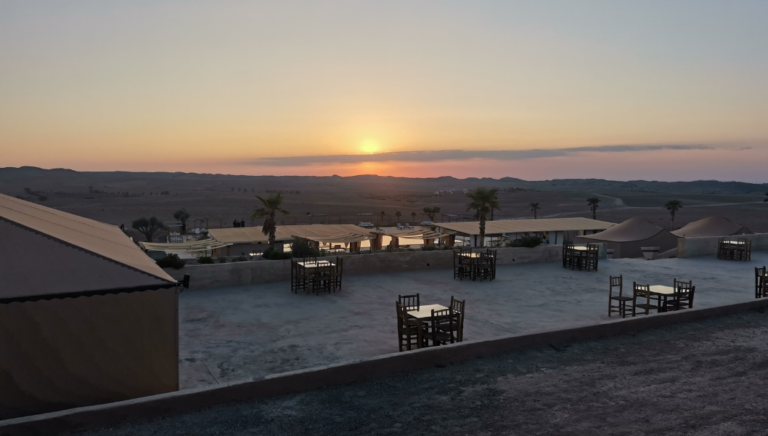
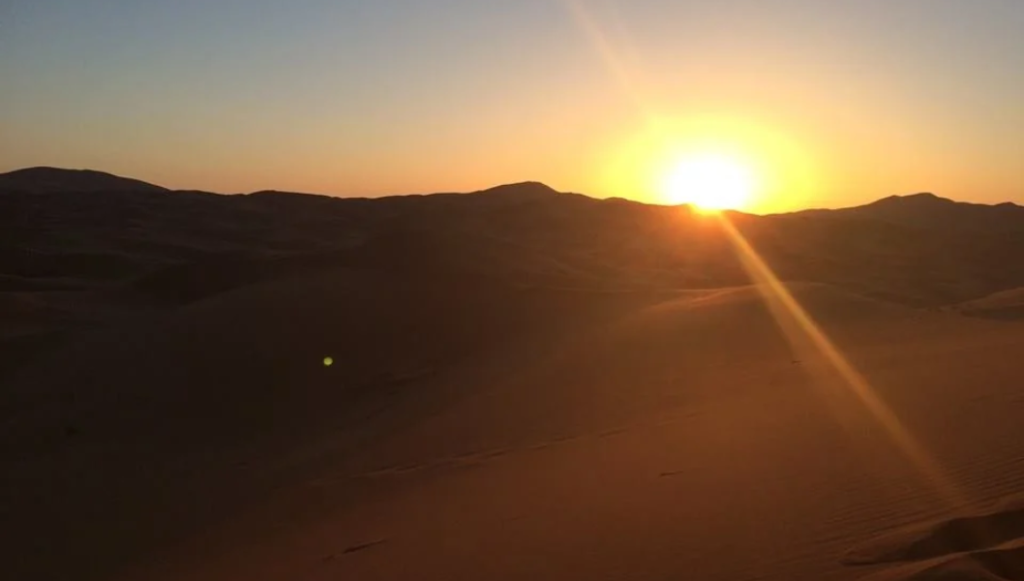
| 9 | Fes → Merzouga (Sahara) | Cedar forests of the Middle Atlas, Ziz Valley, camel ride at sunset, night in a desert camp |
| 10 | Merzouga → Todra Gorge → Dadès Valley | Sunrise over the dunes, Todra Gorge walk |
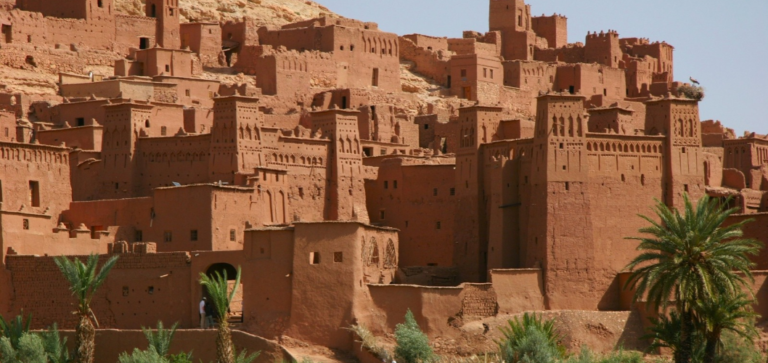
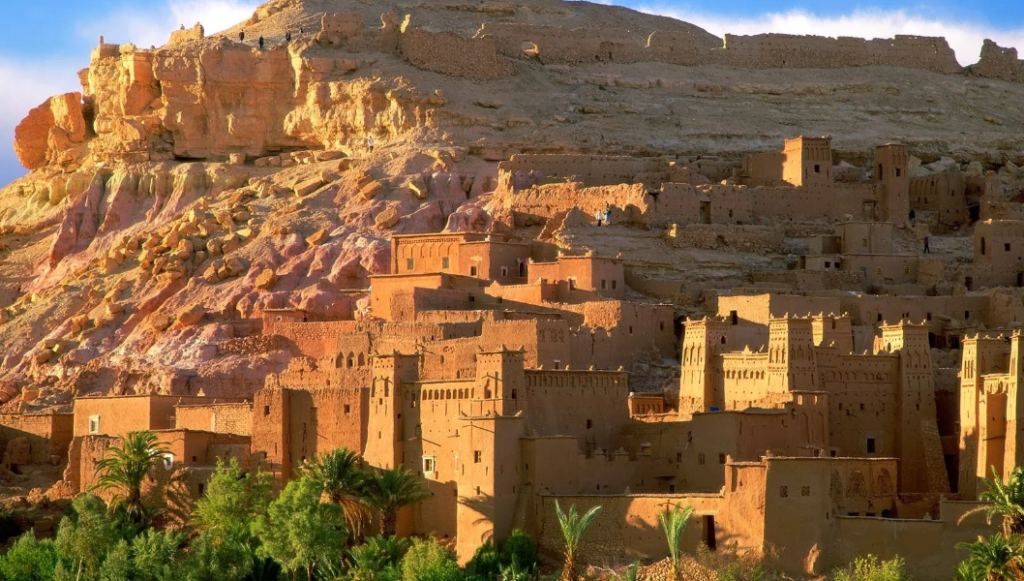
| 11 | Dadès → Ouarzazate → Aït Benhaddou | Road of a Thousand Kasbahs, the UNESCO-listed Ksar of Aït Benhaddou |
| 12 | Aït Benhaddou → Marrakech | Crossing of the High Atlas via the Tizi n’Tichka pass |
| 13 | Marrakech | Guided tour, gardens, souks; optional hammam or cooking class |
| 14 | Departure | Private transfer to Marrakech airport |
The Moroccan part of this route (days 6–14) follows the same logic as our 8-day Morocco tour from Tangier.
3-Week Spain and Morocco Itinerary (Slower Pace)
With three weeks you can spend 8–9 days in Spain (Madrid, Toledo, Córdoba, Seville, Granada) and 11–12 days in Morocco. The extra days let you add a night in the Atlas Mountains, a second desert night, or a few days on the coast in Essaouira. Our 11-day Morocco tour from Tangier to Marrakech is a good base for the Moroccan half.
When Is the Best Time to Visit Spain and Morocco?
Spring (March to May) and autumn (September to November) are the best seasons to combine both countries. Temperatures are comfortable in Seville, Fes, Marrakech and the Sahara at the same time.
- Summer (June to August): Seville, Córdoba and Marrakech are often very hot, and the Sahara is extremely hot during the day. The Strait of Gibraltar is also at its busiest.
- Winter (December to February): Mild in Marrakech and pleasant for sightseeing, but desert nights are cold, and snow can close the High Atlas passes for short periods.
- Ramadan: Travel continues normally, but some restaurants close during the day and opening hours change. Check the dates for your travel year.
Practical Tips for Combining Spain and Morocco
- Passports and entry: Citizens of the USA, Canada, Australia and New Zealand can currently visit Morocco without a visa for short tourist stays. Check your government’s official travel advice before you go (for US citizens, see the U.S. State Department Morocco page), as entry rules for Spain and the Schengen Area can change.
- Time difference: Morocco usually runs on GMT+1, so it is often one hour behind Spain in summer and on the same time in winter, except during Ramadan, when Morocco moves back one hour. Double-check your ferry time in local time. Morocco currently follows Greenwich Mean Time (GMT/UTC+0) throughout the year. Mainland Spain is generally one hour ahead of Morocco during winter and two hours ahead during summer due to its daylight saving time changes. Morocco previously adjusted its clocks during Ramadan, but its time system changed in September 2026. Always double-check ferry departure and arrival times in the local time shown on your ticket, particularly when travelling between Spain and Morocco.
- Money: Spain uses the euro and Morocco uses the dirham (MAD). Euros are not widely accepted in everyday Moroccan shops, so withdraw dirhams from an ATM after you arrive.
- Luggage: On the ferry you carry your own bags, so a medium suitcase is easier than two large ones.
- Language: Spanish is widely understood in northern Morocco, especially in Tangier and Chefchaouen. Arabic, Amazigh (Berber) and French are the main languages elsewhere.
How Chegaga Travel Fits Into Your Spain and Morocco Trip
Chegaga Travel organizes the Moroccan part of your trip. We do not book Spanish hotels, ferries or flights, but we build our private Morocco itineraries around them, so your driver is waiting at the port or airport when you arrive.
For travelers arriving by ferry, we can meet you at Tangier port and start your private tour from there. You can also start in Marrakech, Fes or Casablanca if you are flying in from Spain. See all our tailor-made Morocco tours from Tangier.
A private Morocco tour with Chegaga Travel includes:
- Your own private driver and comfortable vehicle for the whole trip
- Accommodation and daily breakfast
- Licensed local guides in the cities and at Aït Benhaddou
- Dinners in Ouarzazate, the Dadès Valley, Zagora and the desert camp
- A route, pace and hotel style planned around you
Monument entrance fees, lunches, other dinners and drinks are not included. Private tours start from US$272 per person per day, based on 2 travelers. The final price depends on the number of days, travelers, season and hotel category. You can learn more in our guide to the cost of a tailor-made Morocco tour.


Frequently Asked Questions
How long is the ferry from Spain to Morocco?
The fastest and most convenient crossing is Tarifa to Tangier Ville, which takes about one hour and arrives in central Tangier. The Algeciras to Tanger Med route takes about 1.5 hours, but Tanger Med is outside the city, so you need a transfer. Allow extra time for ticketing and passport control on both sides.
Is 10 days enough for Spain and Morocco?
Ten days is enough for a taste of both, for example Seville and Granada plus Tangier, Chefchaouen, Fes and Marrakech. It is tight if you also want the Sahara, because the desert adds at least two full travel days. For a trip that includes the desert, plan 12–14 days.
Can I take a day trip from Spain to Morocco?
Day trips from Tarifa to Tangier exist, but you only see a small part of one city. If Morocco is part of your plan, spending even a week lets you experience Chefchaouen, Fes, the Sahara and Marrakech, which is where the real difference between the two countries becomes clear.
Is it better to travel Morocco by private driver or by train?
Trains connect Tangier, Rabat, Casablanca, Fes and Marrakech, but they do not reach the Sahara, the Atlas Mountains, Chefchaouen or the kasbah valleys. A private driver lets you reach all of them, stop for photos, and travel at your own pace, which is why most multi-day travelers choose this option.
Can you organize the whole Spain and Morocco trip?
We specialize in Morocco and organize the Moroccan part of your trip. We are happy to plan it around your Spanish dates, ferry or flight, so the two parts of your journey connect smoothly. For the Spanish part, you can book independently or use a Spain-based travel specialist.
Plan Your Morocco Days with a Local Team
If you are planning a Spain and Morocco trip, send us your dates, where you will be in Spain, and how you plan to cross. Our Marrakech-based team will suggest a private Morocco itinerary that fits your route, pace and budget. The proposal is free, with no obligation.
Request your free personalized Morocco itinerary
Spain & Morocco Trip Planning
Plan Your Morocco Days with a Local Team
If you are planning a Spain and Morocco trip, our Marrakech-based team will suggest a private Morocco itinerary that fits your route, pace and budget. Just tell us:
- 1Your travel dates
- 2Where you will be in Spain
- 3How you plan to cross
Free proposal · No obligation · Private tours only
📅 Last updated: