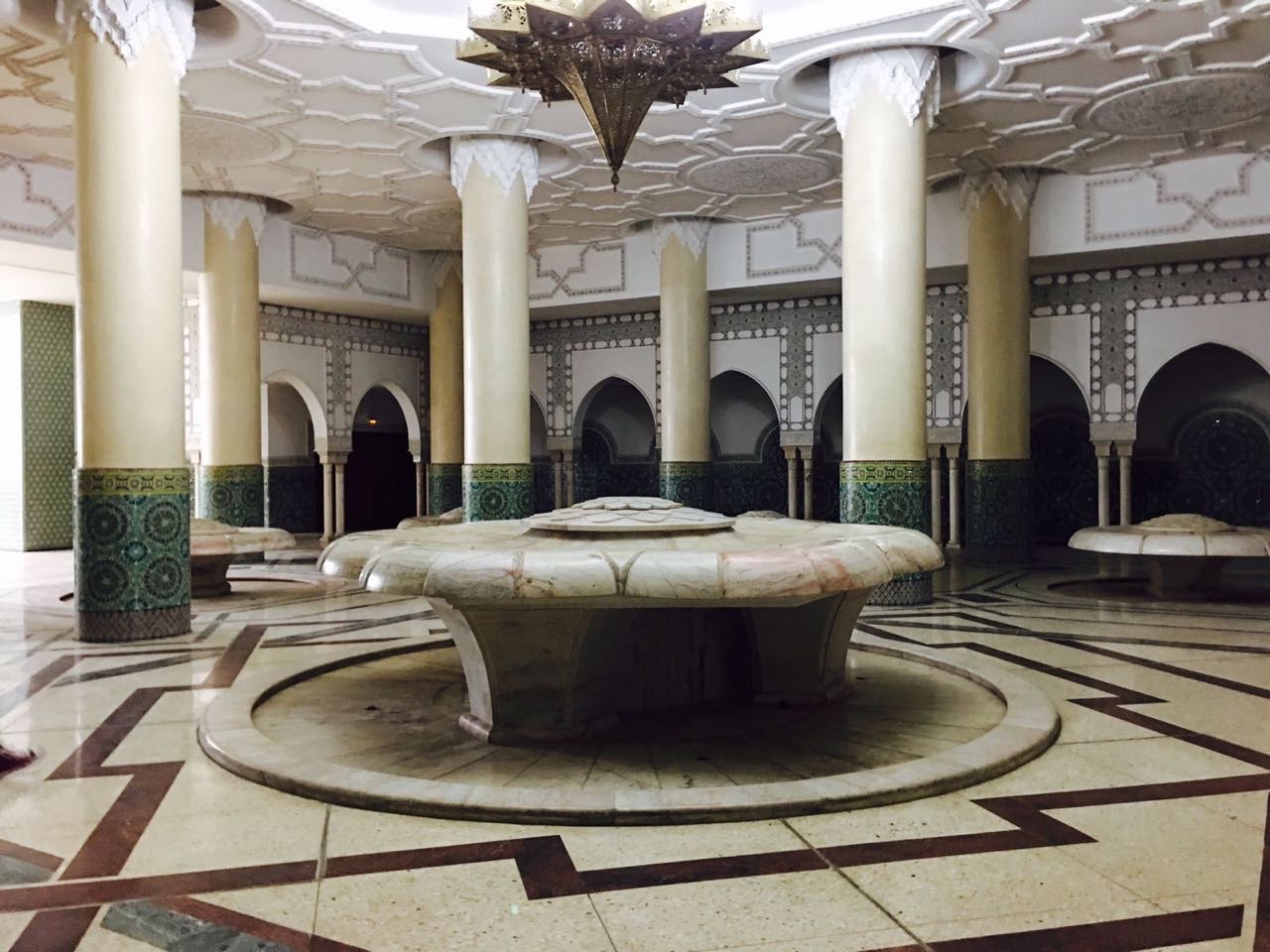
Moroccan Hammam: What to Expect on Your First Visit
A Moroccan hammam (also called a Moroccan bath) is a steam bath where you warm up in a heated room, get covered in savon beldi (a black olive-oil soap), are scrubbed head to toe with a coarse kessa glove, and then rinsed with warm water, often finishing with a clay mask. A spa session usually takes 45 to 60 minutes, and you leave with softer skin than you have had in years.
If it’s your first time, the unknowns are what make people nervous: what to wear, who scrubs you, and whether you will feel awkward. This guide walks you through each step, the difference between a local and a spa hammam, what to bring, the etiquette, and how to fit a hammam into a private Morocco itinerary.
Moroccan hammam at a glance
- What it is: a traditional steam bath with black soap, a kessa scrub, and often a ghassoul clay mask
- How long: about 45–60 minutes at a spa, longer with a massage
- What to wear: disposable underwear or swimsuit bottoms, as full nudity isn’t expected
- Men and women: separated in public hammams, while many spas offer private couples’ rooms
- Best for first-timers: a spa or riad hammam in Marrakech or Fes
- Best moment on a trip: the evening after the Sahara or a long drive day
What Is a Moroccan Hammam?
A hammam is a public or private steam bath, and in Morocco it’s a weekly habit for many families, not just a spa treat. Before most homes had hot showers, the neighborhood hammam was where people got properly clean, and it remains a place to relax and catch up with friends.
Almost every old medina has several hammams, often close to a mosque and a communal bread oven. Some are centuries old: Hammam Mouassine in Marrakech dates back to the 16th century. You will find three main types:
- Neighborhood (public) hammams: simple, inexpensive, and used by locals. You bring your own supplies and usually wash yourself, though you can often pay an attendant to scrub you.
- Spa hammams: private, calm, and designed for visitors. An attendant does everything, products are provided, and you can add a massage.
- Riad and hotel hammams: many riads and hotels in Marrakech and Fes have their own small hammam, which is the easiest option when you are staying there.
Traditional Hammam or Spa Hammam: Which Is Better for a First Visit?
For most first-time visitors, a spa or riad hammam is the better choice. You get privacy, clear instructions, and an attendant who guides you through each step. A neighborhood hammam is more authentic, but it helps to go with someone who knows the routine.
| Neighborhood hammam | Spa or riad hammam | |
|---|---|---|
| Atmosphere | Busy, social, local families | Quiet, private, relaxing |
| Who scrubs you | Yourself, or a paid attendant | A trained attendant |
| Products | Bring your own or buy at the entrance | Provided |
| Men and women | Separate sections or separate hours | Separate, or private rooms for couples |
| Best for | Curious travelers who want local daily life | First-timers, couples, families |
If you can, try both: a spa hammam early in your trip to learn the ritual, then a neighborhood hammam later with a local guide who can explain the routine.
What Happens During a Moroccan Hammam, Step by Step?
The ritual follows the same basic order everywhere: heat, soap, scrub, clay, rinse, rest. Here is what a typical spa session looks like.
1. Changing and the warm room
You change in a private area, leave your clothes and valuables in a locker or basket, and walk into the first, warm room. Hammams usually have a sequence of rooms that get warmer as you move in. You sit or lie on a heated tiled bench for a few minutes while the steam opens your pores.
2. Black soap (savon beldi)
The attendant pours warm water over you and spreads savon beldi across your body. This soft, gel-like black soap is made from olive oil and olive pulp. It’s left on for five to ten minutes to soften the skin before the scrub.
3. The kessa scrub
This is the part everyone talks about. Using a rough kessa glove, the attendant scrubs your arms, legs, back, and front with firm strokes, and you will see gray rolls of dead skin come off. It’s vigorous but should never hurt. If it’s too strong, say “shwiya” (gently) or simply signal with your hand.
4. Ghassoul clay mask
Next, many hammams apply ghassoul (also spelled rhassoul), a mineral clay from the Atlas Mountains, often mixed with rose or orange blossom water. It’s spread over the body, and sometimes the hair, and left to dry for a few minutes.
5. Rinse, hair wash, and rest
Buckets of warm water wash everything away, and you may get a shampoo. You are then wrapped in a towel and taken to a relaxation room, often with mint tea. In spas, this is when you can add an argan oil massage.
What Are the Benefits of a Moroccan Hammam?
The main benefit is very clean, soft skin. The kessa scrub removes dead skin far more thoroughly than a shower, and the heat helps you relax after days of walking and driving. Most visitors notice the difference right away.
- Deep exfoliation: skin feels smoother, and many people find that a tan looks more even afterward.
- Relaxation: warmth, steam, and quiet help ease tired muscles after long travel days.
- A cultural experience: you take part in a weekly ritual that many Moroccan families still keep.
A hammam is a cleansing and relaxing ritual, not a medical treatment. If you have a health condition, read the safety section below.
How Much Does a Moroccan Hammam Cost?
The price depends mostly on the type of hammam. A neighborhood hammam is the cheapest option, but you bring your own products and usually pay extra if an attendant scrubs you. Spa and hotel hammams cost much more, because the price includes the attendant, products, robe, and relaxation area, and you can add a massage.
- Neighborhood hammam entry: [OWNER: add current price range in dirhams]
- Attendant scrub at a local hammam: [OWNER: add current price range]
- Spa hammam (soap, scrub, clay): [OWNER: add current price range]
- Spa hammam with massage: [OWNER: add current price range]
Local hammams usually take cash only. Spas often take cards, but it’s worth checking when you book.
What Should You Wear to a Moroccan Hammam?
Wear disposable underwear (usually provided at spas) or a pair of swimsuit bottoms. Women are often topless in women-only areas, but a swimsuit or bikini top is completely acceptable. Men keep their underwear or swim shorts on. Full nudity is not expected.
- Choose an old swimsuit: black soap and clay can stain light fabrics.
- Spas provide a robe, towel, and slippers. Neighborhood hammams don’t.
- Remove jewelry and contact lenses before entering the steam.
What Should You Bring to a Hammam?
For a spa or riad hammam, you only need yourself, as everything is provided. For a neighborhood hammam, bring or buy the basics, which are sold at the entrance or in the souk:
- Savon beldi (black soap) and a kessa glove
- Ghassoul clay, shampoo, and a comb
- A towel, flip-flops, and clean clothes to change into
- A small mat to sit on and a plastic bag for wet items
- Cash, as small local hammams rarely take cards
Buckets are usually available inside or from the attendant.
Hammam Etiquette: The Unwritten Rules
Moroccan hammams are relaxed, but a few habits will help you feel at ease:
- Men and women are separated. Public hammams have separate sections or separate opening hours. Check the hours before you go.
- No photos. Never take pictures inside a hammam, even of an empty room, unless staff clearly allow it.
- Keep your voice low in spa hammams. Neighborhood hammams are livelier, but be respectful of the people around you.
- Expect busy days. Thursdays and Fridays tend to be the busiest days at local hammams.
- Tipping. In spas, a small tip for your attendant is appreciated.
Can Couples Go to a Hammam Together?
Yes, but only in a spa or hotel hammam. Many spas in Marrakech offer private couples’ hammam rooms where you are scrubbed side by side, often followed by a massage. Traditional neighborhood hammams always separate men and women, so couples visit separately there.
For couples on a honeymoon or anniversary trip, a private hammam in your riad at the end of a long travel day is one of the most relaxing ways to spend an evening.
Is a Hammam Safe for Everyone?
For most healthy adults, yes. But heat and intense scrubbing are not ideal in some situations, so keep these points in mind:
- If you are pregnant, or have heart problems, high or low blood pressure, or a skin condition, ask your doctor before visiting, and tell the attendant.
- Skip the scrub on sunburned skin, fresh tattoos, or skin you waxed or shaved within the last day.
- Drink water before and after. If you feel dizzy, step out of the hot room.
- Your skin is more sensitive after the scrub, so protect it from strong sun the following day.
- For children, a calm riad or spa hammam is the best choice. Check age rules when booking.
When Is the Best Time for a Hammam on Your Morocco Trip?
The best moment is after a long or dusty day. A hammam is perfect the evening you return from the Sahara, after a long drive over the High Atlas, or after a full day walking the medina. Many travelers also book one on their last day, before a long flight home.
- Marrakech: the widest choice of spa and historic hammams, including private couples’ rooms. Hammam Mouassine, in the medina, is one of the city’s oldest.
- Fes: old neighborhood hammams and riad spas inside the medina, a UNESCO World Heritage Site.
- After the desert: sand gets everywhere during a desert camp night, so a hammam back in the city feels especially good.
- In winter: evenings in Morocco can be cold from December to February, which makes a warm hammam even more welcome.
How to Add a Hammam to Your Private Morocco Tour
On a private tour with Chegaga Travel, we can build a hammam into your itinerary on the day that suits you best, for example the evening you return from the desert or your last night in Marrakech. Your driver can take you to a recommended spa, or we can choose a riad with its own hammam so you don’t have to go anywhere.
Because your trip is private, you set the pace. You can pair a hammam with a guided Marrakech medina tour or a Moroccan cooking class, or plan a quiet day after a 3-day Sahara desert tour from Marrakech. Couples often combine it with one of our private Morocco tours for couples, and travelers who love local traditions add it to our cultural tours of Morocco.
On a longer trip, such as our 10-day Morocco itinerary, a hammam fits best on the evening you return from the Sahara or during your stay in Fes or Marrakech, when you have time to rest afterward.
Our private tours start from US$272 per person per day, based on 2 travelers.


Moroccan Hammam FAQ
How long does a Moroccan hammam take?
A standard spa hammam with soap, scrub, and clay usually takes 45 to 60 minutes, plus time to rest afterward. With a massage, plan for about two hours. In a neighborhood hammam, you can stay as long as you like, and locals often spend an hour or more there with friends.
Do you get naked in a Moroccan hammam?
No, full nudity isn’t expected. Most visitors wear disposable underwear or swimsuit bottoms. In women-only areas, many local women go topless, but tourists can keep a swimsuit top on. Men wear underwear or swim shorts. In a spa, the attendant will tell you what to wear.
How often should you do a hammam?
Many Moroccans visit the hammam once a week. As a traveler, one or two sessions during your trip is plenty. Avoid scrubbing on consecutive days, because the kessa removes a layer of dead skin and your skin needs time to recover between sessions.
Can men and women go to the hammam together?
Not in traditional neighborhood hammams, which have separate sections or separate hours for men and women. Couples can share a private hammam room at many spas and hotels in Marrakech and Fes. Ask for a couples’ hammam when booking.
What is the difference between a Moroccan and a Turkish hammam?
Both use heat, steam, and a scrub. A Moroccan hammam is known for black olive-oil soap, the coarse kessa glove, and ghassoul clay, and the room is usually filled with steam. Turkish baths are often built around a heated marble platform and finish with a foam wash.
Plan Your Private Morocco Trip with a Hammam Included
Tell us your dates, interests, and travel style, and we will create a private itinerary with a hammam on the day it fits best, whether that’s after the desert, in Fes, or on your last night in Marrakech. It’s free, with no obligation.
Request your free personalized itinerary
Further reading: traditional Moroccan food to try on your trip, unique things to do in Morocco, and the UNESCO page on the Medina of Fez.
📅 Last updated: