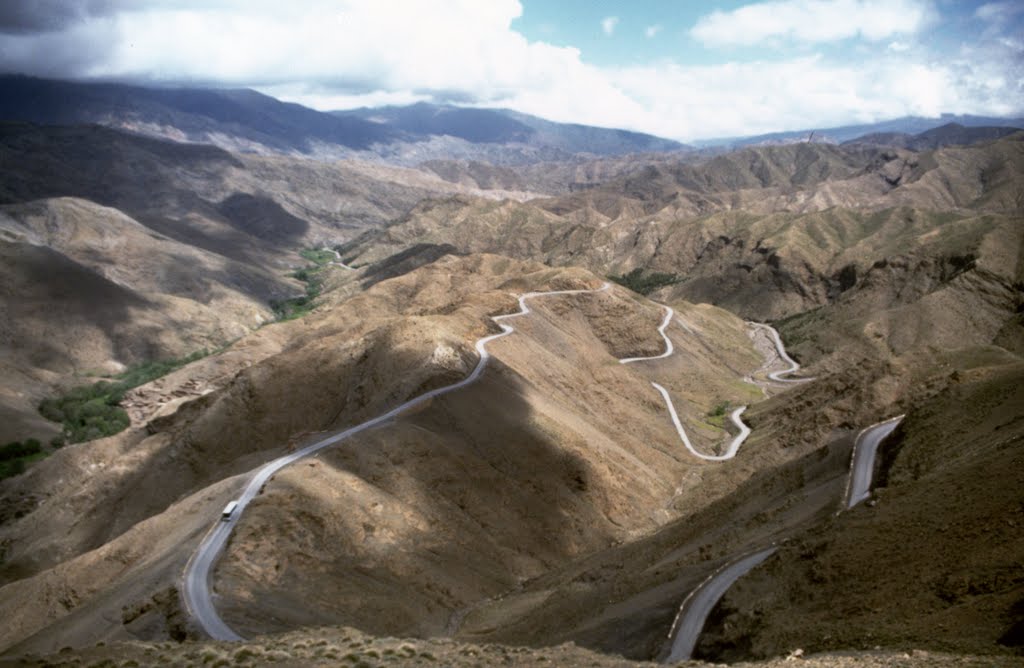
Driving in Morocco: Self-Drive or a Private Driver?
Driving in Morocco is legal and doable for confident drivers: you drive on the right, main highways are good, and most US, Canadian, Australian and New Zealand licenses are accepted by rental companies. The harder parts are city traffic, mountain passes, long distances to the Sahara, frequent police speed checks, and roads with livestock, pedestrians and very few signs in English. For a first trip, a multi-day route to the desert, or a family holiday, most travelers find a private driver less stressful and better value than it first looks.
This guide covers the rules you need to know, what the roads are really like, realistic driving times, and an honest comparison of self-drive versus a private driver, so you can choose what fits your trip.
Is it safe to drive in Morocco as a tourist?
Yes, for experienced and alert drivers, but it demands more attention than driving at home. Several governments, including Canada’s official travel advice for Morocco, note that road safety varies a lot by location and weather, and advise against driving at night. For wider safety advice, see our guide Is Morocco safe?
What you will typically deal with:
- Mixed traffic: cars, trucks, scooters, bicycles, donkey carts, grand taxis and pedestrians often share the same lane, especially near towns.
- Overtaking on two-lane roads: trucks and buses overtake on bends and hills. Leave space and expect the unexpected.
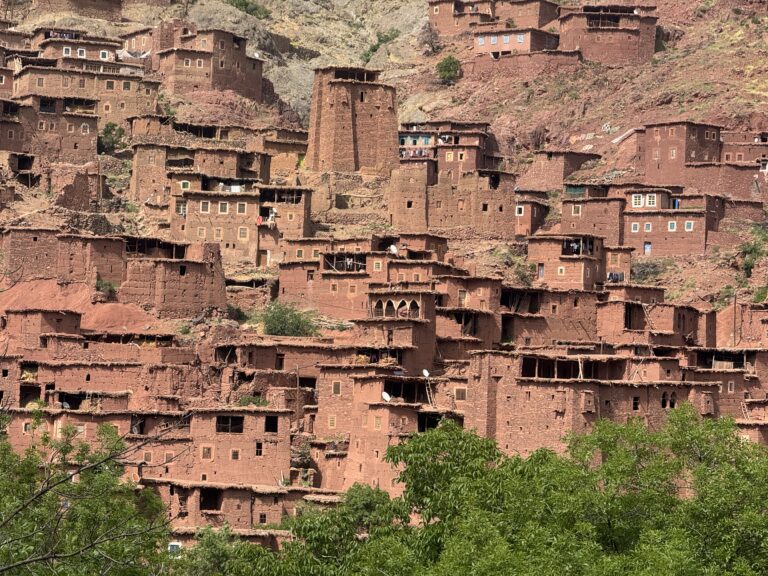
- Animals and people on rural roads: sheep, goats and children walking to school are common, particularly in the Atlas Mountains and the south.
- Night driving: unlit roads, unlit carts and bicycles make driving after dark the biggest avoidable risk.
What are the driving rules in Morocco?
Morocco drives on the right, and the rules are broadly similar to North America and Europe. The differences are mostly in enforcement and local habits.
| Rule | What to know |
|---|---|
| Side of the road | Right-hand traffic, left-hand overtaking |
| Speed limits | 120 km/h on motorways (autoroutes), up to 100 km/h on national roads, 60 km/h in towns and often 40 km/h in villages and near schools. Always follow the posted sign. |
| Speed checks | Fixed and mobile radar are common, especially at town entrances. Fines are usually paid on the spot, so keep some cash in dirhams. |
| Alcohol | The legal limit is very low; treat it as zero. Do not drink and drive. |
| Seat belts and phones | Seat belts for all passengers; no handheld phone use while driving. |
| Roundabouts | Priority rules can vary, and local drivers do not always yield. Approach slowly and watch the cars, not just the signs. |
| Police checkpoints | Frequent on national roads. Slow down, stop if signaled, and keep your license, passport and rental papers within reach. |
Do I need an International Driving Permit for Morocco?
It is strongly recommended, even if not every rental company asks for it. Licenses in English are generally accepted, but an International Driving Permit (IDP) makes police checks and rental pick-up simpler. US travelers can get one from AAA before leaving; Canadians from CAA; Australians and New Zealanders from their national motoring clubs. Most rental companies also require a minimum age (often 21+), a license held for at least one or two years, and a credit card for the deposit.
What are the roads like in Morocco?
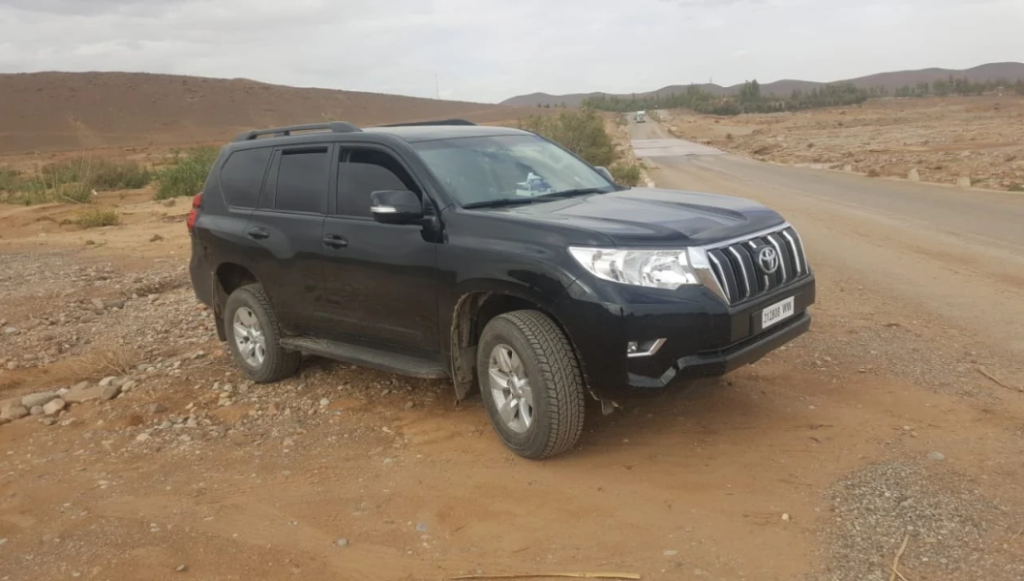
Road quality depends on where you go. The motorways between Casablanca, Rabat, Marrakech, Fes and Tangier are modern toll roads and easy to drive. The challenge is everything off them, which is exactly where most travelers want to go.
- Toll motorways: well maintained, with service areas. Tolls are paid in cash or by card at booths.
- National roads: generally paved and in fair to good condition, but often two lanes, with slow trucks and few safe places to overtake.
- The Tizi n’Tichka pass: the main route from Marrakech over the High Atlas to Ouarzazate climbs to about 2,260 m (7,415 ft). Expect long series of bends, roadworks, heavy trucks, and occasional snow or closures in winter.
- Southern and desert roads: long, straight and quiet, with fuel stations far apart. Sand can drift across the road near the dunes.
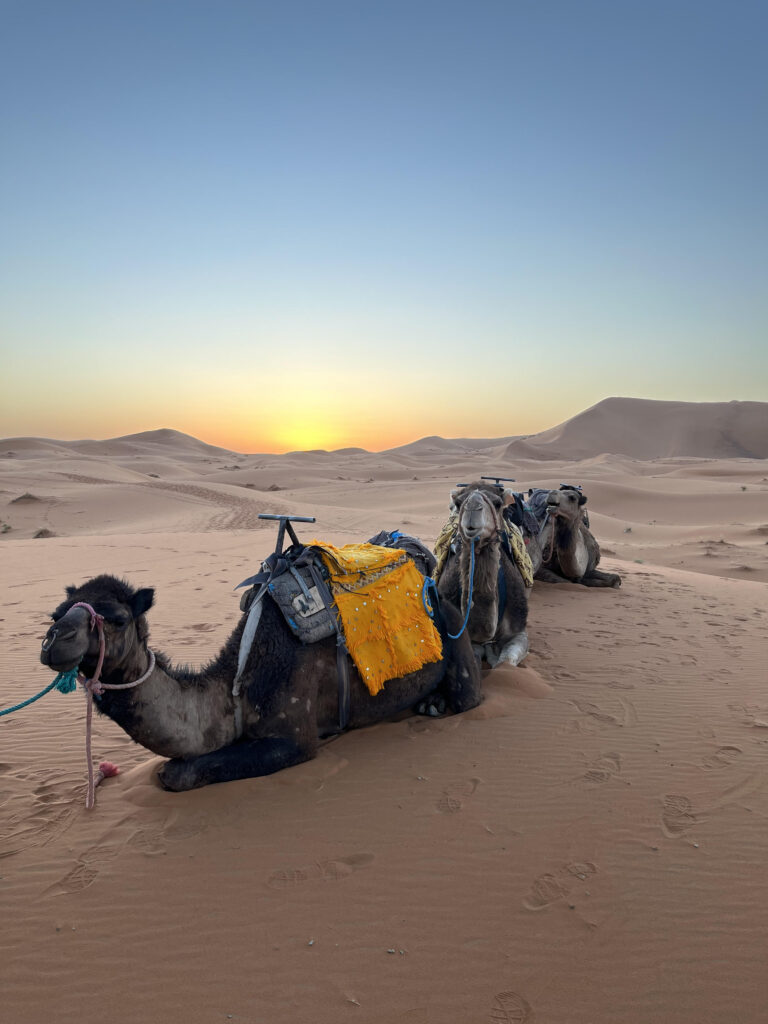
- Off-road tracks (pistes): reaching Erg Chegaga from M’Hamid means a sandy off-road track that requires a 4×4 and an experienced driver. Standard rental contracts usually exclude off-road driving from insurance cover.
What about driving in the cities?
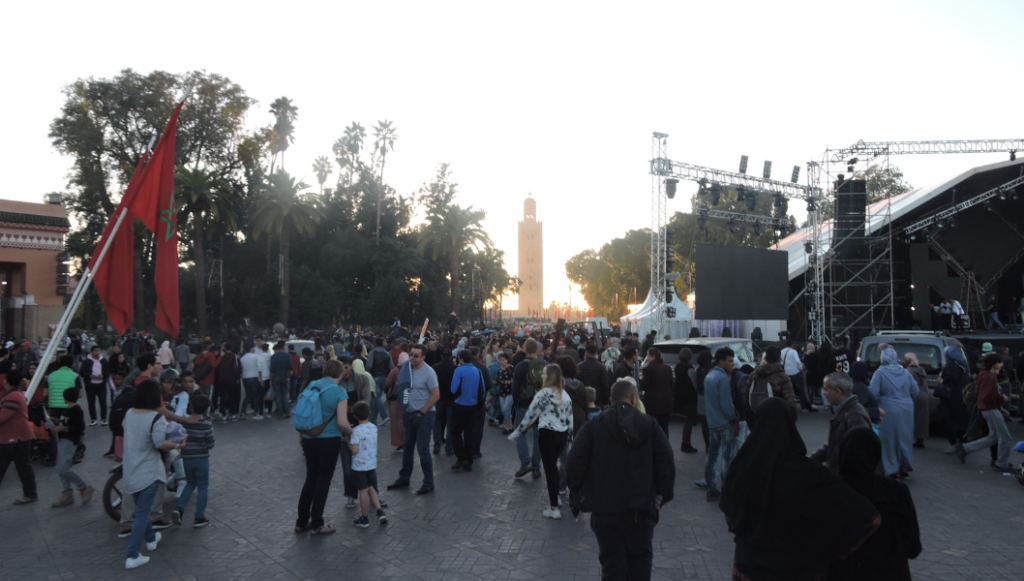
City driving is the part most visitors find hardest. Marrakech, Fes and Casablanca have heavy traffic, scooters weaving between lanes, and complex one-way systems. The old medinas cannot be entered by car at all, so if you are staying in a riad you will park outside the walls and walk, often with your luggage. Parking attendants in high-visibility vests (gardiens) watch cars in many streets and expect a small tip.
How long does it take to drive between Morocco’s main destinations?
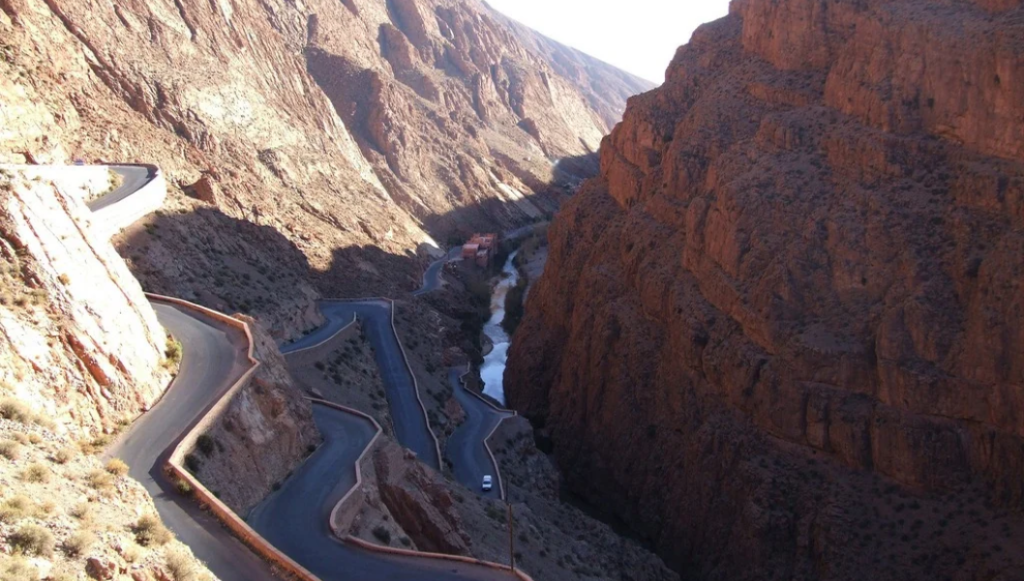
Longer than the map suggests. Distances look short, but mountain roads, villages, speed limits and photo stops slow you down. These are realistic driving times without long stops (for more routes, see our full Morocco driving distances and times guide):
| Route | Approx. distance | Driving time |
|---|---|---|
| Casablanca – Marrakech (motorway) | 240 km / 150 mi | 2.5–3 hours |
| Marrakech – Ouarzazate (via Tizi n’Tichka) | 193km / 119.9mi | 3.5 hours |
| Marrakech – Merzouga (Erg Chebbi) | 585km / 364mi | 9–10 hours |
| Marrakech – M’Hamid (gateway to Erg Chegaga) | 449km / 279mi | 7–8 hours, plus about 2 hours by 4×4 to the dunes |
| Merzouga – Fes | 468km / 290 mi | 7–8 hours |
| Fes – Chefchaouen | 198km / 123mi | 3.5–4 hours |
The most common mistake we see is planning Marrakech to the Sahara and back in too few days. If you want to see the desert properly, our 3-day Sahara desert tour from Marrakech is the realistic minimum, and longer routes are far more relaxed. For the full route and the best stops on the way, read our Marrakech to Merzouga driving guide.
Self-drive or a private driver: which is better for Morocco?
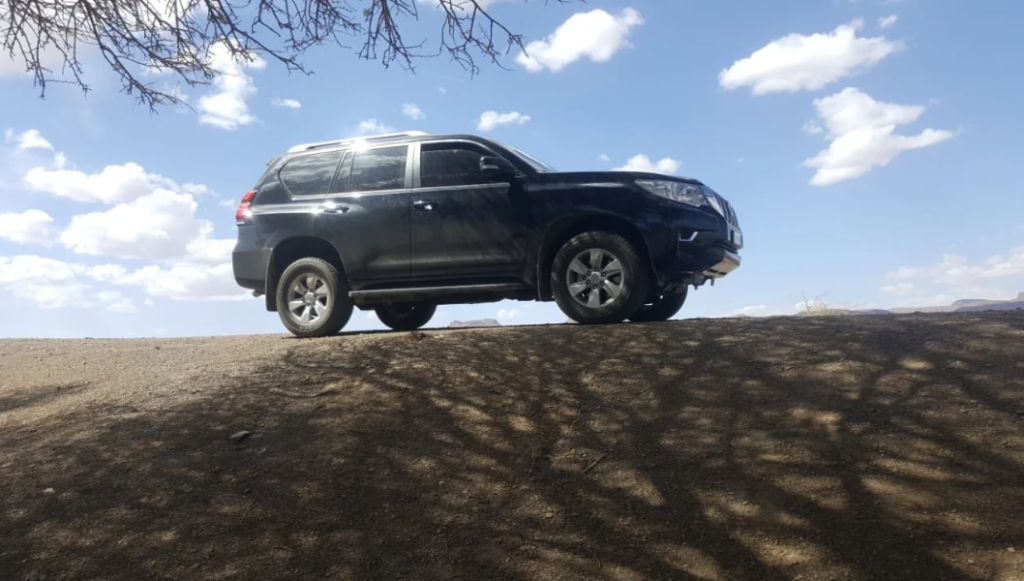
It depends on your driving experience, your route and how you want to spend your days. Here is an honest side-by-side comparison:
| Self-drive (rental car) | Private driver | |
|---|---|---|
| Flexibility | Full control of timing and stops | Full flexibility too: you decide when to stop, and the route is built around you |
| Stress | Navigation, city traffic, checkpoints, parking and fines are on you | You relax, look out the window and enjoy the scenery |
| Local knowledge | Depends on your research and GPS | Knows the roads, the best viewpoints, clean rest stops and local places to eat |
| Sahara access | Fine for paved roads to Merzouga; not suitable for the off-road track to Erg Chegaga | Desert transfers and 4×4 sections arranged as part of the trip |
| Language | Signs mostly in Arabic and French | Driver handles conversations, directions and checkpoints |
| Hidden costs | Fuel, tolls, parking, insurance excess, possible fines and damage deposit | Driver and vehicle included in a private tour price |
| Best for | Experienced drivers on shorter, simpler routes (coast, north, motorway trips) | First-time visitors, families, couples, long itineraries and anyone heading to the Sahara |
When self-drive makes sense
Renting a car can work well if you are a confident driver, you have driven in busy countries before, and your route is mostly on motorways and national roads, for example Casablanca, Rabat, the Atlantic coast and Essaouira. It also suits travelers who enjoy the challenge of driving as part of the adventure.
When a private driver makes more sense
A private driver is the better choice if this is your first time in Morocco, if you are traveling with children or older parents, if your itinerary includes the High Atlas and the Sahara, or if you simply want to spend long driving days enjoying the views rather than watching the road. It also removes the medina parking problem: your driver drops you as close as possible to your riad and arranges help with luggage.
If you want to understand what a driver actually does day to day, read our guide to hiring a private driver in Morocco.
Practical tips if you decide to drive yourself
- Book an automatic early: most rental cars in Morocco are manual, and automatics are fewer and usually more expensive.
- Choose full insurance: check the excess, and read what the policy excludes (tires, windscreen, underbody, off-road).
- Photograph the car at pick-up: every scratch, from every side, with the fuel level visible.
- Fill up whenever you can in the south: stations can be far apart between Ouarzazate, Zagora and the desert.
- Download offline maps: mobile coverage drops in the mountains and near the dunes.
- Never drive at night outside cities: plan each day to arrive before dark.
- Keep small cash in dirhams: for parking attendants, tolls and any on-the-spot fines.
- Do not drive onto sand: leave the car at your camp’s meeting point and let the camp arrange the transfer.
How a private driver fits into a tailor-made tour with Chegaga Travel
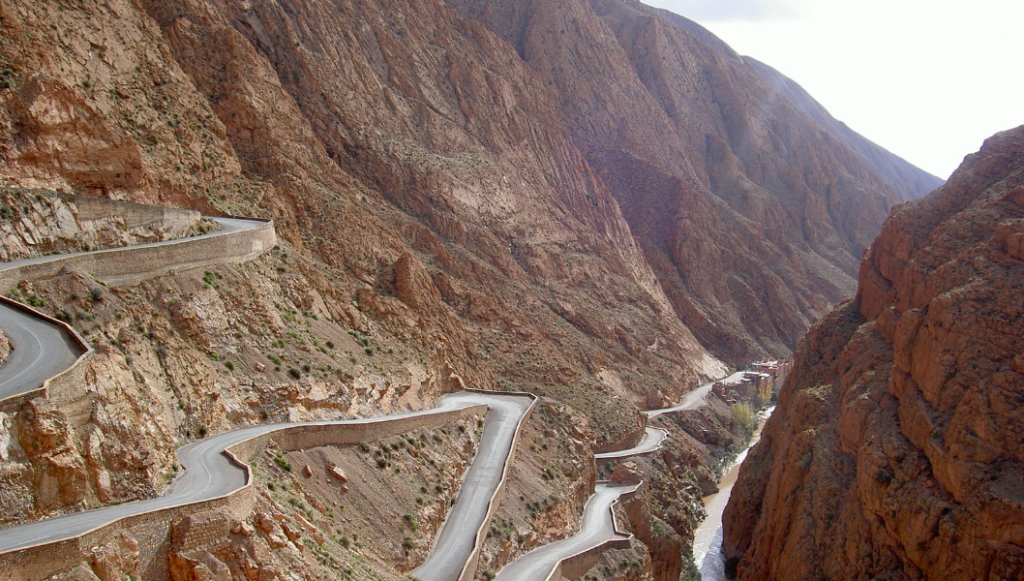
All our trips are private, never shared group tours, for a minimum of two travelers. Your private driver and vehicle stay with you for the whole journey, from your arrival at the airport or hotel to your last day. We build the route around your pace: shorter driving days with children, extra photo stops for photographers, or a night in the Dades Valley to break up the long road to the desert.
Our tailor-made tours include:
- Private driver and vehicle throughout the trip
- Accommodation and daily breakfast
- Local guides in the cities and at Aït Benhaddou, Imlil and the Ourika Valley
- Dinners in Ouarzazate, the Dades Valley, Zagora and the desert camp
Monument entrance fees, lunches, other dinners and drinks are not included. Private tours start from US$272 per person per day, based on two travelers. You can see how the price is built in our guide to how much a Morocco trip costs.
Popular routes with a private driver include our Erg Chegaga desert tours, multi-day private tours from Casablanca, and fully tailor-made Morocco tours from 3 to 35 days.


FAQ: Driving in Morocco
Can Americans drive in Morocco?
Yes. A valid US driver’s license is generally accepted by rental companies, and an International Driving Permit from AAA is strongly recommended for police checks. You will also need your passport and a credit card for the rental deposit. Most companies require drivers to be at least 21 and to have held their license for one or two years.
Is it hard to drive in Marrakech?
For most visitors, yes. Marrakech has dense traffic, many scooters, busy roundabouts and limited parking, and cars cannot enter the medina. If you rent a car, pick it up on the day you leave Marrakech and return it after your city stay, or use a private driver for the whole trip.
Can I drive to the Sahara Desert myself?
You can drive to Merzouga on paved roads, but it is a long trip of around 9–10 hours from Marrakech, best split over two days. Erg Chegaga is different: the last section from M’Hamid is an off-road track that needs a 4×4 and an experienced desert driver, so self-drive is not recommended.
Is a private driver in Morocco worth it?
For most first-time visitors, yes. A private driver handles navigation, checkpoints, parking and long mountain roads, and adds local knowledge you would not find alone. For two or more travelers on a multi-day route, the difference in cost compared with a rental car, fuel, tolls and insurance is often smaller than expected.
Should I avoid driving at night in Morocco?
Yes. Outside the cities, roads are often unlit, and you may meet pedestrians, animals, bicycles and carts without lights. Government travel advice, including Canada’s, recommends avoiding night driving. Plan each driving day so you arrive at your hotel or camp before sunset.
Plan your Morocco trip without the driving stress
If you would rather spend your trip watching the Atlas Mountains and the dunes go by than reading road signs in French, tell us your dates, your interests and how many people are traveling. We will send you a free personalized itinerary and quote, with no obligation.
Request your free tailor-made itinerary
📅 Last updated: