Moroccan Zellige: History, Patterns and How It Is Made
In short: Moroccan zellige (also written zellij) is a mosaic of small, hand-cut pieces of glazed terracotta tile, assembled into geometric patterns. Each piece is chipped by hand from a glazed tile with a sharp hammer, then fitted face-down into a panel. The craft reached its golden age in 14th-century Fes, which is still the capital of zellige today.
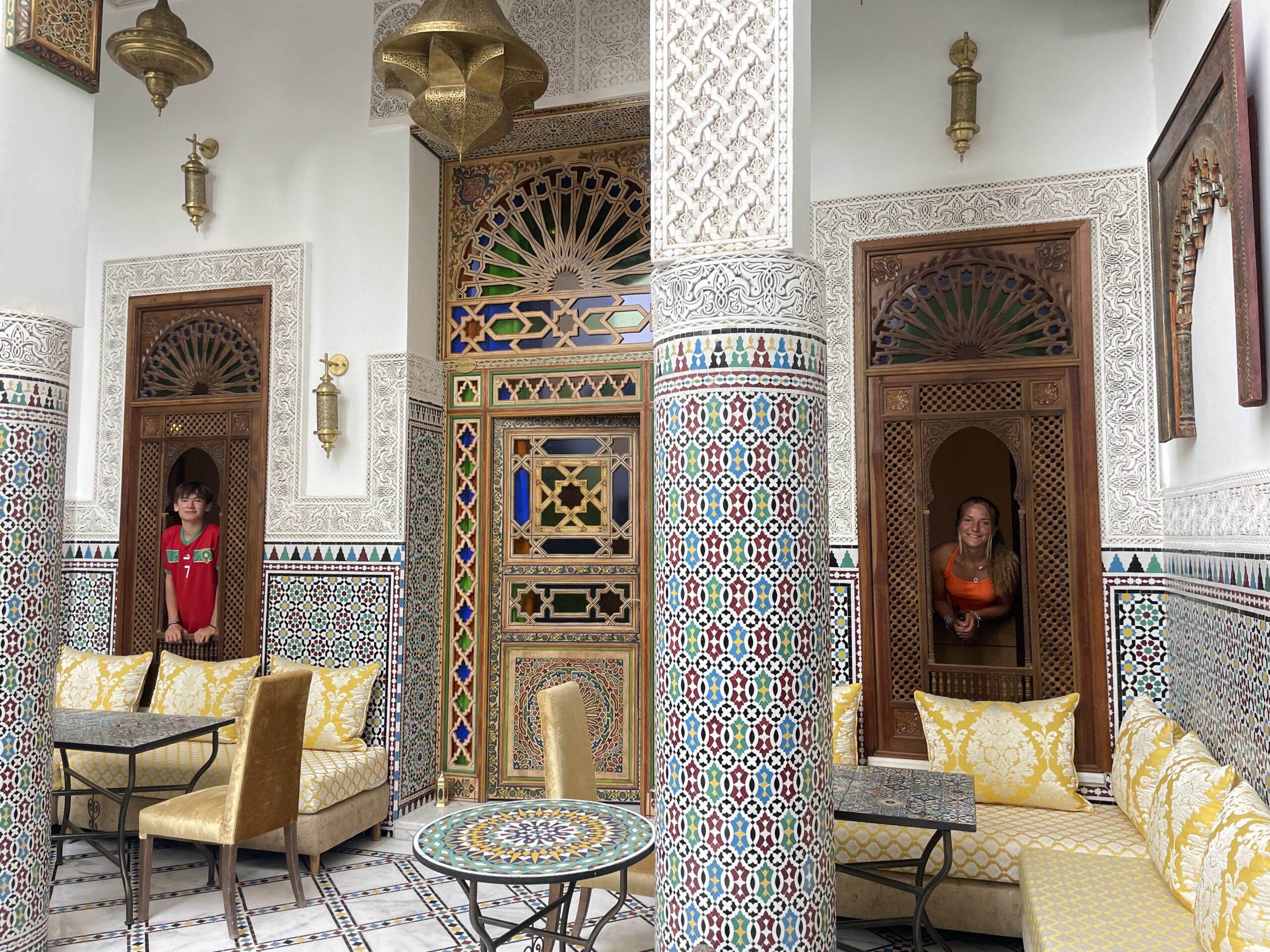
Zellige is everywhere in Morocco: around fountains, on the walls of riad courtyards, in palaces and mosques. Look closely and you will notice that no two pieces are exactly alike. Every star, diamond and triangle was cut by hand, and the glaze catches the light a little differently on each one.
This guide explains what zellige is, where it comes from, how a panel is made step by step, how the patterns work, and where you can see the finest zellige in Morocco or even try it yourself.
The History of Zellige in Morocco
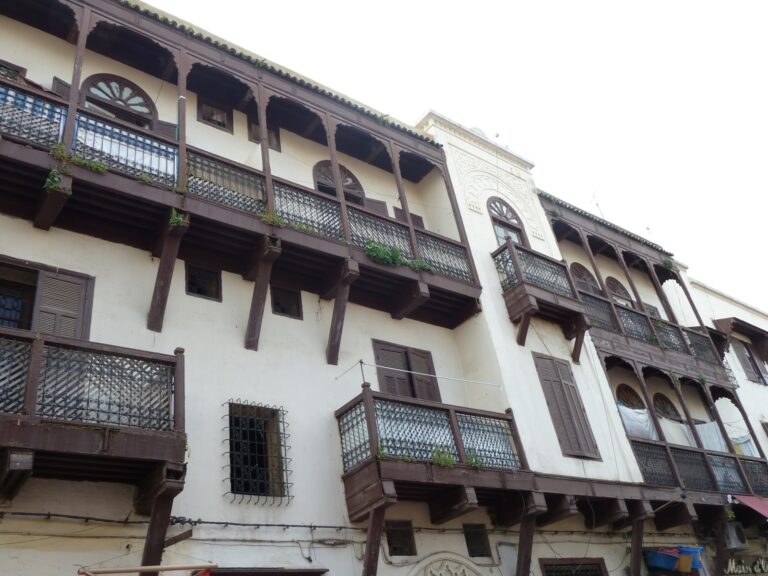
Historians trace the roots of Moroccan zellige back about a thousand years, to the tilework of Moroccan and Andalusian monuments. The craft reached its golden age under the Marinid dynasty in the 14th century, when the sultans filled Fes with madrasas (religious colleges) decorated from floor to ceiling.
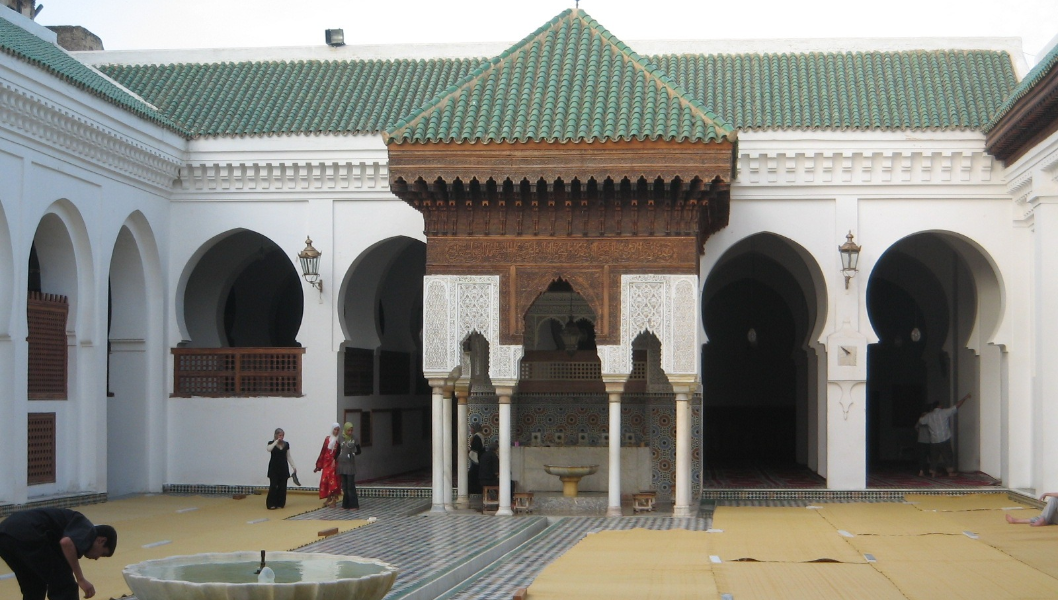
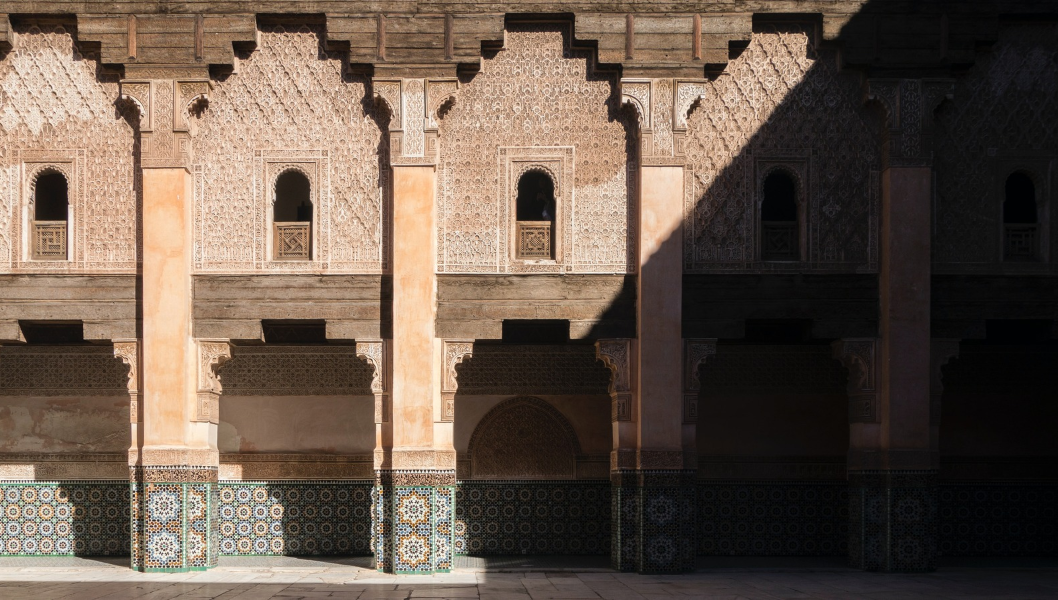
Two of the finest examples still stand in the Fes medina: the Al-Attarine Madrasa, built between 1323 and 1325, and the Bou Inania Madrasa, built in the 1350s. In both, the lower walls are covered with zellige, the middle with carved stucco and the upper walls and ceilings with carved cedar wood. That three-layer decoration became a signature of Moroccan architecture.
The tradition continued under later dynasties, including the Saadians in 16th-century Marrakech, and it never stopped. Zellige makers in Fes still pass their skills from master (maâlem) to apprentice, and their work now decorates homes, hotels and buildings around the world.
How Moroccan Zellige Is Made
Making a zellige panel is slow, careful work that takes several specialists. Here is the traditional process used in Fes:
| Step | What happens |
|---|---|
| 1. Preparing the clay | Local clay from the Fes region is soaked, kneaded by hand to remove impurities and shaped into flat square tiles that dry in the sun. |
| 2. First firing | The dried tiles are fired in a kiln to harden the clay. |
| 3. Glazing | Each tile is coated by hand on its top face with a coloured enamel glaze. |
| 4. Second firing | The tiles go back into the kiln so the glaze fuses to the clay. The uneven heat of traditional kilns gives each tile slightly different shades. |
| 5. Hand-cutting | A cutter chips each glazed tile into small shapes with a sharpened hammer called a menqach, working from the back. The cut leaves a slightly bevelled edge that lets the pieces fit tightly together. |
| 6. Assembly | The pieces are laid face-down on the workshop floor following the pattern, so the craftsman cannot see the finished design as he builds it. Mortar is then poured over the back. |
| 7. Installation | Once the mortar has set, the panel is turned over and fixed to the wall, floor or fountain. |
Why it takes so long to learn: a master cutter shapes each piece by eye, and one wrong strike ruins it. Assembling a complex star pattern face-down, often from memory, takes many years of practice.
Zellige Patterns and Colours
Zellige patterns are built from a few basic shapes, such as stars, crosses, diamonds, triangles and small interlocking pieces, repeated and rotated until they cover a whole wall. The most admired designs radiate from a central star with 8, 12, 16 or even more points, then spread outward in endless, perfectly connected lines.
Traditional zellige uses a small palette of natural glazes:
- White and black, often used to outline the pattern
- Cobalt blue, especially associated with Fes
- Green, from copper-based glazes
- Honey yellow and earthy tones
Because the designs avoid human and animal figures, Moroccan artists explored geometry instead, and zellige became one of the most sophisticated expressions of geometric art in the world.
Zellige, bejmat and mosaic: what’s the difference?
Zellige is the mosaic of small hand-cut pieces. Bejmat is a different Moroccan tile: a simple glazed or unglazed rectangle, laid whole, often for floors. Many modern “zellige tiles” sold abroad are whole square glazed tiles, not cut mosaics. Beautiful, but not the same as the hand-cut panels of the Fes madrasas.
Where to See the Best Zellige in Morocco
| Place | City | Why go |
|---|---|---|
| Al-Attarine Madrasa | Fes | A small 14th-century courtyard, considered one of the finest examples of Marinid decoration |
| Bou Inania Madrasa | Fes | The largest Marinid madrasa of Fes, near the Blue Gate (Bab Boujloud) |
| Fes medina workshops | Fes | See zellige being cut and assembled by hand today |
| Ben Youssef Madrasa | Marrakech | A large Saadian-era courtyard of zellige, stucco and cedar |
| Bahia Palace | Marrakech | 19th-century palace with zellige floors and walls next to painted ceilings |
| Hassan II Mosque | Casablanca | A modern showcase of traditional crafts, completed in 1993 |
Planning your visit? Read our Fes travel guide and Marrakech travel guide.
Try Zellige Yourself in Fes or Marrakech
Zellige tile-making in Fes
On our 12-day Morocco arts and crafts tour, a professional instructor in Fes shows you how zellige pieces are shaped and fitted into star patterns, and you try it with your own hands.
Zellige painting in Marrakech
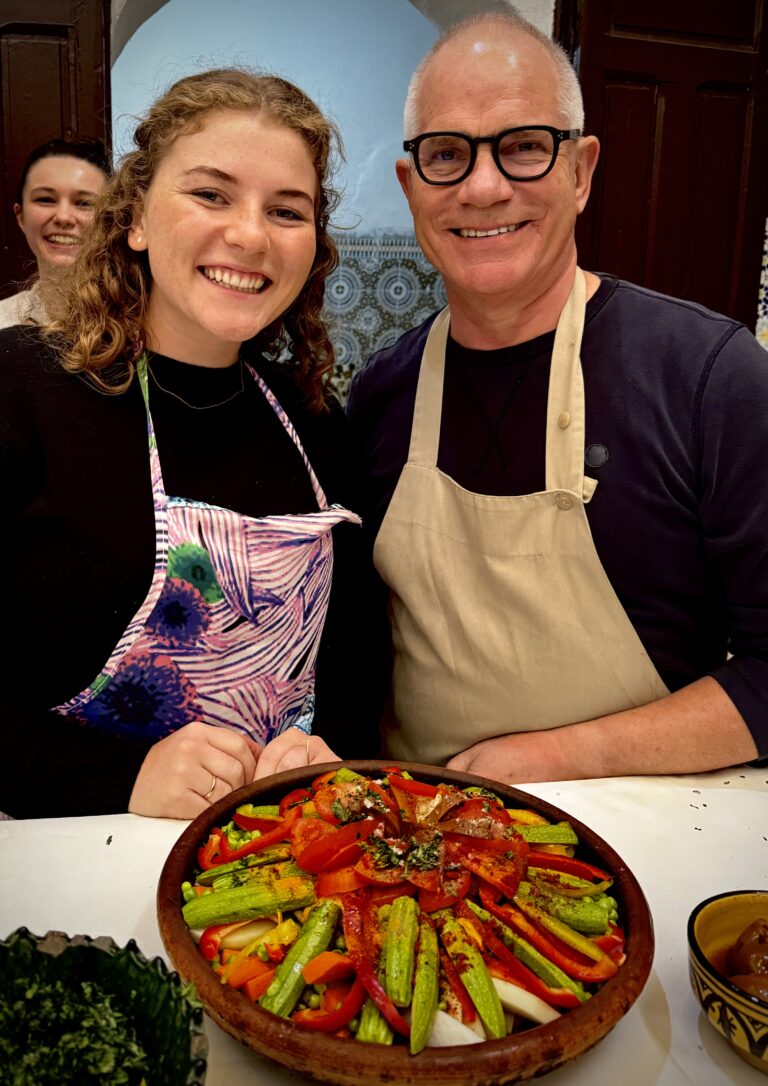
At Art House Marrakech, you paint your own tile with natural pigments and traditional tools in a 2-hour session. It is a painting workshop rather than tile cutting, and a relaxed way to explore zellige colours and patterns.
Both workshops can be added to any private itinerary. See all our Morocco artisan tours.
Moroccan Zellige: Frequently Asked Questions
What is zellige?
Zellige is a traditional Moroccan mosaic made of small pieces of glazed terracotta tile. Each piece is cut by hand into a geometric shape and assembled face-down into panels that decorate walls, floors and fountains.
Where is zellige made?
Fes is the historic capital of Moroccan zellige, and its workshops still use local clay and traditional hand-cutting. Zellige is also made in other Moroccan cities, such as Meknes, Marrakech and Tetouan.
How is zellige cut?
After the tiles are glazed and fired, a craftsman chips each tile into small shapes with a sharpened hammer called a menqach. The pieces are then laid face-down following the pattern, covered with mortar, and turned over once dry.
How do I recognise authentic hand-cut zellige?
Hand-cut zellige has slightly irregular, bevelled edges, small variations in colour and a glaze that catches the light unevenly. Machine-made tiles have perfectly straight edges and a flat, uniform surface.
Where can I see the best zellige in Morocco?
The finest historic zellige is in the Al-Attarine and Bou Inania madrasas in Fes. In Marrakech, visit the Ben Youssef Madrasa and the Bahia Palace, and in Casablanca the Hassan II Mosque.
Can I take a zellige workshop in Morocco?
Yes. Our 12-day Morocco arts and crafts tour includes a zellige tile-making workshop in Fes, and you can also join a 2-hour zellige painting session at Art House Marrakech. Both can be added to any private tour.
See Zellige Made by Hand in Fes
Join a private journey through Chefchaouen, Fes and Marrakech, with zellige, weaving, embroidery and zwaq workshops included and no shopping stops.
Sources
📅 Last updated: