Moroccan Embroidery: Fassi, Rabati and the Women Keeping It Alive
In short: Moroccan embroidery, called tarz, is a family of regional needlework styles named after the towns where they developed: Fes, Rabat, Salé, Meknes, Tetouan, Chefchaouen and Azemmour. The best known is Fes embroidery (tarz al-fassi), worked thread by thread so that the design looks exactly the same on both sides of the fabric. Today it is kept alive mostly by women embroiderers and cooperatives.
Walk into a Moroccan home on a wedding day and you will see embroidery everywhere: on the bride’s kaftan, on cushions, napkins and the curtains around the bed. Each region once had its own colours, stitches and patterns, and a trained eye could tell a Fes piece from a Rabat piece at a glance.
This guide explains the main styles of Moroccan embroidery, how Fes embroidery is made, the women who keep the craft alive, and where you can see it and try it yourself on a trip to Morocco.
What Is Moroccan Embroidery?
In Morocco, embroidery has traditionally been a craft of the towns. Weaving rugs and blankets belonged to rural and mountain communities, while fine embroidery was stitched in the houses of the old medinas, mostly by women and girls.
Textile historians usually divide Moroccan embroidery into two broad groups:
- Urban embroidery, from cities such as Fes, Meknes, Rabat, Salé, Tetouan, Chefchaouen, Azemmour and Essaouira. Each city developed a recognisable style.
- Amazigh (Berber) embroidery, made in rural communities, with its own symbols and techniques.
Several northern towns were shaped by Muslim and Jewish families who arrived from Andalusia after leaving Spain, and that heritage can still be seen in the floral and geometric patterns of Rabat, Tetouan, Chefchaouen and Azemmour.
Fes Embroidery (Tarz al-Fassi): The Double-Sided Stitch
Fes embroidery, also called tarz al-fassi or tarz al-ghorza, is the best-known and one of the most demanding styles in Morocco. Its secret is the double running stitch. The embroiderer stitches a line of evenly spaced stitches, then comes back along the same line to fill the gaps. The result is a design that looks identical on the front and the back: there is no wrong side.
It is a counted-thread technique. Instead of following a pattern drawn on the cloth, the embroiderer counts the threads of the fabric for every stitch. The whole sequence must be planned in advance, because one wrong count shows on both sides.
Colours, materials and patterns
- Materials: silk or cotton thread on linen, cotton or silk fabric.
- Colours: traditionally a single colour per piece, such as blue, red, green, black or gold. Modern pieces often use several colours.
- Patterns: precise, symmetrical geometric and floral motifs, sometimes with a stylised tree of life.
- Uses: bridal and ceremonial clothing, kaftans, and household linens such as napkins, tablecloths and cushion covers. Because both sides look the same, it is ideal for table linen.
A modern twist in its history: Fes embroidery is old, but its spread across the whole country is more recent. In the early 20th century, during the First World War, French-run craft programmes promoted the Fes style in schools and workshops throughout Morocco. That is one reason it is now seen as the Moroccan embroidery.
Today three kinds of embroidery dominate in Fes: hand-stitched Fes embroidery, gold thread embroidery and machine embroidery. When you shop, it helps to know the difference (see the FAQ below).
The Main Styles of Moroccan Embroidery
Moroccan embroidery is usually described by seven town styles. Here is how to recognise them:
| Style | What makes it different | Typical uses |
|---|---|---|
| Fes (tarz al-fassi) | Counted-thread double running stitch, identical on both sides; precise geometric and floral patterns, traditionally in one colour | Kaftans, bridal clothing, napkins, tablecloths, cushions |
| Rabat (tarz rbati) | Bold, colourful designs with strong Andalusian influence, often stitched freely over a traced pattern; also known for luxurious gold thread work | Curtains, covers, kaftans, belts |
| Salé | Close to Rabat across the river, with two distinct local styles of its own | Household textiles |
| Meknes (tarz meknassi) | Similar to Fes and Salé work, with Amazigh influence; many colours on a cream background. Meknes was also known for gold and leather embroidery | Cloths, covers, leather goods |
| Tetouan | Vivid, multicolour designs of Andalusian character, stitched over traced patterns | Embroidered silk bands for mirrors (tenchifa), believed to protect against the evil eye |
| Chefchaouen | Geometric designs with Andalusian roots | Large wedding hangings (arid) placed around the couple’s bed |
| Azemmour | Stylised animals, birds and plants left in the undyed fabric while the background is filled in; compared to Italian Assisi work | Long strips of undyed linen, wedding hangings |
If you visit the north of Morocco, you can see several of these towns on one trip. Read our guides to Chefchaouen, Rabat and Fes.
The Women Who Keep Moroccan Embroidery Alive
For generations, embroidery was taught at home, from mother and grandmother to daughter. Girls stitched linens for their own trousseau, and embroidered pieces marked the big moments of family life, especially weddings. Later, girls also learned Fes embroidery at school and in craft programmes.
Modern homes now buy many textiles ready-made, and much of the embroidery sold in the souks is done by machine. Hand embroidery survives thanks to skilled women, many of them organised in cooperatives. These cooperatives let women work from home or in a shared space, set fair prices and sell their work directly.
When you buy a hand-embroidered piece from a cooperative, you pay for many hours of counted stitches, and you help a centuries-old skill stay alive.
Where to See and Learn Moroccan Embroidery
Fes: embroidery with a women’s cooperative
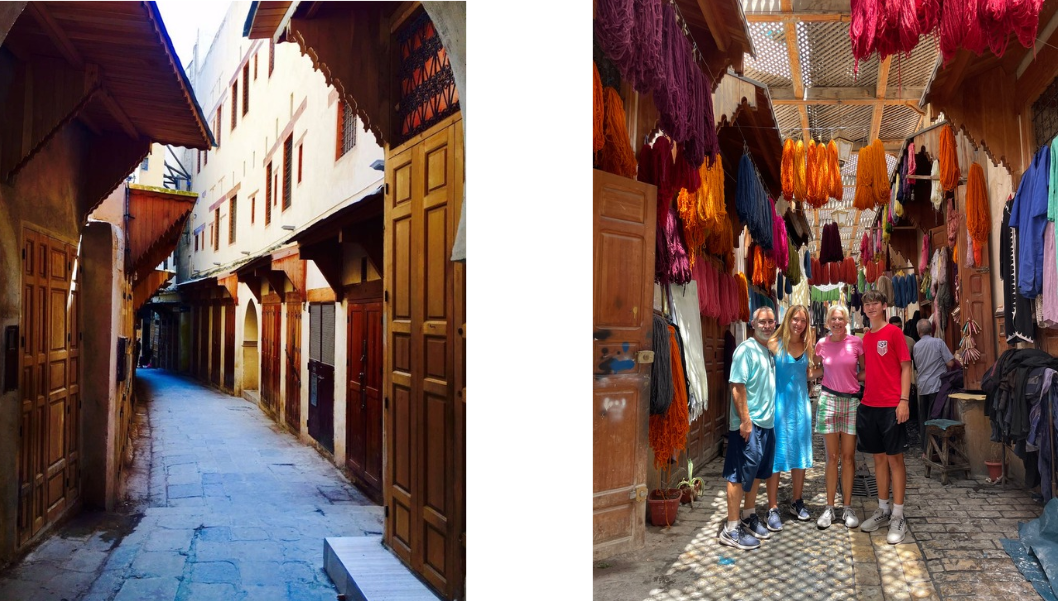
Fes is the best place to discover Moroccan embroidery. On our 12-day Morocco arts and crafts tour, you spend time with a women’s artisan cooperative, learn about Fassi patterns and threads, and try the first stitches yourself with a professional instructor.
Add it to any trip
Not planning a 12-day trip? We can add an embroidery experience in Fes to any private itinerary. See all our Morocco artisan tours and workshops, from rug weaving to zwaq painting.
Tip: look closely at the embroidery on kaftans, cushions and table linen in riads and palaces as you travel. Once you know the double-sided Fes stitch, you will start spotting it everywhere.
Moroccan Embroidery: Frequently Asked Questions
What is Moroccan embroidery called?
Embroidery in Morocco is called tarz. Each style is named after its town, for example tarz al-fassi for Fes embroidery, also known as tarz al-ghorza, or tarz rbati for Rabat embroidery.
What makes Fes embroidery special?
Fes embroidery uses a counted-thread double running stitch, so the design looks exactly the same on both sides of the fabric. Each stitch is placed by counting the threads of the cloth, which makes it one of the most demanding embroidery styles in Morocco.
What are the main styles of Moroccan embroidery?
The seven classic town styles are Fes, Rabat, Salé, Meknes, Tetouan, Chefchaouen and Azemmour. Alongside them, rural Amazigh communities have their own embroidery traditions.
How can I tell hand embroidery from machine embroidery?
Turn the piece over. Genuine Fes embroidery looks the same on both sides, with small, slightly irregular stitches. Machine embroidery usually has a different, messier back, with knots and loose threads, and perfectly identical stitches. Hand-made pieces also cost more because they take many hours.
Where can I learn Moroccan embroidery in Morocco?
Fes is the best place to learn. Our 12-day Morocco arts and crafts tour includes a Fassi embroidery experience with a women’s artisan cooperative, and we can add the same experience to any private itinerary that passes through Fes.
Discover Moroccan Embroidery With Local Artisans
Join a private journey through Fes, Chefchaouen and Marrakech, with embroidery, weaving, zellige and zwaq workshops included and no shopping stops.
Sources
📅 Last updated: