The Road of a Thousand Kasbahs: Skoura to the Valley of Roses
The Road of a Thousand Kasbahs is the stretch of the N10 highway that runs east from Ouarzazate through the Skoura oasis, the Valley of Roses at Kelaat M’Gouna and on to the Dades Valley. It takes its name from the earthen kasbahs and fortified villages (ksour) that line the palm groves and riverbeds along the way. Most travelers drive it on their way from Marrakech to the Sahara, and it is one of the best reasons to take that journey slowly with a private driver.
This guide covers where the route starts and ends, what to see between Skoura and the Valley of Roses, realistic driving times, the best season to go, and how to fit it into a private multi-day Morocco itinerary.
Where Is the Road of a Thousand Kasbahs?
The route follows the N10 between Ouarzazate and Tinghir, in southern Morocco, between the High Atlas to the north and the Jbel Saghro range to the south. The section most people mean is the first half: Ouarzazate to Skoura, Kelaat M’Gouna and Boumalne Dades.
The name is a nickname rather than an official road name. Some writers stretch it to cover the whole southern kasbah region, including the Draa Valley toward Zagora. On the ground, the kasbahs are densest in the Skoura palm grove and the side valleys around Kelaat M’Gouna and the Dades.
| Stop | Approx. distance from Ouarzazate | Approx. driving time from previous stop |
|---|---|---|
| Ouarzazate | 0 km | About 4 hours from Marrakech via the Tizi n’Tichka pass |
| Skoura oasis | About 40 km | 40–45 minutes |
| Kelaat M’Gouna (Valley of Roses) | About 93km | About 1.5 hour |
| Boumalne Dades (Dades Gorge turn-off) | About 123km | About 2 hours |
| Tinghir (Todra Gorge) | About 173km | About 2.41 hours |
The driving itself is short. What takes time are the stops: walking in the palm grove, visiting a kasbah, a rosewater cooperative, and photo stops on the high plateau.
What Is the Difference Between a Kasbah and a Ksar?
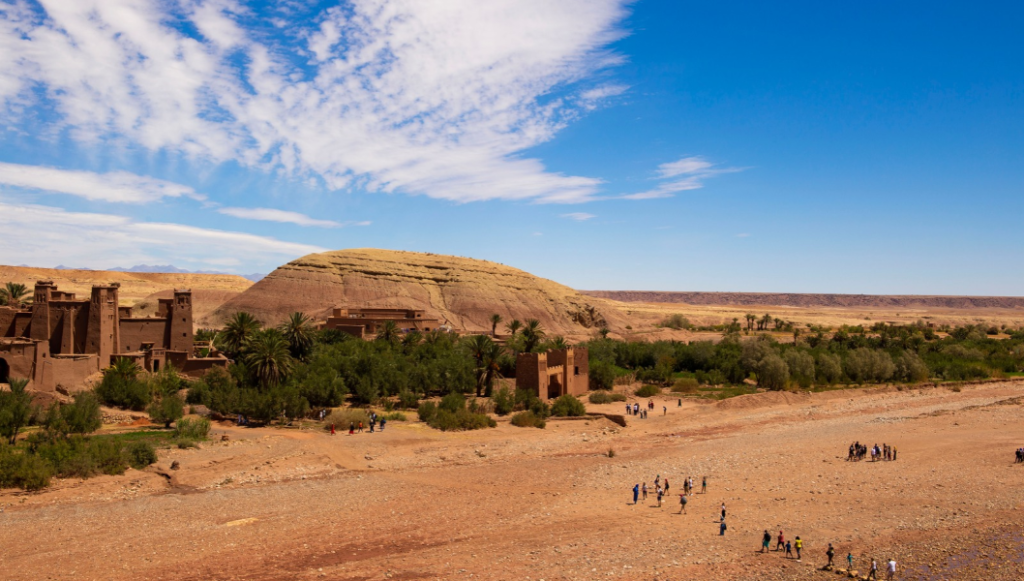
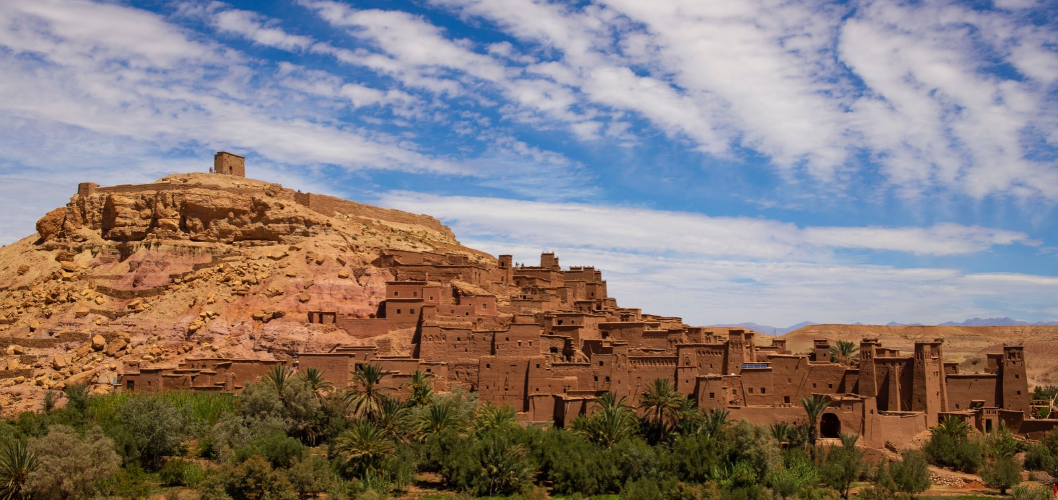
A kasbah is a fortified house built for one powerful family, usually with tall corner towers. A ksar (plural ksour) is a fortified village where many families lived together behind one outer wall.
Both are built from rammed earth (pisé) mixed with straw, sometimes with sun-dried mud bricks on the upper floors. The decorative geometric patterns cut into the towers are typical of the region. Because earth needs constant maintenance, many kasbahs you pass are partly ruined, while others have been restored as museums, family homes or guesthouses. Do not enter abandoned structures on your own; walls and floors can be unstable.
Skoura: The Palm Grove of Kasbahs
Skoura is a large, still-farmed oasis where kasbahs stand among date palms, olive trees and small irrigated fields. It is the first major stop east of Ouarzazate and the most rewarding place on the route to see kasbahs up close.
Kasbah Amridil
Kasbah Amridil is the best-known kasbah in Skoura and one of the few you can visit inside. Parts of it date back roughly to the 17th century, and it is still owned by the family that built it. Inside you can see the old olive press, grain stores, kitchens and the view from the roof over the palm grove. Many travelers recognize it from the old 50-dirham banknote. A small entrance fee is paid on site (monument entrance fees are not included in our tours).
Walking in the palm grove
The palm grove is crossed by dirt lanes and irrigation channels (seguias) that are still used to share water between families. An hour’s walk with a local guide is the best way to understand how the oasis works. Morning or late afternoon light is the best time for photos and for comfortable temperatures.
Staying overnight in Skoura
Skoura has several guesthouses and boutique hotels set inside or beside restored kasbahs. A night here is a quiet alternative to staying in Ouarzazate, and it shortens the following day’s drive to the Dades Valley.
The Valley of Roses at Kelaat M’Gouna
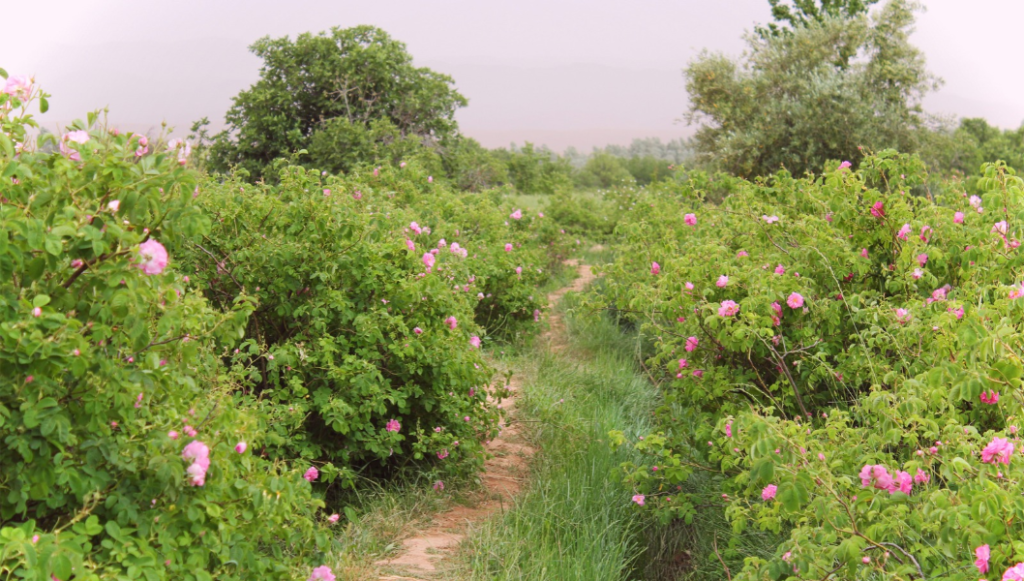
The Valley of Roses is the area around Kelaat M’Gouna and the M’Goun river valley, where farmers grow Damask roses in hedges along the edges of their fields. The petals are distilled into rosewater and rose oil, which you will see sold in cooperatives and shops all over town.
When do the roses bloom?
The roses bloom for a few weeks in spring, usually from late April into May. Kelaat M’Gouna holds its annual Rose Festival during the harvest, generally in May. Outside that window there are no flowers in the fields, but the valley is still green and beautiful, and the rosewater cooperatives are open year-round.
What to do in the Valley of Roses
- Visit a rosewater cooperative to see how the petals are distilled and to buy rosewater, creams and soaps directly from producers.
- Drive or walk into the M’Goun valley on the smaller road north of town toward Bou Thrarar, where kasbahs sit above terraced fields.
- Stop at viewpoints over the river, where green fields, rose hedges and red earth villages are seen together.
Continuing to the Dades Valley and Gorge
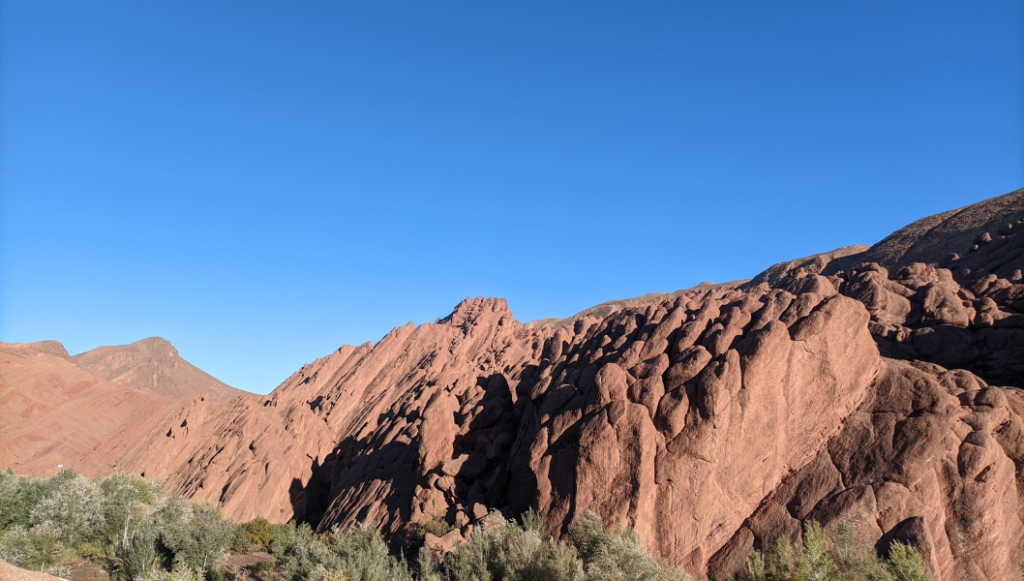
About 30 minutes past Kelaat M’Gouna, Boumalne Dades is the turn-off for the Dades Gorge. Most private itineraries spend the night in the gorge after a day on the Road of a Thousand Kasbahs.
The road into the gorge passes the rounded rock formations often called the “Monkey Fingers,” then climbs a famous set of hairpin bends near Tamellalt. Short walks into the side canyons are easy to add. From the Dades, the next day typically continues to the Todra Gorge near Tinghir and on to Merzouga and the Erg Chebbi dunes.
When Is the Best Time to Travel the Road of a Thousand Kasbahs?
Spring (March to May) and autumn (September to November) are the most comfortable seasons, with mild days and clear light. Late April and May add the rose harvest at Kelaat M’Gouna.
- Spring: green palm groves, the rose season and snow often still visible on the High Atlas.
- Summer (June to August): hot in the middle of the day. Start early, plan indoor kasbah visits around midday and keep the walks for late afternoon.
- Autumn: the date harvest in the oases, warm days and cooler evenings.
- Winter (December to February): sunny days but cold nights. The Tizi n’Tichka pass can occasionally close for a few hours after snow, so a flexible private schedule helps.
Why Drive This Route With a Private Driver?
On a shared desert tour, the Road of a Thousand Kasbahs is often passed at speed, with one short stop before reaching the hotel in the Dades. With your own driver and vehicle, the route becomes a destination in itself.
- Stop when you want: a viewpoint, a village market, a kasbah that catches your eye.
- Choose your pace: split the drive with a night in Skoura instead of rushing from Marrakech to the Dades in one long day.
- Visit with local knowledge: your driver knows which kasbahs are open, which cooperatives to visit, and where to walk safely.
- Travel comfortably: a private, air-conditioned vehicle for your group only, ideal for couples, families and friends.
How the Road of a Thousand Kasbahs Fits a Private Itinerary
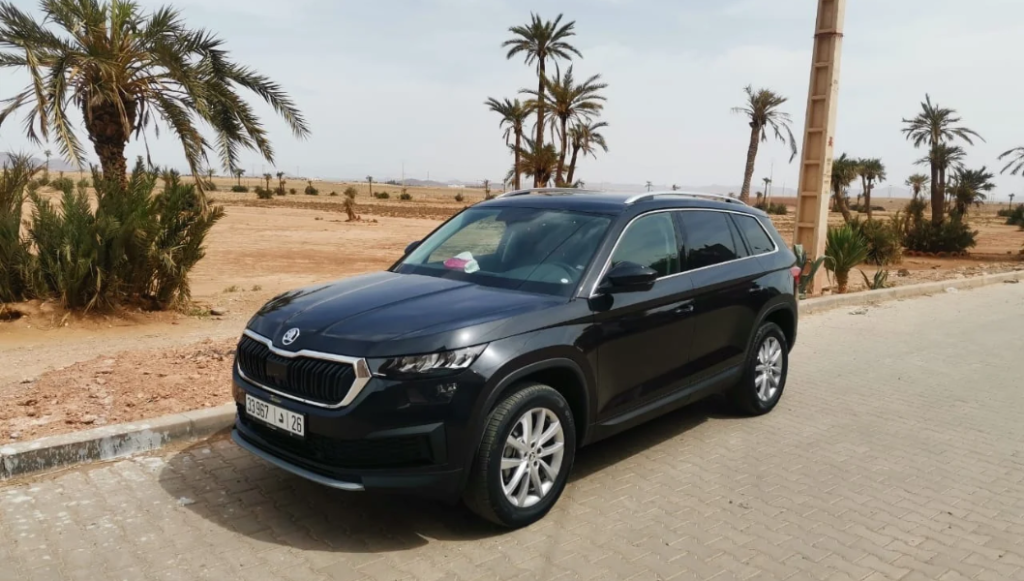
The route sits between Marrakech and the Sahara, so it fits naturally into any private tour that includes Merzouga, and into longer southern loops. Because all our tailor-made Morocco tours are planned around each traveler, you decide how much time to spend on this road. Here is a typical pace we suggest for travelers who want time on this road:
| Day | Route | Highlights |
|---|---|---|
| Day 1 | Marrakech – Tizi n’Tichka – Aït Benhaddou – Skoura | High Atlas pass, guided visit of the UNESCO-listed Ksar of Aït Benhaddou, overnight in a Skoura kasbah guesthouse |
| Day 2 | Skoura – Valley of Roses – Dades Gorge | Kasbah Amridil, palm grove walk, rosewater cooperative, Monkey Fingers, dinner and overnight in the Dades |
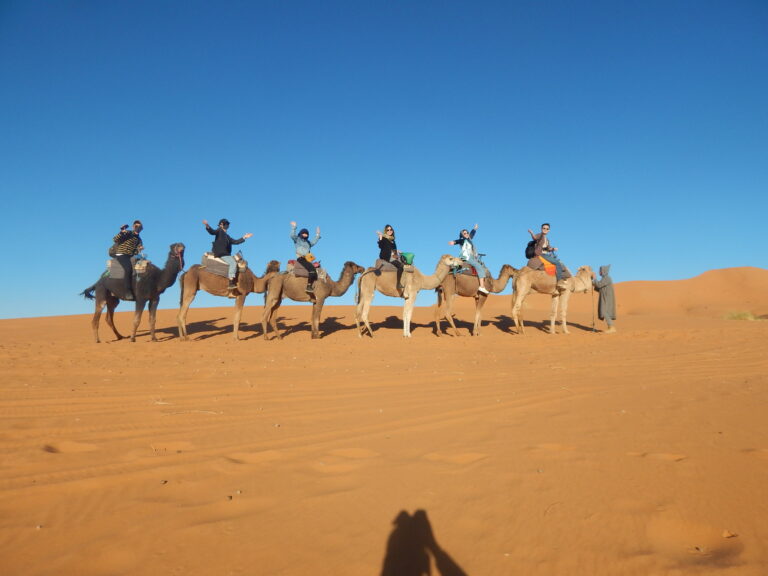
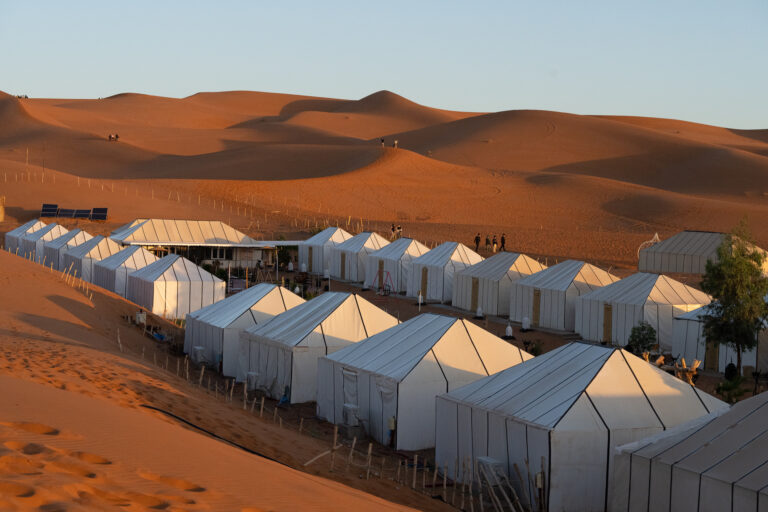
| Day 3 | Dades – Todra Gorge – Merzouga | Todra canyon walk, desert arrival, camel ride to camp in the Erg Chebbi dunes |
From Merzouga, the trip can continue to Fes, return to Marrakech through the Draa Valley, or extend to the Erg Chegaga desert. You can see full routes in our 3-day Sahara desert tour from Marrakech, our private tours of southern Morocco, and our 10-day Morocco tour from Marrakech. Photographers can add extra time in the gorges with our Dades Valley photography tour.
Our private tours start from US$272 per person per day, based on 2 travelers, and include your private driver and vehicle for the whole trip, accommodation, daily breakfast, local guides at Aït Benhaddou, and dinner in places such as Ouarzazate, the Dades and the desert camp. Monument entrance fees, lunches and drinks are not included.


Practical Tips for the Road of a Thousand Kasbahs
- Bring small cash (dirhams) for kasbah entrance fees, local guides, tips and cooperative purchases; card payment is not always possible in villages.
- Dress modestly in villages, with shoulders and knees covered, and wear comfortable shoes for dirt paths in the palm grove.
- Ask before photographing people, especially women and children in villages.
- Pack layers. Mornings and evenings are cool for most of the year, and the Tichka pass is much colder than Marrakech.
- Plan the rose season early. Guesthouses in Kelaat M’Gouna and the Dades fill up during the May festival.
Frequently Asked Questions
Why is it called the Road of a Thousand Kasbahs?
The name comes from the large number of earthen kasbahs and fortified villages built along the oases between Ouarzazate and Tinghir. Many date from the time when caravan and trade routes crossed southern Morocco. “A thousand” is a figure of speech, not an exact count, but the landscape is truly full of them.
How long does it take to drive from Skoura to the Valley of Roses?
Skoura to Kelaat M’Gouna, the main town of the Valley of Roses, is about an hour of driving on the N10. With a kasbah visit in Skoura, a palm grove walk and a stop at a rosewater cooperative, most travelers spend a relaxed half-day or more on this section.
Can I see the Road of a Thousand Kasbahs on a day trip from Marrakech?
Not comfortably. Skoura is about five hours’ drive from Marrakech, so a day trip would leave almost no time for stops. The route is best seen as part of a private multi-day tour to the Sahara, with at least one night in Skoura, Ouarzazate or the Dades Valley.
When is the Rose Festival in Kelaat M’Gouna?
The Rose Festival is usually held in May, during the Damask rose harvest. Exact dates change from year to year, so check before you book. If you want to see the roses in bloom, plan your trip for late April to mid-May and reserve accommodation early.
Is the Road of a Thousand Kasbahs suitable for families?
Yes. The drive is broken into short sections, the palm grove walks are easy, and kasbah visits are interesting for children. With a private driver, you can plan shorter driving days, regular breaks and a night in Skoura to keep the pace comfortable for all ages.
Plan Your Private Journey Through the Kasbahs
If you would like to travel the Road of a Thousand Kasbahs at your own pace, with a night in Skoura, time in the Valley of Roses and the Sahara at the end of the road, we can build the itinerary around you. Tell us your dates, your interests and how many people are traveling, and we will send you a free personalized itinerary and quote.
Request your free personalized Morocco itinerary
📅 Last updated: